There is a particular kind of disappointment only a first vegetable garden can deliver. You buy the seeds, dig the bed, water faithfully — and three weeks later, a row of pale, stretched seedlings leans toward the fence like it is trying to escape. Or nothing comes up at all, and you are left wondering why it is so hard to grow your own vegetables at home.
Most of the time, the answer is simpler: one of the basics was off — not enough sun, soil that was never prepared, or the wrong crop at the wrong time. Growing your own vegetables is less about having a green thumb and more about getting those few basics right, in the right order.
This guide walks through the whole process: finding a sunny spot, choosing between raised beds, containers and in-ground beds, building soil that feeds plants, picking forgiving first crops, and keeping them watered through to harvest. It also covers the no-garden option, because a balcony or a sunny windowsill is enough to start. Everything here comes from published guidance by horticultural experts and university extension services, linked where claims are made.
Written by Md Masud Rana based on published expert sources. This article has not been professionally reviewed. See our sources below.
Quick Answer
To grow your own vegetables at home, pick a spot with 6 to 8 hours of direct sun, start small with one 4-by-8-foot raised bed or a few large containers, and build the soil with compost. Grow easy crops first — radishes, lettuce, bush beans, zucchini and cherry tomatoes — plant cool-season crops before the last frost and warm-season crops after it, water deeply about an inch a week, and mulch. No garden is needed: most of these crops grow well in pots on a balcony or patio.
Contents
- Start With Sunlight: Finding the Right Spot
- Raised Beds, Containers or In-Ground: Which Way to Grow?
- Get Your Soil Ready Before You Sow a Single Seed
- What to Grow First: The Easiest Vegetables for Beginners
- Seeds or Plants? How to Get Things in the Ground
- Watering, Feeding and Mulching Without the Guesswork
- No Garden? Grow Your Own Vegetables at Home in Containers
- Dealing With Pests and Problems the Simple Way
- What Recent Research Shows
- Common Mistakes to Avoid
- Final Recommendations
- Frequently Asked Questions
Start With Sunlight: Finding the Right Spot
If you take one thing from this guide, take this: sunlight matters more than anything else. Soil can be improved, watering can be fixed, a missed sowing can be repeated. A shady spot cannot be fixed, and no fertiliser will make up for it. Spend more time choosing where to grow than on anything else.
Most vegetables need at least six to eight hours of direct sunlight a day, and fruiting crops such as tomatoes, peppers, squash and cucumbers do best with eight or more. Leafy greens — lettuce, spinach, kale and chard — and root crops such as radishes and beets cope with four to six hours, which makes them the right choice for a spot that only gets morning sun. NC State Extension’s beginner guide puts it plainly: most vegetables need at least eight hours of direct sunlight, and fruiting crops do better with ten.
Before you dig anything, watch your space for a day. Note where the sun falls morning, midday and afternoon, and remember shade moves through the year — a spot sunny in June may sit in shadow by September. Also check the practical things: a tap or hose nearby, drainage after rain, and a spot close enough to the house that you will visit it daily. A garden at the far end of the plot gets visited far less than one by the back door.
Keep the bed away from large tree roots, which compete for water and nutrients, and avoid ground that may be contaminated. If you are unsure about your soil’s history, a raised bed filled with bought compost sidesteps the question.
How much space do you really need?
Far less than most people imagine. A single 4-by-8-foot bed — about 1.2 by 2.4 metres — is enough for a useful first season: salad greens, a couple of tomato plants, beans and herbs. NC State Extension notes that one bed of that size may supply a good portion of the produce for one or two people. Start with the space you can manage, and expand next year once you know how much time gardening takes you.
Raised Beds, Containers or In-Ground: Which Way to Grow?
There are three main ways to grow vegetables, and the right choice depends on your space, your soil and your back. None is universally best, and most experienced gardeners use a mix.
| Method | Best for | Costs | Watch out for |
|---|---|---|---|
| In-ground bed | Good native soil, larger spaces | Cheapest to start | Weeds, poor or heavy soil, bending down |
| Raised bed | Most beginners, poor soil | Timber or materials plus soil | Dries out faster, needs regular watering |
| Containers | Patios, balconies, rented homes | Pots and potting mix | Dry out fast, need frequent feeding |
In-ground beds are the traditional approach: clear a patch of lawn or bare ground and plant directly into the soil. They cost almost nothing and hold moisture well, but they demand the most soil preparation and weeding, and they ask the most of your knees and back.
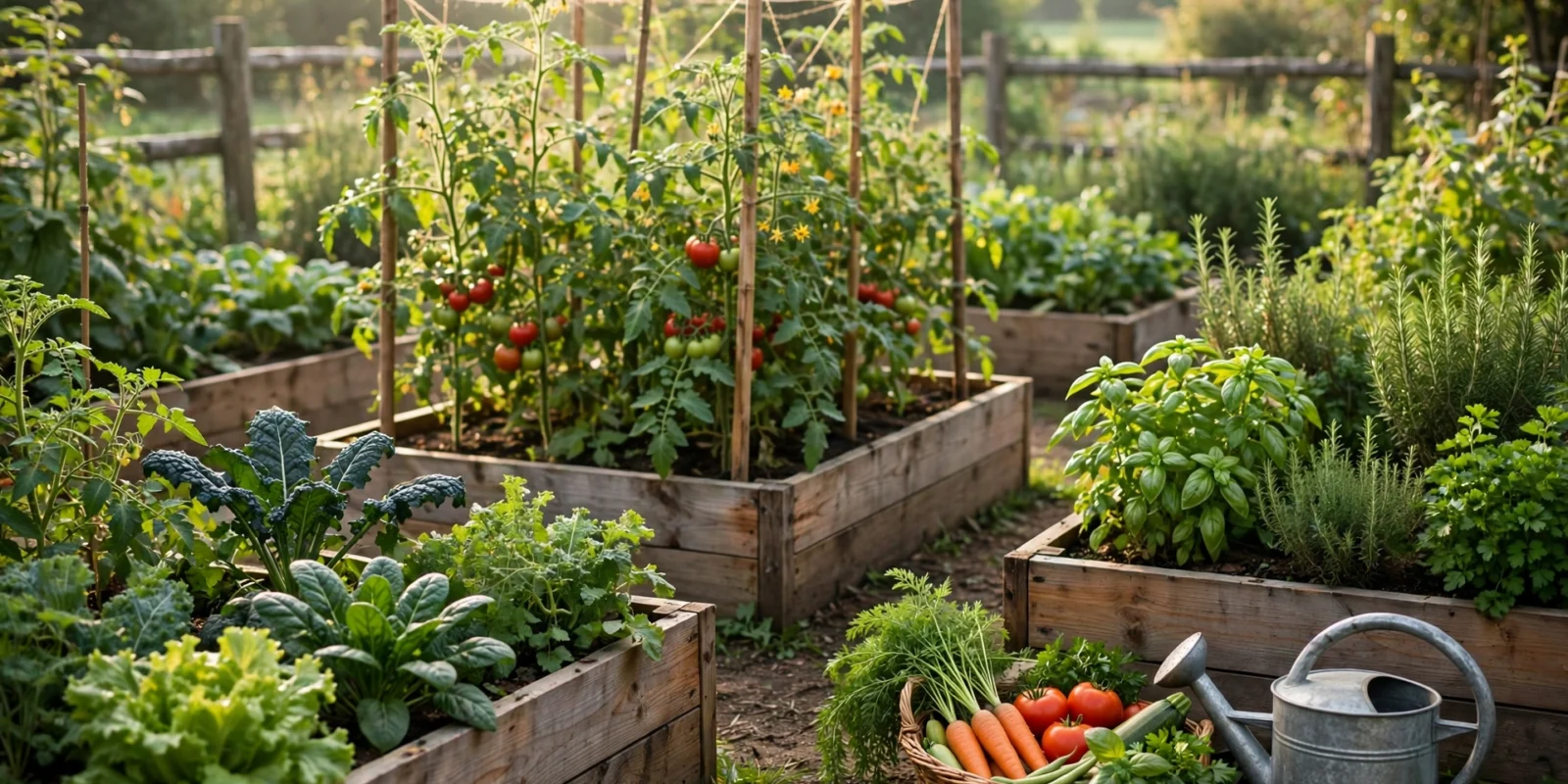
Raised beds are the usual recommendation for beginners, and for good reason. A bottomless wooden or metal frame, roughly 30 centimetres deep and filled with topsoil and compost, warms up faster in spring, drains well, and lets you control the soil completely — which matters enormously if your ground is heavy clay, stony or waterlogged. The Royal Horticultural Society calls a raised bed one of the simplest fixes for clay soil. Keep beds narrow, about 1.2 metres wide, so you can reach the middle from either side without stepping on the soil. Avoid old railway sleepers or treated timber that might leach chemicals into the soil.
Containers suit anyone without a garden, and a few pots on a sunny step will tell you whether you enjoy gardening before you commit to digging. The trade-off is that pots dry out quickly and need feeding more often, as nutrients wash out with every watering. Bigger containers are more forgiving — tomatoes, peppers and aubergines need at least five gallons.
Whichever method you choose, start small. The most common pattern among new gardeners is a large, ambitious first garden that becomes a weedy chore by midsummer. One bed you actually tend beats a sprawling plot you abandon.
Get Your Soil Ready Before You Sow a Single Seed
Ask experienced gardeners for their best advice and most will say the same thing: feed the soil, not the plant. Vegetables are hungry, fast-growing crops, and they can only be as healthy as the ground they grow in. Soil is not just dirt holding plants upright — it is a living mix of minerals, organic matter, air, water and microorganisms that turn organic matter into nutrients your vegetables absorb.
Start by clearing grass and weeds, pulling out persistent roots by hand. Loosen the soil to about 20 to 30 centimetres with a garden fork, then spread 5 to 8 centimetres of compost over the surface and work it into the top few inches. NC State Extension advises amending soil with organic material first, then submitting a soil sample to find out its pH and nutrient levels before adding anything else.
Most vegetables grow best in slightly acidic to neutral soil, pH about 6.0 to 7.0. A soil test — cheap through your local extension service or a garden centre kit — tells you exactly what your soil needs instead of leaving you to guess. Guessing with lime or fertiliser is one of the quieter ways beginners damage a bed.
For raised beds or containers, use topsoil mixed with good compost, or packaged potting mix for pots. Never fill containers with garden soil: it is heavy, drains poorly and compacts. If you do not have compost yet, now is the time to start a pile — kitchen scraps and garden waste become the best soil improver you can get for free. Our guide to starting composting at home walks through the simple setup.
The no-dig shortcut
Many gardeners skip digging altogether. The no-dig method means smothering grass or weeds with cardboard, covering it with a thick layer of compost, and planting straight into that. It preserves the soil’s structure and is far easier on your back. It works best if you can wait a few weeks for the cardboard to soften, but planting the same day usually works for sturdy transplants.
What to Grow First: The Easiest Vegetables for Beginners
The single biggest decision in your first season is what to plant. The rule is simple: grow what you actually eat, and start with crops that forgive mistakes. Four or five easy plants that succeed will teach you more than twenty varieties of which half fail. Here are the most reliable first crops, with rough harvest times. The seed packet gives the exact figure for your variety.
| Crop | When to plant | Days to harvest | Why it suits beginners |
|---|---|---|---|
| Radishes | Early spring or autumn | 25–30 | Fastest reward; direct sow; likes cool weather |
| Lettuce and salad leaves | Early spring or autumn | 30–60 | Cut-and-come-again; tolerates part shade |
| Bush beans | After the last frost | 50–60 | Direct sow; no staking; heavy cropping |
| Zucchini (courgette) | After the last frost | 45–60 | Very productive; one or two plants are plenty |
| Cherry tomatoes | After the last frost, as young plants | 60–80 | Productive and tolerant; buy as plants |
| Peas | Early spring | 55–70 | Cool-season crop; simple support |
| Kale and chard | Spring or autumn | 50–60 | Long harvests; tough plants |
| Herbs (basil, chives) | After frost, or anytime indoors | 30–60 | Small, useful, harvested constantly |
Radishes deserve a special mention. They are the fastest reward in the garden — ready to pull in under a month — and you can sow a fresh row every couple of weeks and keep harvesting all season. If you need to see something happen before believing the whole enterprise works, plant radishes first. Pull them young, though: left too long, they turn woody and hot.
Lettuce has a trick beginners rarely expect: pick the outer leaves and leave the centre growing, and one plant feeds you repeatedly for weeks. The same cut-and-come-again approach works for spinach and chard.
Skip slow or fussy crops in year one: celery, cauliflower, melons and sweetcorn take up a lot of space for a modest return and punish small timing mistakes. Grow them in year two, once you know your soil and your seasons.
Also favour crops that are expensive to buy or hard to find fresh. The RHS makes the same point in its planning advice: grow your favourites and the ones where freshness matters most — leeks rather than onions, for example — while buying cheap staples at the shop. And be honest about how much you will eat: one or two courgette plants will feed a household.
Seeds or Plants? How to Get Things in the Ground
Every vegetable falls into one of two groups, and that decides when it goes in. Cool-season crops — lettuce, peas, spinach, radishes, carrots, kale — thrive in spring and autumn below about 21°C, and many can be sown a few weeks before the last spring frost. Warm-season crops — tomatoes, peppers, cucumbers, beans, squash — are frost-sensitive and must wait until after the last frost, when the soil has warmed. Your local extension service or garden centre can give you the dates for your area.
Most seeds can be sown straight into the bed. Beans, peas, radishes, lettuce, cucumbers and squash all do well this way, and root crops such as carrots must be direct-sown — moving them makes the roots fork. Sow about two to three times as deep as the seed is wide, then water gently so you do not wash seeds out. Sow thinly; crowded seedlings grow small and bitter.
Slow or tender crops are easier bought as young plants, or started indoors 6 to 8 weeks before the last frost. Tomatoes, peppers, aubergines and brassicas fall into this group. Choose short, sturdy seedlings whose roots are not circling the pot, and harden them off before planting out — gradually longer spells outdoors over a week or so, brought back in at night. The RHS advises hardening off over 10 to 14 days.
A common mistake is sowing too little seed. Germination is never 100%: the RHS notes carrots can legally be sold with a germination rate of just 65%, and some sprouted seeds rot or are eaten. Sow a little thickly where losses are expected, and thin later. Sow early — if a crop fails, you still have time for a second batch.
Sow little and often
Quick crops sown all at once are ready all at once, then gone. Sow a short row every two weeks instead for a steady supply. This succession sowing suits lettuce, radishes, spring onions, spinach and bush beans. Keep a simple garden journal too — planting dates, what worked — because your own notes are the best planting calendar you will ever own.
Watering, Feeding and Mulching Without the Guesswork
Watering is where most beginner gardens are won or lost, and the usual error is light, daily sprinkles that wet only the surface. Shallow watering encourages shallow roots, which then need watering even more often. The fix is simple — water deeply and less often, so moisture reaches 15 centimetres down, then wait until the top few centimetres dry out.
As a rough guide, vegetables need about an inch of water a week from rain and watering combined, more in hot weather or in containers. NC State Extension gives the same figure and adds the key detail: water the soil, not the plant. Wet leaves spread disease. A watering can at the base, or a soaker hose, is far more effective. Morning is best — foliage dries during the day and less water evaporates.
Push a finger into the soil: if it feels dry two inches down, it is time to water. In containers, check daily in summer — pots on a sunny patio can dry out in a day. Our guide to saving water at home covers the same habits indoors and out.
Mulch is the single best time-saver in a vegetable garden. A 5 to 8 centimetre layer of straw, shredded leaves or compost holds moisture in the soil, suppresses weeds and breaks down to feed the soil. Mulch as soon as plants are established, keeping it a few centimetres from stems so they do not rot.
Feeding matters most for hungry crops such as tomatoes, squash and cabbages. Compost at planting, plus more when plants start to fruit, is usually enough for a first garden. Container plants need more: a soluble fertiliser at half strength every few days, since nutrients wash out with every watering.
No Garden? Grow Your Own Vegetables at Home in Containers
Not having a garden is no reason not to grow food. A sunny balcony, patio, doorstep or well-lit windowsill can produce fresh vegetables for months, as long as you choose crops that suit pots.
Oregon State University Extension lists the crops that do well in containers: lettuce, herbs, tomatoes, peppers, aubergines, carrots, beans, squash, radishes, strawberries, kale, chard and spinach. Dwarf varieties — small carrots, compact tomatoes bred for pots — work particularly well, and vining crops can be trained up a trellis to use vertical space.
Three rules make or break container growing. Drainage: every pot needs holes, and raising pots on bricks helps water escape. Size: ten-inch pots suit herbs, but tomatoes, peppers and aubergines need at least five-gallon containers — bigger is always more forgiving. The mix: use packaged potting soil. Never fill a container with garden soil — it compacts and suffocates roots.
Sunlight still decides what will thrive. Fruiting crops need six to eight hours of direct sun, while leafy greens and many herbs manage with four to six, so a balcony that only gets morning light is still good for lettuce, spinach, chard and parsley. Containers dry out fast, especially on concrete in full sun — daily watering in summer is normal.
Growing a little of your own also changes how you shop: lettuce picked the same day it is eaten never becomes waste. Our guide to reducing food waste at home covers the rest of the picture.
Dealing With Pests and Problems the Simple Way
Something will eat your vegetables. That is not a failure; it is gardening. The aim is not a pest-free garden — that does not exist — but one where pests stay at a level your plants can outgrow. Walk the beds every few days, look under leaves, and catch problems while they are small.
Most beginner problems have simple, chemical-free answers. Slugs and cutworms that eat seedlings overnight can be picked off by hand, or blocked with collars around young stems. Caterpillars and beetles are best dealt with by hand-picking, or by covering young plants with row covers. Yellowing leaves usually mean overwatering or a lack of nutrients — check drainage first, then feed. Wilting means dry soil: water deeply and mulch. White powder on squash leaves is powdery mildew; spacing plants for airflow and watering at the base helps prevent it.
Two habits prevent more trouble than any spray. The first is crop rotation: do not grow the same family in the same spot year after year — pests and diseases that attack one family build up in the soil, so move each family to a different bed. A simple three- or four-year rotation is enough. The second is diversity: flowers such as marigolds among the vegetables attract pollinators and beneficial insects, and mixed planting makes it harder for a pest to destroy a whole crop.
Before reaching for any spray, even a natural one, remember that many garden chemicals harm the insects that eat pests, and residues end up on food you will eat. For a home vegetable garden, hand-picking, row covers, good spacing and healthy soil solve most problems.
What Recent Research Shows
Growing vegetables is good for more than the dinner table, and recent research has started to measure how. A 2025 study in Urban Agriculture & Regional Food Systems surveyed 1,699 people and found gardeners ate fresh fruit and vegetables more often and had lower body mass indexes — although the authors note the relationship is complex and partly explained by age and education.
A second 2025 study, published in Frontiers in Public Health, looked at indoor hydroponic vegetable gardening with 36 adult cancer patients over eight weeks. Mental wellbeing scores rose by 3.8 points on a validated scale — past the three-point threshold considered clinically meaningful — while depression scores and overall quality of life also improved, and fruit and vegetable intake went up. The study was small and the authors call for larger trials. You can read the full study in Frontiers in Public Health.
None of this means a vegetable garden is medicine. It means the time outdoors, the gentle activity and the satisfaction of eating something you grew are real, measurable benefits — available to anyone with a few pots and a sunny spot.
Common Mistakes to Avoid
1. Starting too big. A large first garden becomes a weedy chore by midsummer. One bed you tend properly beats a sprawling plot you abandon.
2. Planting in shade. Most vegetables need six to eight hours of direct sun. A shady spot will not be fixed by fertiliser, extra water or hope. If your only sunny spot is small, grow in containers.
3. Skipping soil preparation. Planting into unimproved, compacted ground is the most common reason first gardens disappoint. Compost, a fork and half an hour before sowing change everything.
4. Planting warm-season crops too early. Tomatoes and beans put out before the last frost will sulk or die. Wait for the soil to warm, and check your local last-frost date.
5. Crowding plants. Seedlings look tiny, so it is tempting to plant them close together. At full size they need airflow and light, and crowded plants get sick. Follow the spacing on the packet, even when it looks wasteful.
6. Watering lightly every day. Shallow sprinkles create shallow roots. Water deeply, less often, at the base, and mulch to hold moisture in.
7. Growing too much of one thing. One courgette plant feeds a household; four produce a glut nobody can eat. Grow a little of several crops instead.
8. Giving up after one failure. A failed crop is information, not a verdict. Note what happened, sow again if the season allows, and try a different variety next time.
Final Recommendations
Start this week, not next spring. Even in late autumn or winter, you can plan the bed, order seeds and build a compost pile. Gardening rewards the people who begin, not those who wait for perfect conditions.
Keep it small and close. One 4-by-8-foot bed or four large pots, near the back door, with five or six forgiving crops. That is a complete first garden.
Invest in soil before seeds. Compost, a soil test and a fork will do more for your harvest than any gadget.
Learn your frost dates. They are the most useful piece of local knowledge a vegetable gardener can have, and they cost nothing to look up.
Grow what you eat, and eat what you grow. Picking a salad minutes before eating it is the whole point. Our Eco Living basics guide puts home growing in the wider picture of a lower-waste household, if you want to go further.
Keep notes. A notebook with planting dates and what worked is worth more than any gardening book by your second year, because it is written for your soil and your climate.
Frequently Asked Questions
Choose a spot with 6 to 8 hours of direct sun and a water source nearby. Start small — one 4-by-8-foot raised bed or a few large containers. Build the soil with compost, pick easy crops such as lettuce, radishes, beans, zucchini and cherry tomatoes, and plant by your last frost date. Water deeply, mulch, and check for pests weekly.
Radishes are the fastest and most forgiving, ready in about 25 to 30 days from sowing. Lettuce is almost as easy and keeps producing if you pick the outer leaves. Bush beans, zucchini and cherry tomatoes are also reliable first crops. All germinate readily, tolerate a little neglect and reward you within weeks.
Yes. Many vegetables grow well in containers on a patio, balcony or sunny windowsill — lettuce, herbs, tomatoes, peppers, carrots, beans, radishes, kale and spinach. Use pots with drainage holes and good potting mix, never garden soil. Tomatoes and peppers need at least five-gallon containers, and fruiting crops need 6 to 8 hours of sun; leafy greens manage with 4 to 6.
Most vegetables need at least 6 to 8 hours of direct sunlight a day. Fruiting crops such as tomatoes, squash and cucumbers do best with 8 or more. Leafy greens and root crops such as lettuce, spinach, kale, radishes and beets cope with 4 to 6 hours. Watch your space through a day before planting — shade shifts with the seasons.
It depends on your average last spring frost date. Cool-season crops such as lettuce, peas, spinach and radishes can go in a few weeks before it. Warm-season crops such as tomatoes, peppers, beans, cucumbers and squash must wait until after it, when the soil has warmed. Your local extension service or garden centre can give you the dates.
Start from seed for beans, peas, radishes, lettuce, cucumbers, squash and carrots. Buy young plants for slow or tender crops such as tomatoes, peppers, aubergines and broccoli — they are easier and give you a head start. If you start seeds indoors, sow 6 to 8 weeks before the last frost and harden seedlings off before planting out.
Most vegetables need about an inch of water a week from rain and watering combined, more in hot weather or in containers. Water deeply and less often, at the base in the morning, rather than lightly every day. Push a finger into the soil: if it feels dry two inches down, water. Mulch to hold moisture in.
Walk the garden every few days and check leaf undersides. Pick slugs, caterpillars and beetles off by hand, use row covers over young plants, and space plants well for airflow. Rotate crop families to a different bed each year, and plant flowers such as marigolds among the vegetables to attract beneficial insects. Healthy soil and strong plants resist pests far better than weak ones.
This content is for educational purposes only and does not replace professional horticultural or food safety advice. Always wash home-grown produce thoroughly before eating, and consult a qualified professional if you are unsure about soil safety or the safe use of any garden product.
Conclusion
Growing your own vegetables is not a skill you are born with, and it is not a test you pass or fail. It is a short list of basics — sun, soil, timing, water — repeated with patience until they become habit. The first season will not be perfect: something will be sown too early, something will be eaten by slugs. That is normal, and it is how every good gardener learned.
The reward is not only the food: ten minutes in the garden before the day starts, a salad picked minutes before it is eaten, and the quiet confidence of feeding yourself from a patch of ground — or a few pots on a balcony. Start small, this week, with a bed or a pot, some compost and a packet of radish seeds. By next month, you will be eating something you grew yourself.
References
- Royal Horticultural Society — Planning a Vegetable Garden — https://www.rhs.org.uk/advice/beginners-guide/vegetable-basics/seed-sowing-techniques/planning-a-vegetable-garden
- Royal Horticultural Society — How to Get Your Veg Off to a Flying Start — https://www.rhs.org.uk/advice/grow-your-own/features/getting-established
- NC State Extension — Vegetable Gardening: A Beginner’s Guide — https://content.ces.ncsu.edu/home-vegetable-gardening-a-quick-reference-guide
- Oregon State University Extension — No Yard? Grow Vegetables in Containers — https://extension.oregonstate.edu/news/no-yard-grow-vegetables-containers
- Frontiers in Public Health (2025) — Indoor Hydroponic Vegetable Gardening to Improve Mental Health and Quality of Life in Cancer Patients: A Pilot Study — https://www.frontiersin.org/journals/public-health/articles/10.3389/fpubh.2025.1670698/full
- ToGardener — Vegetable Gardening for Beginners: Start Your First Garden — https://www.togardener.com/vegetable-garden-for-beginners/