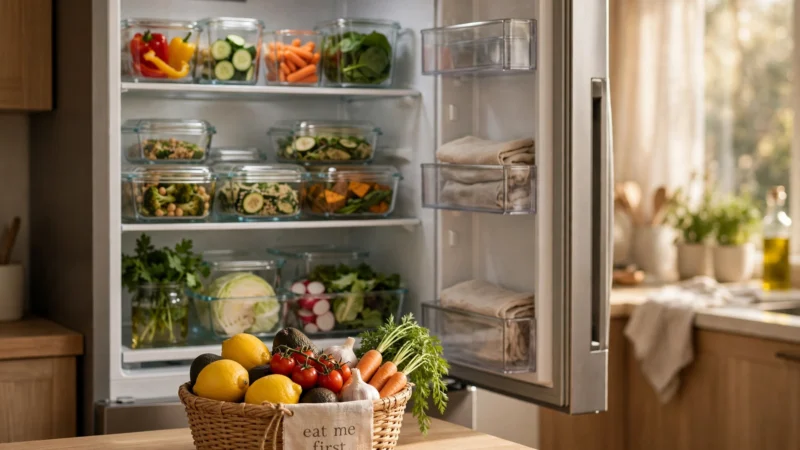
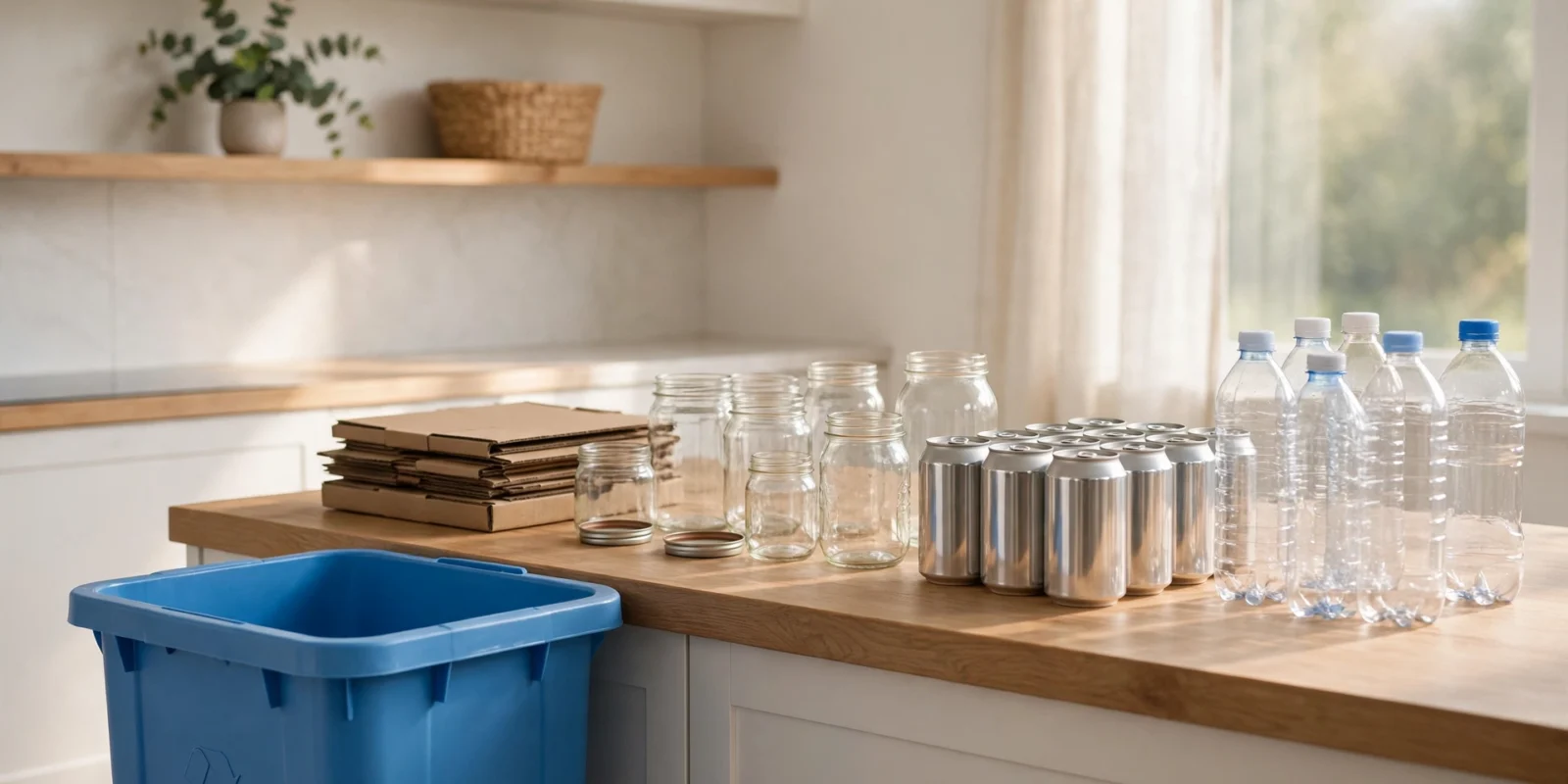
Most of us stand in front of the bin at least once a day wondering how to recycle at home: does this go in the recycling, or am I about to ruin a whole truckload? A greasy pizza box. A coffee cup that looks like paper but isn’t. A plastic bag you know doesn’t belong there — but you drop it in anyway, just in case.
That hesitation is not a personal failing. Rules change from one town to the next, packaging keeps getting more complicated, and the little triangle of arrows on a tub tells you almost nothing useful. In some areas, roughly a quarter of what lands in recycling bins shouldn’t be there at all.
This guide fixes that. It explains how to recycle at home properly — what your programme actually accepts, how to prepare each item, how to read the symbols on packaging, and what to do with the tricky stuff that never belongs in the kerbside bin. Everything here comes from published guidance from the US Environmental Protection Agency, the UK’s WRAP, and working recycling programmes, with links so you can check the originals.
Written by Md Masud Rana based on published expert sources. This article has not been professionally reviewed. See our sources below.
Quick Answer: How to Recycle at Home
Recycling at home comes down to three habits: only put in items your local programme accepts, keep them empty, clean and dry, and keep them loose — never bagged. Clean paper, cardboard, metal cans, glass bottles and jars, and plastic bottles and jugs numbered 1 or 2 are accepted almost everywhere. Plastic bags, greasy pizza boxes, coffee cups, batteries and electronics never belong in the kerbside bin. When in doubt, leave it out.
Contents
- Why Recycling at Home Still Matters
- How to Recycle at Home in 6 Steps
- What Can You Recycle? The Yes List
- What You Can’t Recycle at the Kerb — and What to Do Instead
- Reading Recycling Symbols and Plastic Numbers 1–7
- The Tricky Items Everyone Gets Wrong
- Wishcycling: The Well-Meaning Habit That Ruins Recycling
- Recycling Rules Around the World
- What Recent Research Shows
- Common Mistakes to Avoid
- Final Recommendations
- Frequently Asked Questions
Why Recycling at Home Still Matters
Recycling is easy to feel cynical about. You’ve probably heard that most plastic never gets recycled, or that your carefully sorted bin ends up with the rubbish. Some of that scepticism is fair — but the picture is more useful than the headlines suggest.
Start with scale. In the United States in 2018, 292.4 million tons of household waste were generated, and 146.2 million tons ended up in landfill, according to the US Environmental Protection Agency. Every bottle, can and box recycled instead is material that doesn’t need to be dug from the ground, cut from a forest, or refined from oil. Recycling just ten plastic bottles saves enough energy to power a laptop for more than 25 hours, the EPA reports.
There’s an economic side too. The EPA’s Recycling Economic Information study found that recycling and reuse in the US supported 681,000 jobs and $37.8 billion in wages in a single year.
None of this means recycling alone fixes the waste problem. The EPA is blunt about the hierarchy: not creating the waste beats recycling it, every time. Reducing and reusing come first; recycling is third. That’s why this guide pairs recycling know-how with habits that cut waste before it reaches the bin — and why our guide to reducing plastic waste at home is a natural companion to it.
Here’s the honest framing, though. Recycling only works when what arrives at the sorting facility is actually recyclable. Contamination — wrong items, dirty containers, bagged loads — is the biggest reason good recycling gets thrown away. The Recycling Partnership puts US inbound contamination near 17% by weight, and curbside programmes recover only about a third of the recyclables within reach, according to Resource Recycling. In some areas, around 25% of bin contents aren’t recyclable at all, Rockland Green reports. That gap is exactly what this guide is for.
The three rules that cover most of it
If you remember nothing else, remember these three rules — they appear, in some form, in nearly every programme’s guidance:
- Recycle clean paper, cardboard, cans and bottles — the backbone of every kerbside programme.
- Keep food and liquid out. A container with food still in it contaminates everything it touches.
- No plastic bags or soft plastics. They tangle sorting machinery and are the top contaminant at most facilities.
Everything else in this guide is detail on top of those three rules. Get them right and your recycling is already better than most households’.
How to Recycle at Home in 6 Steps
Setting up home recycling is a one-afternoon job, and then it mostly runs itself. The secret is making the right choice the easy choice — a system so obvious that everyone in the house follows it without thinking.
Step 1: Find out what your programme accepts
Before you buy a single bin, check your local rules — your city or county waste website in the US, your council’s website in the UK, or your council’s yellow-lid bin guide in Australia. The EPA’s advice is simple: contact your local authority and use the Earth911 directory — see the EPA’s frequent questions on recycling. Print the accepted-items list and stick it above the bin. And if you’ve recently moved, re-check: a yoghurt pot that’s recyclable in one city may not be in the next.
Step 2: Set up a simple sorting station
You don’t need a fancy system. A kitchen recycling bin plus the outdoor kerbside bin is enough for most homes — put the indoor bin where waste is generated, usually the kitchen, and keep a small container in the bathroom for shampoo bottles and toilet roll tubes. Short on space? One extra box for all recyclables does the job.
Step 3: Learn the preparation routine
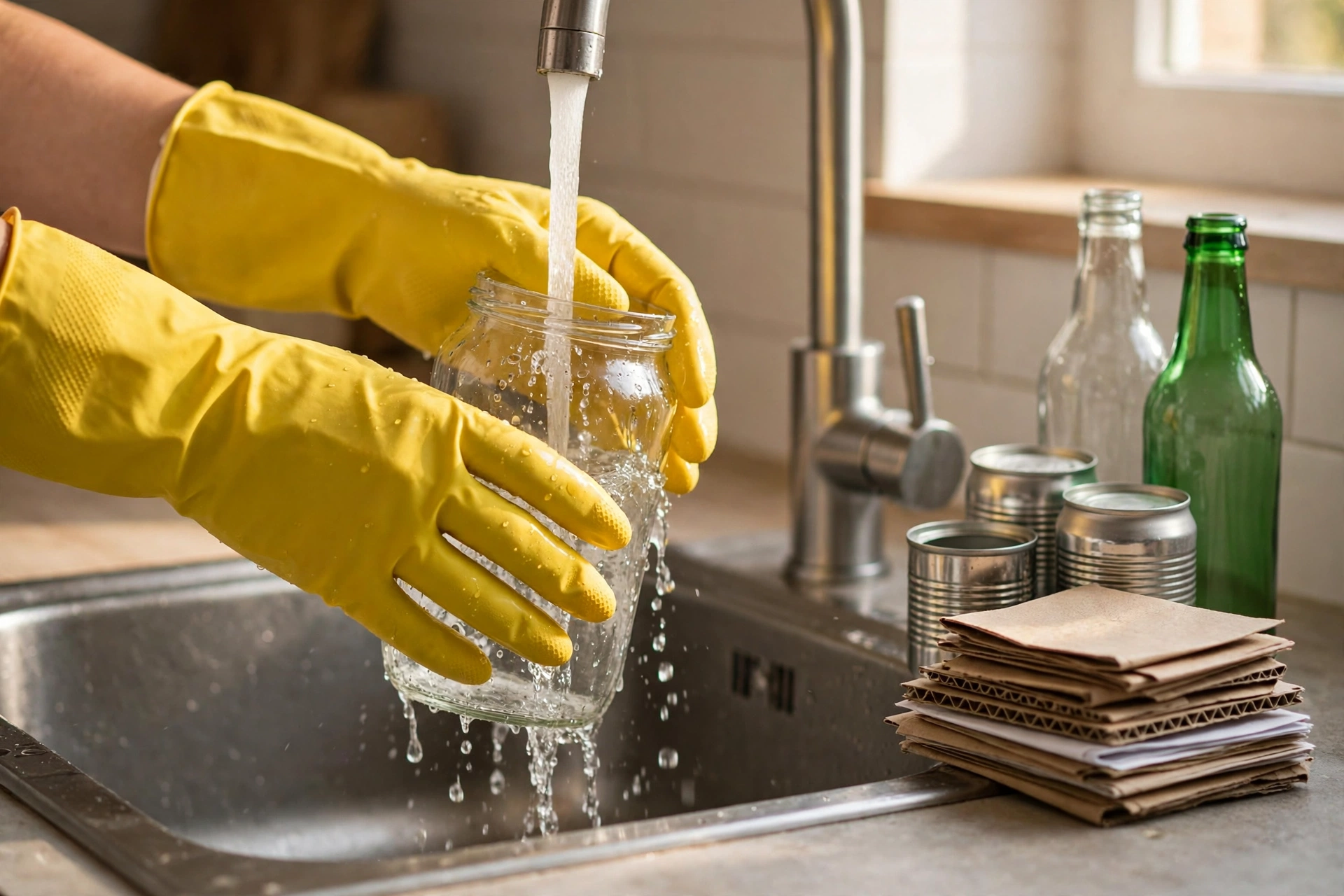
Every item gets the same quick treatment: empty, rinse, dry. Tip out the contents, give it a five-to-ten-second rinse with cold water (no soap needed), and let it drain. A peanut butter jar needs a proper wash; a soup can just needs a swish. Rockland Green notes facilities can handle trace residue; what they can’t handle is actual food. Flatten cardboard boxes too — wet cardboard is often rejected.
Step 4: Keep it loose, never bagged
Never put recyclables inside a plastic bag. Workers can’t see what’s inside, bags tangle the machinery, and whole bags often get pulled out and sent to landfill unopened. Queensland’s recycling guidance puts it plainly: keep recyclables loose — see their do’s and don’ts of recycling.
Step 5: Deal with the non-kerbside items separately
Keep a bag by the door for things that can’t go in the kerbside bin: plastic bags and film, batteries, electronics, textiles. Drop plastic bags at a grocery store collection bin, batteries at a retailer or council drop-off, and electronics at an e-waste point.
Step 6: Put it out on time, and keep the lid closed
Learn your collection day — weekly or fortnightly in most places. Keep the lid closed so rain doesn’t soak paper and cardboard, and don’t overfill the bin: an overflowing bin sheds items on windy days.
What Can You Recycle? The Yes List
Most kerbside programmes accept the same core materials. The EPA lists the ten most commonly recycled curbside items as cardboard, paper, food boxes, mail, beverage cans, food cans, glass bottles, jars, jugs, and plastic bottles and caps — but always confirm with your local provider first, since acceptance varies by area.
| Material | What goes in | How to prepare it |
|---|---|---|
| Paper | Newspapers, magazines, mail, office paper, envelopes, notebooks | Keep dry and clean; envelope windows are removed during processing |
| Cardboard | Shipping boxes, cereal and cracker boxes, clean pizza box tops, paperboard cartons | Flatten, keep dry, remove food residue |
| Metal | Aluminium drink cans, steel food cans, clean foil scrunched into a ball, empty aerosol cans | Empty and rinse; scrunch foil fist-sized or larger |
| Glass | Bottles and jars — clear, brown and green | Empty and rinse; never put broken glass in the bin |
| Plastic | Bottles and jugs, usually #1 and #2 — water bottles, milk jugs, detergent bottles, shampoo bottles | Empty and rinse; replace the cap where accepted |
| Cartons | Drink cartons for milk, juice and soup (Tetra Pak style) | Rinse; accepted in a growing number of programmes |
Two materials deserve a special mention. Aluminium is one of the most valuable things in your bin — infinitely recyclable, with around 75% of all aluminium ever produced still in use today. Corrugated cardboard has one of the highest recycling rates of any material, which is why flattening boxes and keeping them dry matters. Glass is recyclable almost everywhere, but some areas run separate glass drop-offs instead of kerbside collection. Broken glass, mirrors and ovenware melt at different temperatures from container glass and should never go in the bin.
What You Can’t Recycle at the Kerb — and What to Do Instead
Knowing what stays out is at least as important as knowing what goes in. The wrong items don’t just fail to get recycled — they can jam machinery, injure workers, and drag a whole load to landfill. Here’s the no-list, with the better destination for each.
| Item | Why it stays out | What to do instead |
|---|---|---|
| Plastic bags & film | Tangles sorting machinery; the top contaminant at most facilities | Take to a grocery store drop-off bin; switch to reusable bags |
| Greasy pizza boxes | Oil soaks into fibres and weakens recycled paper | Recycle the clean top; compost or bin the greasy bottom |
| Coffee cups | Plastic lining bonded to paper can’t be separated cheaply | Bin the cup; recycle the plastic lid if numbered #1, #2 or #5 |
| Styrofoam / polystyrene | Too light, too bulky, almost no market for it | Bin it; check for specialist drop-offs in your area |
| Batteries | Can spark fires when crushed in trucks and facilities | Retailer or council battery drop-off — never in any bin |
| Electronics & cables | Contain hazardous materials and valuable metals needing specialist handling | E-waste collection point or retailer take-back scheme |
| Food-soiled paper | Grease and food ruin paper fibres | Compost it if you can — see our guide to starting composting at home |
| Clothes & textiles | Tangle machinery; not accepted at the kerb | Donate wearable items; textile recycling bins for worn-out ones |
| Nappies & wipes | Contaminated and made of mixed materials | General waste |
| Coffee pods | Mixed foil, plastic and grounds in one tiny package | Brand take-back schemes; some pods are recyclable only if emptied and separated |
Batteries deserve emphasis: lithium batteries crushed in a truck or sorting facility can ignite, and fires started this way have shut down recycling plants. A dead battery is a five-minute errand at a supermarket drop-off. Food waste has its own path too — greasy paper, peelings and leftovers don’t belong in recycling, but they don’t have to go to landfill either. If you have a food waste collection or a compost bin, that’s where they go — our guide to reducing food waste at home covers the whole picture, from meal planning to compost.
Reading Recycling Symbols and Plastic Numbers 1–7
That triangle of chasing arrows with a number inside is probably the most misunderstood symbol in your kitchen. Here’s the truth that catches most people out: the symbol does not mean “recyclable”. It is a resin identification code — it tells the sorting facility what type of plastic the item is made from, and nothing more. Whether your programme accepts that plastic is a separate question, decided by local equipment and markets.
| Code | Plastic | Common items | Usually accepted? |
|---|---|---|---|
| #1 PET | Polyethylene terephthalate | Water and soft drink bottles, food jars | Yes — widely accepted |
| #2 HDPE | High-density polyethylene | Milk jugs, detergent and shampoo bottles | Yes — widely accepted |
| #3 PVC | Polyvinyl chloride | Some pipes, cling film, blister packs | Rarely — check locally |
| #4 LDPE | Low-density polyethylene | Plastic bags, bread bags, squeeze bottles | Curbside no — store drop-off only |
| #5 PP | Polypropylene | Yoghurt pots, margarine tubs, bottle caps | Often — check locally |
| #6 PS | Polystyrene | Foam cups, takeaway boxes, packing foam | Usually no |
| #7 Other | Mixed / other resins | Multi-layer pouches, some bottles | Rarely — check locally |
The practical rule: focus on #1 and #2. They’re accepted almost everywhere and make up the bulk of household plastic recycling. For everything else, check your local list — and when a product’s number isn’t accepted, that’s useful information at the shop too.
One more label worth knowing: in the UK and Australia you’ll increasingly see clear on-pack labels — “Recycle”, “Don’t Recycle”, or “Recycle at large supermarkets” — developed by WRAP and its partners. They replace the guessing game with a direct instruction. WRAP’s recycling guidelines set out the industry-agreed list of what can and can’t be collected from households.
The Tricky Items Everyone Gets Wrong
Most recycling mistakes aren’t laziness — they’re genuinely confusing items. Here are the ones people ask about most.
Can you recycle pizza boxes?
It depends on the grease. A box with light grease spots can be recycled in many programmes — modern repulping equipment handles small amounts of food residue. A box saturated with oil, dripping, or with cheese stuck to it cannot. The safe approach: tear the box in half, recycle the clean top, compost or bin the greasy bottom. Rockland Green confirms the same rule.
Can you recycle coffee cups?
Almost always no. A disposable coffee cup looks like paper, but it’s lined with a thin layer of plastic so it can hold hot liquid — and that mixed-material construction is very difficult and expensive to separate. The cup belongs in general waste. The plastic lid is different: if it’s marked #1, #2 or #5 and your programme accepts it, the lid can go in recycling.
Can you recycle plastic bags?
Not in your kerbside bin, ever. Bags and film wrap around sorting machinery — workers call them “tanglers” — and facilities shut down while staff cut them out by hand. Plastic bags are recyclable only through separate collection: most large grocery stores have a drop-off bin near the entrance. Clean, dry bags go there.
Can you recycle bottle caps and lids?
This one genuinely varies. The EPA says you should be able to recycle bottle caps if they’re attached to the bottle, but to check with your local provider about loose caps — loose ones fall through sorting screens. The credit-card test is a handy rule: if a plastic item is smaller than a credit card, it probably can’t be recycled at the kerb.
Can you recycle shredded paper?
Only if it’s contained. Loose shredded paper falls through sorting equipment and ends up as waste. Put it in a paper bag, staple or tape it shut, and place the bag in the bin. The same goes for small scraps of paper — bag them or bin them.
Can you recycle batteries and electronics in the bin?
Never. Batteries — especially lithium ones from phones, vapes and power tools — can catch fire when crushed. Electronics contain metals and chemicals that need specialist handling. Use a retailer drop-off, a council hazardous waste collection, or an e-waste point. The EPA’s frequent questions page lists household hazardous waste — batteries, paints, solvents — as items that should never go in the recycling bin or the general waste stream.
Wishcycling: The Well-Meaning Habit That Ruins Recycling
Wishcycling is the habit of tossing something into the recycling bin and hoping it’s recyclable — the garden hose, the old Christmas lights, the broken toy, the takeaway container with sauce still in it. It feels responsible in the moment. It is, unfortunately, one of the most damaging things a well-meaning household can do.
Here’s why. When a truckload arrives at a sorting facility and too many items have to be pulled out by hand, the load is downgraded, sold at a discount, or rejected outright and sent to landfill. RecycleNation describes the chain clearly — a contaminated load costs the hauler extra to divert, and those costs eventually come back as higher collection rates for everyone. But when one in four or five items in the bin doesn’t belong there, loads start failing.
The fix is a simple rule, worth printing above the bin: when in doubt, keep it out. Putting a questionable item in the rubbish costs nothing — it was going to landfill anyway if it wasn’t recyclable. Putting it in the recycling risks taking good recyclables down with it. And the honest question for a non-recyclable item isn’t “which bin does it go in?” — it’s “do I need to buy this version of it again?”
Recycling Rules Around the World
Recycling is local in a way that surprises people. The same yoghurt pot can be recyclable in Manchester, rejected in Ohio, and collected separately in Melbourne. Here’s how the systems differ in our five main reader countries — and what to check.
United States
The US has no single national system: rules are set by cities, counties and haulers, and they vary widely. The EPA’s guidance is the shared baseline — clean paper, cardboard, cans, bottles and jars; no plastic bags, electronics or hazardous waste at the kerb — but your hauler’s list is the final word. Earth911’s directory can help you find drop-off points for items your kerbside programme won’t take.
United Kingdom
England’s system changed significantly in 2026. Under the Simpler Recycling rules in force from 31 March 2026, collectors must by default collect four streams separately: food and garden waste, paper and card, all other dry recyclables (glass, metal, plastic and cartons), and residual waste. The aim is to end the “recycling postcode lottery” and give households the same service wherever they live. Scotland, Wales and Northern Ireland run their own systems, so council guidance still matters.
Australia
Most Australian households use a yellow-lid bin for mixed recycling, and the accepted list is short: paper and cardboard, glass bottles and jars, hard plastics, steel and aluminium. Soft plastics — bags, wrappers, cling film — never go in the yellow-lid bin; they go to supermarket drop-off points. Container deposit schemes in most states pay a small refund per bottle and can.
Canada and New Zealand
Canada’s rules vary by province and municipality, but the core list is the same: clean paper, cardboard, metal and rigid plastic containers. New Zealand’s kerbside recycling is standardising around a common set — plastics numbered 1, 2 and 5, cans, paper and cardboard, and glass where collected separately. In both countries, as everywhere, the council website is the authority, not a general guide.
What Recent Research Shows
Recycling is changing faster than most guides admit, and the last two years have brought genuinely useful developments for households.
First, the measurement problem is finally being taken seriously. The Recycling Partnership puts US inbound contamination near 17% by weight, and curbside programmes recover only about a third of the recyclables within reach — figures published in Resource Recycling in November 2026. Cameras on collection trucks can now flag contamination address by address, so outreach reaches the households creating the problem. Early pilots are striking — a six-week cart-tagging programme in Smyrna, Delaware cut contamination from 34% to 5%.
Second, policy is catching up with the confusion. England’s Simpler Recycling rules, in force from 31 March 2026, standardise what every household can recycle and how it is collected. WRAP’s data is telling: its Spring 2025 Recycling Tracker found 89% of UK residents say they regularly recycle most items that can be recycled — the problem isn’t willingness, it’s knowing what counts.
Third, the list of what’s recyclable keeps growing at the edges. Toothpaste tubes, long a classic “bin it” item, are now made from the same material as milk bottles and are technically 100% recyclable; WRAP reports a growing number of UK local authorities now accept them at the kerb. It’s a small example, but it shows why checking your local list once a year matters — the answer for a specific item genuinely changes.
The honest caveat: none of this changes the hierarchy. The EPA’s position remains that source reduction — not creating the waste — is the most environmentally preferred strategy, with reuse second and recycling third. Recycle well, but buy less packaging first. Our Eco Living basics guide covers the wider picture, from reducing consumption to choosing products that last.
Common Mistakes to Avoid
Most recycling errors are habits, not decisions — and habits can be fixed in a week. Here are the seven that cause the most damage:
- Wishcycling — hoping an item is recyclable. The garden hose, the broken toy, the tangled lights: if you’re not sure, it goes in general waste. Better approach: when in doubt, keep it out — and look it up once so you know next time.
- Bagging recyclables in plastic bags. Bagged loads can’t be seen or sorted properly, so facilities often pull the whole bag and send it to landfill. Better approach: put items loose in the bin.
- Skipping the rinse. A jar with food still in it can spoil the paper and cardboard around it. Better approach: a five-second rinse with cold water is enough for almost everything.
- Recycling greasy cardboard. Oil weakens paper fibres during repulping, so a saturated pizza box can downgrade a batch. Better approach: tear the box, recycle the clean half, bin the greasy half.
- Putting batteries or electronics in any bin. Crushed lithium batteries start fires in trucks and sorting plants. Better approach: keep a small box by the door for batteries and old electronics, and drop them at a retailer or council collection point.
- Trusting the chasing-arrows symbol. The number identifies the plastic type; it doesn’t promise your programme accepts it. Better approach: focus on #1 and #2 plastics.
- Recycling tiny items. Bottle caps, straws, cutlery and foil lids fall through sorting screens and jam machinery. Better approach: use the credit-card test — smaller than a credit card means general waste.
Final Recommendations
Seven evidence-based habits that make home recycling work as a routine the whole household can keep:
- Print your local list and put it above the bin. Most confusion disappears once the list is visible where the decision happens.
- Build the three-bin habit: rubbish, recycling, and a “take it when I’m out” bag. The third bag catches plastic film, batteries and electronics before they reach the wrong bin.
- Empty, rinse, dry — every container, every time. Five seconds per item, no soap needed.
- Flatten boxes and keep paper dry. Wet cardboard is rejected, and an overflowing bin sheds litter.
- Choose packaging you can recycle when you have the choice. The #1 bottle over the #7 pouch, the glass jar over the multi-layer sachet.
- Reduce before you recycle. A reusable bottle, a shopping bag, a coffee cup — each one removes dozens of items from the waste stream every year. The EPA ranks source reduction above recycling for good reason, and our guide to saving energy at home shows the same “reduce first” thinking across the household.
- Re-check your local rules once a year. Programmes change — England’s Simpler Recycling rules arrived in 2026, and items like toothpaste tubes have only recently become recyclable in many areas.
Frequently Asked Questions
Check your local programme's accepted-items list on your council or hauler website, then set up one indoor recycling bin in the kitchen and learn your collection day. Put items in loose, never bagged, and rinse containers first.
Almost everywhere, you can recycle clean paper, cardboard, metal cans, glass bottles and jars, and plastic bottles and jugs numbered 1 or 2. Drink cartons are accepted in a growing number of programmes — always confirm with your local provider.
Yes, but only briefly. A five-to-ten-second rinse with cold water is enough — no soap, no scrubbing. Containers should be empty and reasonably clean so food residue doesn't contaminate the paper and cardboard.
It depends on the grease. A box with light grease spots can be recycled in many programmes, but a box saturated with oil or with cheese stuck to it cannot. Tear the box in half: recycle the clean top and compost or bin the greasy bottom.
Not in your kerbside recycling bin. Plastic bags and film tangle sorting machinery and are the top contaminant at most facilities. They are recyclable only through separate collection at most large grocery stores.
The number inside the chasing-arrows triangle is a resin identification code: it tells you what type of plastic the item is made from, not whether it is recyclable. Numbers 1 (PET) and 2 (HDPE) are accepted almost everywhere.
Wishcycling means putting an item in the recycling bin and hoping it is recyclable, even though you aren't sure. It contaminates loads, damages sorting equipment, and can send a whole truckload of good recyclables to landfill. When in doubt, keep it out.
Never. Batteries — especially lithium ones from phones, vapes and power tools — can catch fire when crushed in collection trucks or sorting facilities. Use a retailer or council battery drop-off instead.
This content is for educational purposes only and does not replace professional advice. Always check with your local council or recycling provider before making waste disposal decisions for your household.
Conclusion
Recycling at home isn’t complicated once you strip away the guesswork — but the guesswork is exactly where most of us get stuck. The rules differ by town, the packaging keeps changing, and the symbols tell you less than they seem to. So the system here is deliberately simple: know your local list, keep things empty, clean and dry, never bag them, and when in doubt, leave it out.
The stakes are real but so is the payoff. Every clean bottle, can and box in the right bin is material that doesn’t need to be extracted, refined or landfilled — and the EPA’s figures show the energy savings are measurable, not symbolic. Doing it right protects everyone else’s recycling too.
Start small if that’s what works. Print the list. Set up the bin. Get the household into the rinse-and-flatten habit. Then, when the routine is settled, look upstream: the reusable bag, the refillable bottle, the product in the recyclable jar. Recycling is the third R for a reason — reduce and reuse come first.
Your next step takes two minutes: look up your council or hauler’s recycling list today, print it, and put it above the bin. Everything else in this guide builds on that single page.
References
- US Environmental Protection Agency — Recycling Basics and Benefits — 2026 — https://www.epa.gov/recycle/recycling-basics
- US Environmental Protection Agency — Frequent Questions on Recycling — 2026 — https://www.epa.gov/recycle/frequent-questions-recycling
- RecycleNation — How to Recycle Properly: Do’s & Dont’s of Conservation — 2024, updated 2025 — https://recyclenation.com/2024/06/how-to-recycle-properly-dos-donts-of-conservation/
- Rockland Green — Recycling Myths vs Facts 2025 | What Really Goes in the Bins — 2025 — https://www.rocklandgreen.com/news-and-events/todays-recycling-myths-vs-facts/
- Resource Recycling — Recycling tracking data is already on your truck — 2026 — https://resource-recycling.com/analysis/opinion/2026/11/11/recycling-tracking-data-is-already-on-your-truck/
- WRAP — Recycling Guidelines (Version 2.1) — 2017, amended 2021 — https://www.wrap.ngo/sites/default/files/2021-12/WRAP-Recycling%20guidelines-March-2017-Amended-October-2021-Version-2.1.pdf
- Queensland Department of the Environment, Tourism, Science and Innovation — The do’s and don’ts of recycling — https://www.detsi.qld.gov.au/our-department/news-media/down-to-earth/dos-donts-recycling
- GovWire / Defra — Simpler household recycling rules come into force across England — 2026 — https://www.govwire.co.uk/news/department-for-environment-food-rural-affairs/simpler-household-recycling-rules-come-into-force-across-england-g1343654