Most of us have no idea how much water our home actually uses. We turn on the tap, the shower runs, the washing machine hums — and the bill arrives once a month as a single number that tells us almost nothing about where it all went. Then a dry summer arrives, or the bill jumps for no obvious reason, and suddenly the question matters: how to save water at home without turning daily life into a chore.
The short answer is that you can probably cut your household water use by a fifth or more without spending a penny, and considerably more with a few cheap upgrades. The US Environmental Protection Agency (EPA) estimates that the average family uses more than 300 gallons of water a day at home — roughly 1,140 litres — and that we could all use at least 20 percent less simply by fitting water-efficient fixtures and appliances. This guide walks through the whole house, room by room, starting with the waste you cannot see — leaks — and ending with the few upgrades that pay for themselves.
Written by Md Masud Rana based on published expert sources. This article has not been professionally reviewed. See our sources below.
Quick Answer
To save water at home, start by finding and fixing leaks, then shorten showers, turn off the tap while brushing your teeth, run the dishwasher and washing machine only when full, and water the garden early or late in the day. The average family uses more than 300 gallons (about 1,140 litres) of water a day, and household leaks alone waste around 9,400 gallons a year. Fixing a running toilet and fitting a low-flow showerhead are the fastest wins.
Contents
- How Much Water Does a Home Actually Use?
- Find and Fix Leaks First
- Save Water in the Bathroom
- Save Water in the Kitchen and Laundry
- Save Water in the Garden and Outdoors
- Upgrades That Pay for Themselves
- Reuse Water Safely at Home
- What Recent Research Shows
- Common Mistakes to Avoid
- Final Recommendations
- Frequently Asked Questions
How Much Water Does a Home Actually Use?
Before changing anything, it helps to know where the water goes. Without that picture, saving water feels vague — like being told to “eat less” with no idea what is on the plate.
The EPA’s WaterSense programme puts the average American family at more than 300 gallons of water a day at home, with roughly 70 percent of that used indoors. Per person, that works out to about 82 gallons a day, according to figures from the US Geological Survey that the EPA still cites. In litres, that is roughly 1,140 litres per household per day, or about 310 litres per person.
Where the water goes indoors
The EPA’s breakdown puts the toilet at the top of the indoor list, at roughly a quarter to 30 percent of indoor use, followed by showers at around a fifth, then taps and the washing machine. Leaks sit quietly in the same table at around 12 percent — water nobody uses, nobody enjoys, and everybody pays for.
Outdoors, the EPA puts the average at more than 30 percent of total household use — and up to 60 percent in dry regions. A single badly timed watering session can undo a week of careful habits indoors, so the garden is where the biggest savings often hide.
The most useful number, though, is not a national average but your own. The EPA suggests looking at your water bill — not just the amount due, but how much water you actually used — and comparing it month to month. A sudden jump with no change in household size or season is the single best early warning of a leak. Many water companies now show usage graphs online or on their apps; if yours does not, a quick photo of the meter once a month does the same job for free.
Find and Fix Leaks First
If you do one thing from this guide, do this one. Leaks are the largest source of water waste that most households can fix in an afternoon, and they are invisible by nature. You do not see them, you do not hear most of them, and you pay for every drop.
According to the EPA’s WaterSense statistics, the average family wastes 180 gallons a week — about 9,400 gallons a year — through household leaks. That is the amount of water needed to wash more than 300 loads of laundry. Nationally, household leaks waste nearly 900 billion gallons a year, equal to the annual water use of nearly 11 million homes.
The running toilet
The single worst offender is the running toilet. A toilet that runs continuously can waste around 200 gallons a day. The usual culprit is a worn flapper valve, the rubber disc that seals the tank. It costs a few pounds or dollars, takes about ten minutes to replace, and needs no plumber. If you can hear your toilet refilling when nobody has used it, or if it hisses faintly in the small hours, that is almost certainly the cause.
There is a simple test that costs nothing. Put a few drops of food colouring in the cistern, wait 15 minutes without flushing, and look in the bowl. If the water has changed colour, the seal is leaking. Test every toilet this way once or twice a year — silent leaks in a spare bathroom can run for months unnoticed.
Dripping taps and hidden pipes
A tap dripping once a second looks trivial. Left alone, it can waste thousands of gallons over a year. Most drips are a worn washer or a tired cartridge, both cheap parts and straightforward fixes — and if you rent, it is exactly the kind of repair a landlord should make promptly, so report it rather than living with it.
Hidden leaks are harder. Check under sinks and behind the washing machine for damp patches, mould, or a musty smell, and watch the water meter with everything off: if it moves in 15 minutes, water is going somewhere it should not. Fixing easily corrected leaks can save about 10 percent on a water bill, according to the EPA — no habit saves as much for as little effort, so do the leak check first, before buying anything.
Save Water in the Bathroom
The bathroom is where most indoor water is used, which makes it the best place to start — and most of the easy wins here cost nothing at all.
Shorten your shower
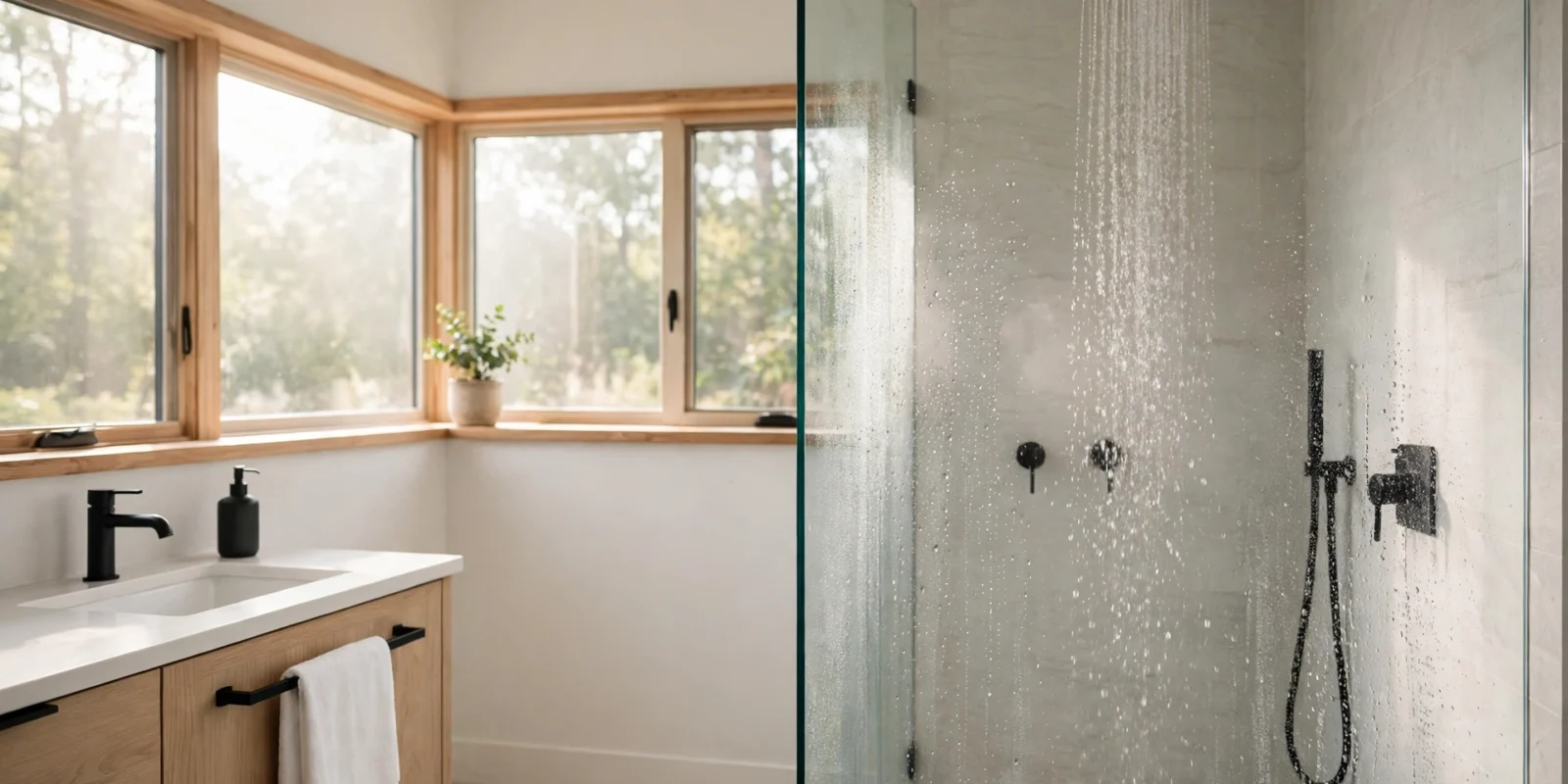
Every minute in the shower uses roughly a bucket of water, as the New South Wales Government puts it in its guide to saving water at home, which recommends keeping showers to four minutes or less. The average showerhead flows at about 2 to 2.5 gallons a minute, so an eight-minute shower uses 16 to 20 gallons. Cutting just two minutes off a daily shower saves around five gallons a day, or more than 1,800 gallons a year for one person.
The practical trick is not willpower but a cue: a waterproof shower timer, a short playlist, or simply turning the water off while you shampoo. The goal is noticing how much running-water time is spent doing nothing at all.
Try the navy shower
If you want the single biggest shower saving available, learn the navy shower. The technique comes from naval ships, where fresh water was scarce: wet yourself for about 30 seconds, turn the water off while you soap and shampoo, then turn it back on for a minute or less to rinse. As the Navy shower method is usually described, the total running time can be under two minutes. A ten-minute shower can use as much as 230 litres (60 gallons), while a navy shower usually takes as little as 11 litres (3 gallons).
That sounds spartan, and on a cold morning it can feel like it. In practice, most people adapt within a week, especially with a showerhead that has a pause button or a shut-off valve at the handle. You do not need to navy-shower every day: using it on weekdays and taking a longer shower at the weekend still saves thousands of gallons a year across a household.
Fix the toilet’s thirst
The toilet is typically the largest single source of indoor water use, accounting for nearly 30 percent of it, according to the EPA. Older toilets can use 3.5 gallons or more per flush, while a modern WaterSense-labelled model uses 1.28 gallons. The EPA estimates that replacing all old toilets in a home with WaterSense-labelled models can save the average family 13,000 gallons of water and $130 in water costs per year.
If a new toilet is not on the cards, two free habits help right away. Use the half-flush button if you have a dual-flush cistern — it exists for a reason, and many households ignore it out of habit. And never use the toilet as a bin: flushing tissues or wipes wastes a full flush on rubbish that belongs in the bin, and wipes in particular can cause expensive blockages.
Small tap habits that add up
Turning off the tap while brushing your teeth can save 8 gallons of water a day, according to the EPA — nearly 5,700 gallons a year when combined with turning it off while shaving. Wet the brush, turn the tap off, brush, then rinse briefly. The same applies to washing your face and shaving: fill the basin, or use a cup for rinsing, rather than letting the tap run.
Save Water in the Kitchen and Laundry
The kitchen uses less water than the bathroom, but the waste here is almost entirely habit — water running while nobody is using it. That makes it some of the easiest water to save in the whole house.
Only run full loads
Both the dishwasher and the washing machine use roughly the same amount of water whether they are full or half empty. Running the dishwasher only when it is full can save the average family nearly 320 gallons of water a year, according to the EPA, by eliminating roughly one load a week. The same logic applies to laundry: wait for a full load, and wear clothes more than once when they are not dirty.
Dishwasher or hand washing?
This is one of the most common questions, and the answer surprises most people: a modern dishwasher, run full, usually uses less water than washing the same dishes by hand under a running tap. Letting the tap run for five minutes while washing dishes can waste 10 gallons of water, according to the EPA. Hand washing in a plugged sink — one basin of soapy water, one of rinse water — can come close, but the running-tap method loses badly.
Stop defrosting and rinsing under running water
Thaw frozen food in the fridge overnight or in the microwave instead of under a running tap — the NSW Government lists this among its first kitchen tips. Rinse fruit and vegetables in a bowl or a plugged sink rather than under the tap, and keep the rinse water: it is perfectly good for watering plants. The same goes for the water you run while waiting for the tap to get hot — catch it in a jug and use it for the kettle, the garden, or the pets’ bowls.
Laundry: cold, full, and less often
Washing in cold water saves the energy used to heat it — water heating is typically the second-largest energy expense in a home after space heating — so the two savings travel together. For more on that overlap, see our guide on how to save energy at home. Modern detergents are designed to work in cold water, and most everyday loads come out just as clean.
Save Water in the Garden and Outdoors
For many households, the garden is where the largest savings of all are hiding — and also where the most water is wasted without anyone noticing. Outdoor use accounts for more than 30 percent of household water on average, and as much as 50 percent of outdoor water is lost to wind, evaporation and runoff from inefficient watering, according to the EPA.
Water at the right time, in the right place
Water early in the morning or in the evening, when it is cooler, so less evaporates before it reaches the roots. The NSW Government recommends before 10am or after 4pm. Water the roots, not the leaves: a watering can or a soaker hose puts water where plants can use it, while a sprinkler on a windy day mostly waters the air and the pavement.
How often matters as much as when. Frequent light watering encourages shallow roots that need constant topping up, while longer, less frequent watering encourages roots to grow deeper. Push a finger into the soil: if it is moist below the surface, the garden does not need water yet.
Mulch, mulch, mulch
A layer of mulch — bark chips, straw, compost or wood chippings — over garden beds keeps moisture in the soil, suppresses weeds that compete for water, and slowly improves the soil itself. The NSW Government recommends mulching garden beds to prevent evaporation and reduce weeds, and it is one of the cheapest garden investments there is. It also pairs naturally with composting; our guide on how to start composting at home shows how kitchen scraps become the soil improver that helps the garden hold water.
Choose plants that suit your climate
Native and drought-tolerant plants need far less supplementary watering once established than thirsty imports. A lawn is the thirstiest feature in most gardens — if you love a lawn, keep the grass longer in summer so it shades its own roots, and leave clippings on the lawn as a light mulch. If you are replanting, consider reducing the lawn area in favour of beds or native planting.
Rain barrels and smarter cleaning
A rain barrel or water butt connected to a downpipe captures free rainwater for the garden — plants generally prefer it to treated tap water, and it costs nothing after the initial purchase. Sweep driveways and patios with a broom instead of hosing them down, and wash the car on the lawn with a bucket rather than a running hose.
Upgrades That Pay for Themselves
Habits are free, but a few modest purchases can lock the savings in permanently — and several pay for themselves within a year.
Low-flow showerheads and tap aerators
Replacing a showerhead with a WaterSense-labelled model can save the average family more than 2,700 gallons of water a year, and reduce water and electricity costs by around $70, according to the EPA. WaterSense-labelled products are certified to use at least 20 percent less water than standard models while performing as well or better. They are inexpensive, fit in minutes, and are one of the best-value upgrades in the house.
Tap aerators are even cheaper — often just a few pounds or dollars each — and screw onto the end of a tap to mix air into the flow, cutting water use noticeably without any loss of pressure. They are ideal for renters, since they can be removed again when you leave. In Australia and New Zealand, look for the WELS star rating on taps, showerheads and toilets: more stars means more water-efficient, and the label shows the actual flow rate so you can compare models properly.
Dual-flush toilets and efficient appliances
When the washing machine or dishwasher reaches the end of its life, choosing a water-efficient replacement matters: modern efficient machines use far less water per load than models from a decade or two ago. Check the water rating as well as the energy rating — in the US, look for the WaterSense or ENERGY STAR labels; in Australia and New Zealand, the WELS rating; in the UK, the Waterwise or manufacturer efficiency figures.
Smart irrigation, done properly
If you have an automatic irrigation system, a WaterSense-labelled irrigation controller can reduce irrigation water use by up to 30 percent and save an average home up to 15,000 gallons a year, according to the EPA. The catch is maintenance: a system that is not properly maintained and operated can waste up to 25,000 gallons a year. Check it each spring for broken heads and sprinklers watering the pavement, and fit a rain sensor if you do not have one.
Reuse Water Safely at Home
Not all household water needs to be drinking quality. Water that has already done one job can often do a second, and reusing it is one of the most satisfying ways to save water at home — because it turns waste into something visibly useful.
Greywater, the simple version
Greywater is the wastewater from your shower, bath, basins and washing machine — everything except toilet water. The NSW Government notes that greywater can be used in the garden, but that it is important to do so safely. The simple, no-plumbing version is a bucket: collect the water while the shower warms up, keep the rinse water from washing vegetables, and pour cooled cooking water on the garden. Use it on ornamental plants and lawns rather than on vegetables you will eat raw, and avoid water containing bleach or harsh chemicals. Never store greywater — use it within a day, because it goes stale quickly and can smell.
Rainwater harvesting
A rain barrel on a downpipe is the easiest form of rainwater harvesting, and a full-sized rainwater tank is the serious version. The NSW Government suggests considering a rainwater tank as a longer-term step, and checking local council rules first — some areas require permits. Captured rainwater is ideal for the garden, and in some homes it is also used for flushing toilets or washing clothes, though that needs proper plumbing and, in many places, approval.
What not to reuse
Be careful with two things. First, water from the kitchen sink that has touched raw meat, or water containing cleaning chemicals, should go down the drain, not on the garden. Second, rules differ by country and by local council — some places restrict greywater systems, so check your local rules before installing anything permanent. The bucket method, using plain rinse water on ornamental plants, is uncontroversial almost everywhere.
What Recent Research Shows
The EPA’s WaterSense statistics page, last updated in March 2026, restates the core figures that have held steady for years: the average family can save 13,000 gallons a year by replacing old toilets, more than 2,700 gallons by replacing showerheads, and around 10 percent of its water bill by fixing easily corrected leaks. What has changed is the context around them. In 2014, the US Government Accountability Office reported that 40 out of 50 state water managers expected water shortages in some portion of their states over the following decade. Droughts, the EPA notes, now happen somewhere in the country every year, and water suppliers increasingly treat efficiency as an alternative to expensive new supply projects. One honest caveat: national averages are not personal predictions — your savings depend on your household size, climate, fixtures, and how much of your use is outdoors.
Common Mistakes to Avoid
1. Ignoring a small leak because it looks harmless
A drip or a faintly running toilet feels like nothing. It is the most expensive nothing in the house — thousands of gallons a year, every year, until it is fixed. Check for leaks before buying any water-saving gadget.
2. Watering the garden at midday
Watering under a hot sun loses much of the water to evaporation before it reaches the roots. Water before 10am or after 4pm, and water the soil, not the leaves.
3. Running half-empty machines
A half-full dishwasher or washing machine uses nearly as much water as a full one. Wait for a full load, and use the eco setting when it is genuinely needed.
4. Over-watering the lawn
Most lawns need far less water than their owners think, and frequent shallow watering creates shallow roots that need even more water. Water deeply and less often, and check the soil before watering at all.
5. Fitting a low-flow showerhead but keeping long showers
A low-flow head saves about 20 percent per minute — but if the shorter flow tempts you into a longer shower, the saving evaporates. Pair the fitting with a timer or a target time.
6. Using the toilet as a bin
Every flush for a tissue, a wipe or a cotton bud wastes a full cistern of clean water and risks a blockage. Keep a small bin beside the toilet instead.
7. Storing greywater
Greywater goes stale within a day and can smell and harbour bacteria. Use it the same day, on ornamental plants, and never store it in a tank without a proper system.
Final Recommendations
- Check for leaks this week. Do the food-colouring test on every toilet, check the meter with everything off, and fix what you find. It is the highest-return job in this guide.
- Shorten showers to five minutes or less, and try the navy shower at least on weekdays. A shower timer makes this easy to keep.
- Fit a low-flow showerhead and tap aerators. Both are cheap, renter-friendly, and pay for themselves quickly.
- Turn off the tap while brushing, shaving and washing up, and rinse vegetables in a bowl you can reuse on the garden.
- Run the dishwasher and washing machine only when full, and wash clothes in cold water where the detergent allows.
- Use the half-flush button every time, and never flush rubbish down the toilet.
- Water the garden early or late, at the roots, and only when the soil is dry. Mulch your beds and choose plants that suit your climate.
- Collect rainwater with a barrel on a downpipe, and reuse shower warm-up water on the garden.
- Read your water meter monthly and compare with previous months — a sudden jump is the earliest warning of a leak.
- When appliances and toilets reach replacement age, choose water-efficient models — WaterSense in the US, WELS in Australia and New Zealand — and check the water rating alongside the energy rating.
This content is for educational purposes only and does not replace professional advice. Always consult a qualified professional before making plumbing or water-system changes to your home.
Conclusion
Saving water at home is not about deprivation or keeping score of every cup. It is about noticing where the water goes and making sure each litre is used on purpose — a shower long enough to enjoy but not long enough to waste, a garden watered when the plants can actually drink, a toilet that flushes once and stays quiet. It sits naturally alongside our guides on recycling at home and reducing food waste.
The numbers make the case on their own. The average family uses more than 300 gallons a day, leaks waste around 9,400 gallons a year, and a handful of cheap fixes — a flapper valve, a showerhead, a few aerators — can cut use by a fifth or more. Most of the savings cost nothing, and the ones that do cost something pay for themselves. Start small, and start this week. Fix one leak. Time one shower. Put a bucket in it. Check the meter next month and see what changed.
Frequently Asked Questions
The US EPA's WaterSense programme puts the average American family at more than 300 gallons (about 1,140 litres) of water a day at home, with roughly 70 percent used indoors — about 82 gallons per person. Your own use will vary with household size, climate and garden size. The best figure to track is your own, from your water bill or meter.
Start with leaks: fixing them can save about 10 percent of your bill, according to the EPA. Then shorten showers, turn off the tap while brushing your teeth, run the dishwasher and washing machine only when full, and fit a low-flow showerhead and tap aerators. A WaterSense showerhead alone saves the average family more than 2,700 gallons a year, and replacing old toilets can save 13,000 gallons.
Put a few drops of food colouring in the toilet cistern and wait 15 minutes without flushing — if colour appears in the bowl, the seal leaks. For the whole house, turn off every tap and appliance, then watch the water meter for 15 minutes: if it moves, water is escaping somewhere. Also look for damp patches or a musty smell under sinks, and watch for unexplained jumps in your water bill.
A navy shower means wetting yourself for about 30 seconds, turning the water off while you soap and shampoo, then turning it back on for a minute or less to rinse. The technique comes from naval ships, where fresh water was scarce. A ten-minute shower can use as much as 230 litres (60 gallons), while a navy shower usually takes as little as 11 litres (3 gallons).
Usually, yes — if you run it full. A modern dishwasher uses less water per load than washing the same dishes by hand under a running tap, and letting the tap run for five minutes while washing dishes can waste 10 gallons, according to the EPA. Hand washing in a plugged sink with one basin of soapy water and one of rinse water can come close, but the running-tap method loses badly.
Water early in the morning or in the evening, before 10am or after 4pm, so less evaporates. Water the roots, not the leaves, using a watering can or soaker hose. Mulch your beds to hold moisture in the soil, choose native or drought-tolerant plants, and water deeply but less often. A rain barrel on a downpipe gives you free water for the garden.
A tap dripping once a second can waste thousands of gallons over a year, and a running toilet can waste around 200 gallons a day. The EPA estimates the average family loses about 9,400 gallons a year to household leaks — the amount needed to wash more than 300 loads of laundry. Most drips come from a worn washer or cartridge, both cheap parts.
References
- US EPA WaterSense — How We Use Water — US Environmental Protection Agency — https://www.epa.gov/watersense/how-we-use-water
- US EPA WaterSense — Statistics and Facts — US Environmental Protection Agency — Last updated March 11, 2026 — https://www.epa.gov/watersense/statistics-and-facts
- NSW Government — How to save water at home — New South Wales Government — Published 2026-11-16 — https://www.nsw.gov.au/environment-land-and-water/water-use-and-monitoring/reduce-water-use-at-home
- Wikipedia — Navy shower — https://en.wikipedia.org/wiki/Navy_shower