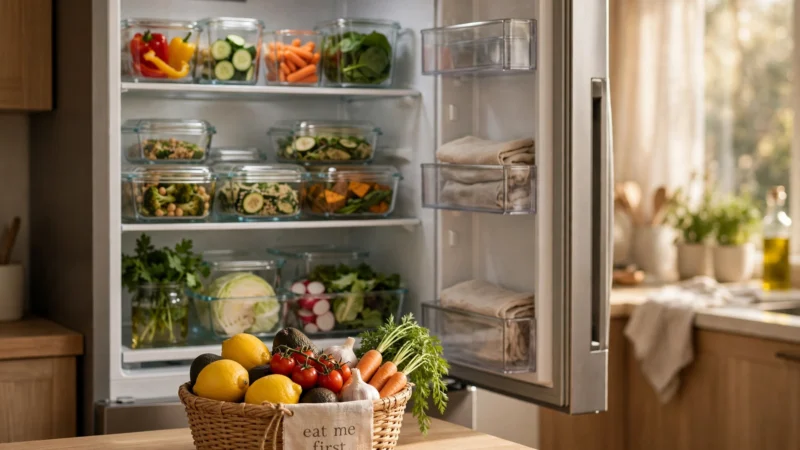

Your energy bill arrives, and it is higher than you expected. Again. You have not bought anything new, you have not changed your routine — at least, not that you can see — and yet the number keeps climbing. Learning how to save energy at home is less about one big purchase and more about finding the handful of habits and fixes that quietly drain power every single day.
Written by Md Masud Rana based on published expert sources. This article has not been professionally reviewed. See our sources below.
This guide starts with the biggest energy users in a typical home, then works room by room through changes that cost nothing, changes that cost very little, and upgrades worth considering later. It is written for homeowners and renters in the United States, the United Kingdom, Canada, Australia and New Zealand, and flags where advice differs by climate or heating system.
Many households describe the same pattern: the bill creeps up in winter or summer, nobody is quite sure why, and the first response is to blame a phone charger or a hallway light. Those small things add up, but they are rarely the whole story — heating, cooling and hot water are where the biggest savings live.
Quick Answer Box
To save energy at home, start with heating and cooling, which use the most energy in most homes: set your thermostat a degree or two closer to the outdoor temperature, heat or cool only the rooms you use, and seal obvious draughts. Then cut hot-water waste with shorter showers and a sensible water-heater setting, switch off standby power with a power strip, swap remaining old bulbs for LEDs, wash laundry at 30°C and air-dry when you can. These no-cost and low-cost steps together can trim a noticeable share of a typical bill without making your home uncomfortable.
Contents
- Where Does Your Home Energy Actually Go?
- How Do You Cut Heating and Cooling Costs Without Feeling Cold?
- What Is the Cheapest Way to Save on Hot Water?
- How Do You Stop Standby Power Draining Money Overnight?
- How Do You Save Energy in the Kitchen and Laundry?
- What Low-Cost Upgrades Pay Back Fastest?
- What Should Renters Do Differently — and What About Bigger Investments?
- What Recent Research Shows
- Common Mistakes That Waste Energy
- Final Recommendations
- Frequently Asked Questions
Where Does Your Home Energy Actually Go?
If you want to save energy at home, start where the energy actually goes, not where it is easiest to see. A light left on in an empty room is annoying, but it is not usually the reason a bill jumps. Heating and cooling dominate most household energy use, and hot water comes next. Everything else — lighting, cooking, laundry, electronics — matters, but it sits in their shadow.
The US Department of Energy notes that heating can account for almost half of the average family’s winter energy bill, and that water heating can account for 14% to 25% of the energy consumed in a home, according to its Home Energy Checklist. That split explains why a household can swap every bulb for an LED and still see a high bill: the lights were never the main problem.
Heating and cooling come first
Two homes with similar appliances can therefore have very different bills. Insulation, air sealing, window quality, thermostat settings and how many hours a day the system runs all matter more than the television in the living room. If your bill suddenly spikes, weather is the first suspect, followed by a system running longer than usual.
Hot water is the quiet second bill
Showers, baths, washing machines and dishwashers all draw on hot water, and keeping a tank of water hot around the clock costs energy even when nobody is using it. Shorter showers, lower wash temperatures and a sensible water-heater setting therefore punch above their weight. They are also among the easiest changes to make, because they need no tools and no permission from a landlord.
Appliances, lighting and standby fill the rest
Refrigerators run around the clock, tumble dryers use intense heat, and televisions, consoles, chargers and routers draw small amounts of power all day and night. Together they form a meaningful share of the bill — and they respond to simple habits: full loads, cold washes, lights off in empty rooms, and a power strip switched off at night. See also our guide to reducing plastic waste at home.
How Do You Cut Heating and Cooling Costs Without Feeling Cold?
The fear that stops most people is comfort. Nobody wants a cold house in January or a sticky one in July, and nobody should have to choose between a reasonable bill and a livable home. The good news is that the most effective heating and cooling changes are about timing and control, not endurance.
The single most useful habit is to heat or cool only when, and where, you need it. A programmable thermostat — or a simple timer — lets the temperature drop overnight and while you are out, then restore comfort before you wake or return. The Department of Energy notes that programmable thermostats can save up to $150 a year when used properly, in its summer energy-saving guide. National Grid similarly reports savings of up to $180 a year, in its energy-saving tips. Treat those figures as illustrations, not promises.
Turn the thermostat down by just one degree
A small change, kept all winter, beats a dramatic change abandoned after a week. Islington Council’s no-cost tips note that turning a thermostat down from 22°C to 21°C can save £90 a year, and stress that the temperature should not go below 18°C where elderly people, ill people or small children live, in its no-cost energy saving tips. If you feel chilly, warm yourself first — an extra layer, a blanket, a hot drink — before turning the whole house up.
For cooling, the same logic runs in reverse. The Department of Energy notes that running air conditioning at 78°F (about 26°C) instead of 72°F (about 22°C) can save between 6% and 18% on a cooling bill, in its summer energy-saving guide. A ceiling fan helps: the same guide notes that a fan lets you raise the thermostat by about 4°F with no loss of comfort — but fans cool people, not rooms, so switch them off when you leave.
Heat the rooms you use, not the whole house
Close doors to rooms you are not using, turn radiator valves down in those rooms, and keep furniture away from radiators and vents. National Grid warns that blocked vents require up to 25% more energy to distribute air, in its energy-saving tips.
Use the sun as free heating in winter: open curtains on sunny windows during the day and close them at dusk to hold the warmth in, as the Department of Energy’s Home Energy Checklist suggests. In summer, do the opposite — shades, blinds and curtains closed against the afternoon sun, windows opened in the cool of the evening where it is safe to do so. This costs nothing and it is one of those habits that feels obvious once you start doing it deliberately.
Keep the system itself in good shape
A clogged filter forces a heating or cooling system to work harder for the same result. National Grid advises changing filters monthly, in its energy-saving tips. The Department of Energy’s checklist likewise advises cleaning or replacing filters and having a furnace or heat pump serviced each year, in its Home Energy Checklist.
What Is the Cheapest Way to Save on Hot Water?
Hot water is the second-biggest energy user in many homes, and it responds to the simplest changes of all. You do not need new equipment to use less of it — you need slightly different habits, and one sensible setting.
Start with the water-heater temperature. The Department of Energy advises turning a water heater down to the warm setting of 120°F (about 49°C), which saves energy and reduces scalding risk, in its Home Energy Checklist. Do not turn it down so far that stored water sits lukewarm for long periods, and ask a qualified professional if your household needs a different setting.
Shorter showers beat almost every gadget
Islington Council notes that keeping showers to four minutes can save up to £95 a year on water and energy bills, in its no-cost energy saving tips. A shower timer, or a favourite four-minute song, makes the habit stick far better than willpower alone. A low-flow showerhead is the natural next step: National Grid recommends low-flow showerheads to conserve water and the energy used to heat it, in its energy-saving tips.
Fix drips, and only heat what you use
A dripping tap wastes water around the clock, and hot drips waste energy too. Islington Council notes that a dripping tap can waste more than 5,300 litres of water per year, in its no-cost energy saving tips. The same “only what you need” rule applies to the kettle: Islington Council puts the saving from boiling only the water you need at up to £11 a year.
How Do You Stop Standby Power Draining Money Overnight?
Standby power — sometimes called phantom load or vampire power — is the electricity devices draw when they look switched off but are still plugged in: televisions waiting for a remote, consoles on instant-on, chargers, printers, set-top boxes, speakers and routers. Each one draws very little. Added together, across a whole home, they stop being trivial.
Duke Energy Florida notes that a typical home can have upwards of 40 such devices, making up roughly 5% to 10% of total energy use, and recommends unplugging devices when not in use and using smart power strips, in its tips for warding off energy vampires. Islington Council similarly notes that switching off standby can save £45 a year, in its no-cost energy saving tips.
The power-strip trick
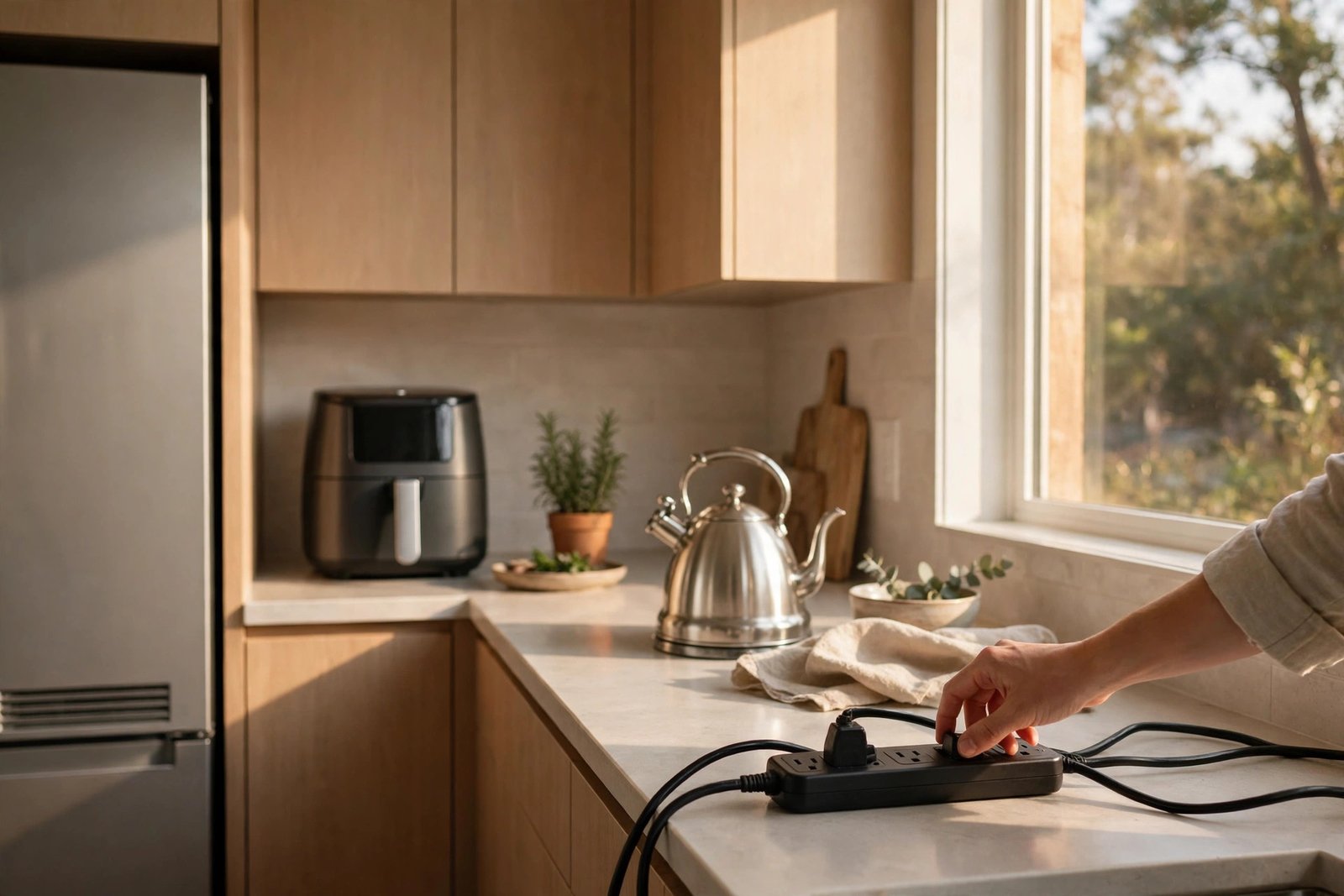
The practical fix is to group devices. Put the television, console, speakers and streaming box on one switched power strip, and the computer, monitor and printer on another. One switch at night cuts the whole group. The Department of Energy’s checklist advises unplugging equipment that drains energy when not in use, in its Home Energy Checklist.
Keep recording boxes, medical devices and routers you rely on plugged in. For everything else, “off at the wall” is the default, and a remote-controlled socket solves hard-to-reach sockets behind furniture.
Use the sleep settings you already have
Computers, laptops and televisions all have energy-saving settings built in. The Department of Energy’s checklist advises turning a monitor off when not in use for more than 20 minutes, in its Home Energy Checklist. Duke Energy Florida likewise recommends enabling sleep mode, in its tips for warding off energy vampires.
How Do You Save Energy in the Kitchen and Laundry?
The kitchen and the laundry room are where daily habits meet big appliances. Neither room needs a renovation to become more efficient. It needs full loads, lower temperatures, lids on pans, and a little patience with drying.
Cook smarter, not longer
Match pan size to the hob or burner, put lids on pans, and avoid opening the oven door to peek — every peek drops the temperature and makes the oven work to recover it. For small meals, a microwave, toaster oven or countertop grill uses less energy than heating a full oven, as the Department of Energy notes in its summer energy-saving guide. Batch cooking helps too — see our guide to reducing food waste at home.
Keep the refrigerator working easily: National Grid advises setting a refrigerator to 38°F (about 3°C), minimising how often the door is opened, and not overcrowding it, in its energy-saving tips. Let hot food cool before refrigerating it, and check door seals occasionally — a seal that no longer grips lets cold air escape all day.
Wash cold, wash full, dry with air
Washing at 30°C is the single easiest laundry change. Islington Council notes that most modern detergents work just as effectively at 30°C, and that lower-temperature washing helps clothes last longer, in its no-cost energy saving tips.
Run full loads in both the washing machine and the dishwasher — a half-empty machine uses nearly as much energy and water as a full one. National Grid advises running only full loads and cleaning the lint filter after each use, in its energy-saving tips. Then air-dry where you can: Islington Council notes that air drying instead of using a tumble dryer can save up to £50 a year.
What Low-Cost Upgrades Pay Back Fastest?
Once the no-cost habits are in place, a few small purchases pay for themselves quickly. The order below follows payback speed, not excitement: the dullest upgrade on this list is usually the best value.
1. LED bulbs, starting with the lights you use most. National Grid notes that ENERGY STAR certified lights use up to 90% less electricity than older incandescent bulbs, in its energy-saving tips. Replace the kitchen, living room and hallway lights first; the spare-room bulb can wait. Our guide to smart lighting for seniors also covers lighting controls and timers.
2. Draught-proofing. Self-adhesive strips around doors and windows and a brush strip under an external door are cheap and immediately noticeable on a windy day. National Grid notes that adequate insulation can save up to 15% on heating and cooling costs, in its energy-saving tips. Do not seal ventilation that a home needs to stay dry — extractor fans and air bricks exist for a reason, and blocking them invites damp and mould.
3. A switched or smart power strip. One strip for the entertainment corner and one for the home-office desk turns standby control into a single switch. This is a small purchase with a daily payoff, and it is far more reliable than remembering to unplug six devices one by one.
4. A low-flow showerhead and faucet aerators. Both reduce hot-water use without changing how a shower feels, and both are usually simple to fit. The Department of Energy’s checklist lists faucet aerators among the first low-cost purchases to make, in its Home Energy Checklist.
5. A programmable or smart thermostat — if your heating system supports one. This is the most expensive item on this list, but it is also the one that automates everything in the heating section above. Check compatibility with your boiler or heat pump before buying, and if you rent, ask your landlord: many are happy to approve a thermostat upgrade that also protects their property from damp.
When you do replace an appliance, look for your country’s efficiency label — ENERGY STAR in the United States and Canada, the A–G label in the United Kingdom, and the star-rating label in Australia and New Zealand. The Department of Energy notes that ENERGY STAR labelled products can cut energy bills by up to 30%, in its Home Energy Checklist.
What Should Renters Do Differently — and What About Bigger Investments?
Renters can do almost everything in this guide except change the building itself. Thermostat habits, standby control, LEDs, cold washes, air drying, shorter showers, kettle discipline and draught strips are all available without a landlord’s permission in most tenancies — and draught strips and showerheads are usually reversible, which is the test most landlords apply. Keep receipts and the original fittings if you swap anything, so you can restore the home when you leave.
What renters usually cannot do is add insulation, replace windows, or change a heating system. If your home stays cold despite reasonable heating, report draughts, broken seals or a faulty thermostat to your landlord in writing. Portable heaters are an expensive short-term fix, not a strategy.
Bigger investments, in sensible order
For homeowners, bigger jobs generally pay back in this order: insulation and air sealing first, then heating-system efficiency and controls, then windows, then appliances as they fail. Replacing a working appliance purely to save energy rarely pays back quickly; replacing a failing one with an efficient model almost always does.
Before any large spend, consider an energy audit — many utilities offer them free or at low cost — to learn which job matters most for your specific house. Solar panels, heat pumps and battery storage deserve their own guides and are deliberately not covered in depth here.
One wider connection is worth making. Saving energy is also an environmental choice, and it sits alongside the other low-waste habits that make a home lighter on resources. If this guide has got you thinking about the household as a whole, our eco living basics guide and our guide to starting composting at home cover the next steps without asking you to change everything at once.
What Recent Research Shows
The guidance above rests on long-standing advice from government energy bodies, but two points in recent updates are worth highlighting. First, the Department of Energy updated its summer energy-saving guide in May 2026, keeping its core figures — the 6% to 18% cooling-bill saving from running air conditioning at 78°F rather than 72°F, the roughly 20% of conditioned air lost through ducts, and the value of programmable thermostats — while refreshing the surrounding advice, in its summer energy-saving guide. The stability of those figures across updates is itself informative: the big levers have not changed, even as appliances and controls have improved.
Common Mistakes That Waste Energy
1. Blaming the light bulbs while ignoring the heating. LEDs help, but heating and hot water dominate the bill. Fix the thermostat and the draughts first, then enjoy the bulb swap as a bonus.
2. Heating an empty house all day. Leaving heating on low around the clock feels thrifty and is usually not. Heat when you need it, with a timer or programmable thermostat, and let the house cool while you are out.
3. Blocking vents and radiators with furniture. A sofa against a radiator or a cabinet over a vent forces the system to work harder for less comfort. Leave air space around every heat source and vent.
4. Leaving everything on standby, forever. One device on standby is nothing. Forty of them, all year, is a real slice of the bill. Group devices on switched strips and make “off at the wall” the nightly default.
5. Washing small loads in hot water, then tumble-drying everything. Half loads, hot washes and routine tumble drying combine the three most wasteful laundry habits at once. Wash full, wash at 30°C, and air-dry when you can.
6. Opening the oven door to check dinner, again and again. Each peek drops the oven temperature and extends cooking time. Use the oven light and the timer, and trust them.
7. Buying an efficient gadget before fixing a free habit. A smart thermostat in a draughty house with the heating on all day saves less than a draught strip and a timer setting. Free habits first, purchases second.
Final Recommendations
1. Set your thermostat once, properly. A degree lower in winter, a few degrees higher in summer, and a schedule that matches when you are actually home.
2. Heat and cool only the rooms you use. Close doors, turn down valves in empty rooms, and keep vents and radiators clear.
3. Cut standby power tonight. Put entertainment and office devices on switched power strips and switch them off when you finish for the day.
4. Swap the bulbs you use most for LEDs. Kitchen, living room and hallway first; spare rooms later.
5. Wash at 30°C, wash full loads, and air-dry when you can. This one habit change costs nothing and repeats all year.
6. Shorten showers and fit a low-flow showerhead. Four minutes is a good target, and a low-flow head makes it feel no different.
7. Seal the obvious draughts. Doors, windows and letterboxes first; leave ventilation that protects against damp untouched.
8. Set the water heater to 120°F (about 49°C). Check your manufacturer’s guidance and ask a professional if your system or household needs a different setting.
9. Service the heating and cooling system yearly and change filters regularly. A struggling system costs money every day it runs.
10. Before any big spend, get an energy audit. It tells you which improvement matters most for your house, not for houses in general.
This content is for educational purposes only and does not replace professional electrical or heating advice. Always consult a qualified professional before making changes to your heating, electrical or hot-water systems, and before acting on any safety-related guidance in this article.
Frequently Asked Questions
Heating and cooling are usually the largest share of a home energy bill, followed by water heating. A sudden rise is most often caused by colder or hotter weather making your system run longer, a clogged filter or blocked vents, a thermostat set much warmer or cooler than usual, or a tariff increase. Compare your kilowatt-hour use, not just the money amount, across months: if usage jumped, look at heating and cooling first; if usage is steady but the bill rose, check your supplier's rates.
Heating and cooling systems use the most energy in most homes, with water heating usually second. Refrigerators, clothes dryers, washing machines and cooking appliances follow, because they either run around the clock or use intense heat. Lighting and small electronics matter, but they are a smaller share than most people expect — which is why thermostat habits and draughts usually save more than swapping bulbs alone.
Turn the thermostat down by a degree in winter and up a few degrees in summer, heat only the rooms you use, and use a timer so you are not heating an empty home. Switch devices fully off at the wall instead of leaving them on standby, wash laundry at 30°C in full loads, air-dry clothes, boil only the water you need, and take shorter showers. Open curtains for free solar heat on winter days and close them at dusk.
Generally no. For most homes it is cheaper to heat only when you need it, using a timer or programmable thermostat, than to maintain a temperature in an empty home all day. A heating system uses energy while it is actively replacing heat lost through walls, windows and draughts, so hours of maintaining temperature in an empty house cost more than reheating before you return. Keep a minimum temperature that protects against damp and frozen pipes, especially in cold weather.
Yes, though one device alone saves very little. A typical home can hold upwards of 40 devices drawing standby power, together making up roughly 5% to 10% of total energy use, according to Duke Energy Florida. The practical fix is to group televisions, consoles, speakers and office equipment on switched power strips and switch the whole group off at night. Keep recording boxes, medical devices and routers you rely on plugged in.
For most everyday laundry, yes. Most modern detergents are designed to clean effectively at 30°C, and most of a wash cycle's energy goes into heating the water, so a cooler wash removes the biggest cost. Lower temperatures also help clothes keep their colour and shape for longer. Keep hotter washes for bedding, towels and heavily soiled items where hygiene matters, and follow the care labels on the garments themselves.
Yes. ENERGY STAR certified lights use up to 90% less electricity than older incandescent bulbs, according to National Grid, and LEDs last far longer, so you also buy replacements less often. Lighting is a modest share of most bills, so LEDs alone will not halve your energy costs — but they are one of the cheapest, simplest upgrades available, and the saving is greatest on the bulbs you use for several hours every day.
Start with habits and reversible changes: thermostat settings and timers, switching off standby power, LED bulbs, cold full-load washes, air drying, shorter showers and draught strips. Keep the original fittings so you can restore the home when you leave. For anything structural — insulation, windows, heating systems — report the problem to your landlord in writing, since a cold or draughty home is usually a property issue rather than something a tenant should fix alone.
Conclusion
Saving energy at home is not a single grand gesture. It is a dozen small decisions, repeated daily, that add up to a home that costs less to run and feels just as comfortable — often more so, because a draught-free room at 20°C feels better than a draughty one at 23°C.
Start this week with the free habits: set the thermostat schedule, switch off standby power at night, wash at 30°C, and take a four-minute shower tomorrow morning. Next, spend a little where it pays back fastest — LEDs, draught strips, a power strip for the television corner. Then, when an appliance fails, choose the efficient option and get an energy audit before any large spend.
Your bill will not fall overnight, and anyone promising that it will is selling something. But month by month, these habits change how your home uses energy, in every season, without asking you to live less comfortably. Start with the biggest user — your heating — and let the rest follow.
Next, read our guide to reducing food waste at home for the kitchen habits that pair with everything above.
References
- US Department of Energy — Home Energy Checklist — 2026 — https://www.energy.gov/cmei/femp/home-energy-checklist?nrg_redirect=152501
- US Department of Energy — Top 11 Things You Didn’t Know About Saving Energy at Home: Summer Edition — updated 2026 — https://www.energy.gov/articles/top-11-things-you-didnt-know-about-saving-energy-home-summer-edition
- National Grid — Energy Saving Tips — https://www.nationalgrid.com/us/ma/electric/home/ways-to-save/energy-saving-tips
- Islington Council — No Cost Energy Saving Tips — https://www.islington.gov.uk/environment-and-energy/energy/energy-saving-guidance/no-cost-energy-saving-tips
- Duke Energy Florida — Tips for Warding Off Energy Vampires — https://news.duke-energy.com/releases/duke-energy-florida-shares-tips-for-warding-off-energy-vampires-saving-money