Written by Md Masud Rana based on published expert sources. This article has not been professionally reviewed. See our sources below. Last updated: October 2026.
Open your fridge right now and look at the back shelf. Chances are something is sitting there — half a bag of spinach gone slimy, a tub of leftovers nobody claimed, a yoghurt that’s been “a few days past” for a week. You are not alone in this, and you are not careless. But that quiet pile-up costs more than most people realise.
In the United States alone, wasted food costs each consumer an estimated $728 a year — $2,913 a year for a household of four, or $56 every single week, according to the US Environmental Protection Agency. And here is the part that stings: globally, households — not restaurants, not supermarkets — are responsible for the biggest share of food waste. The UN Environment Programme found that 60% of the world’s wasted food comes from homes like yours and mine.
The good news? That fact is what makes this fixable. You just need a handful of practical habits — better planning, smarter storage, and knowing what date labels really mean. Every tip below is backed by guidance from the EPA, the UK’s WRAP, FoodSafety.gov, or UN agencies, so you can check the sources yourself.
The Quick Answer
To reduce food waste at home: plan meals and shop with a list, store food at the right temperature (fridge at 5°C/41°F or below), treat “best before” as a quality guide but respect “use by” dates, freeze food before it spoils, eat oldest items first, and turn leftovers into new meals. Small habit changes — not dramatic lifestyle overhauls — are what cut household waste most reliably.
What’s in This Guide
- How Much Food Do Households Actually Waste?
- Why Does Food Get Wasted at Home?
- Plan Before You Shop: The Single Biggest Fix
- How Should You Store Food to Keep It Fresh Longer?
- Date Labels: What Do “Use By” and “Best Before” Really Mean?
- Making the Most of Leftovers — Safely
- Preserve It Before It Spoils: Freezing and Beyond
- What About the Scraps You Can’t Eat?
- What Recent Research Shows
- Common Mistakes That Cause Food Waste
- Final Recommendations
- Frequently Asked Questions
- References
How Much Food Do Households Actually Waste?
The numbers are sobering, and worth sitting with for a moment. UNEP’s Food Waste Index Report 2024 found that the world wasted 1.05 billion tonnes of food in 2022 — roughly a fifth of all food available to consumers. Households accounted for 631 million tonnes of that, or 60%. On average, every person on the planet wastes about 79 kilograms of food at home each year.
It is not only a rich-country problem, either. UNEP found that household waste levels differ by only about 7 kilograms per person per year between high-income and lower-middle-income countries. The fridge in a flat in London and a kitchen in Lagos are, statistically, not that far apart.
The Money Drain
Money is the argument that tends to land hardest. The EPA’s 2025 report put the average at $728 per consumer per year in the US — nearly double the older, oft-quoted $1,500 figure for a family of four, which was based on 2010 grocery prices. Wasting food wastes the labour, transport, packaging, and money behind it too.
In the UK, the picture is similar. WRAP, the UK’s food waste action body, reports that 60% of all UK food waste happens in homes — 6.4 million tonnes of it — and that self-reported waste has been creeping back up since the pandemic low.
The Climate Cost
Then there is the part nobody sees. Food loss and waste generate an estimated 8 to 10 percent of global greenhouse gas emissions — largely methane released as food rots in landfill. About 1.4 billion hectares of farmland, an area larger than Canada, is used to grow food nobody eats. Every wilted lettuce is, in a small way, wasted land, wasted water, and wasted fuel.
None of this is meant to make you feel guilty. It is meant to show the scale of the opportunity. Because the waste happens in our kitchens, the fix lives there too — and it starts with understanding why it happens in the first place.
Why Does Food Get Wasted at Home?
Most guides jump straight to tips. But tips don’t stick unless you know which of your habits is actually causing the waste. WRAP’s Household Food Management Survey — the UK’s largest annual study of home food waste, running since 2007 — identified the main drivers, and they will sound familiar.
Buying More Than You Can Eat
The single biggest driver is overbuying: struggling to judge and buy the right amount. WRAP found that “displaced meals” — planned meals that never happen because someone eats out, works late, or simply changes their mind — are a major culprit. The ingredients bought for Tuesday’s stir-fry sit in the fridge while the household orders takeaway, and by Friday they’re past saving.
Temptation plays a role too. Bulk deals and “buy one, get one free” offers feel like savings, but only if you actually use the extra. As one UK council puts it plainly, don’t get tempted by multi-buy deals unless you know you will definitely use the food — or can freeze it.
Confusion and Poor Visibility
The second cluster of causes is about not knowing what you have. Food buried at the back of the fridge. Leftovers nobody labelled. Date labels that read like warnings. WRAP found that 86% of UK adults agree food waste is an important national issue — yet only 63% say they’re actively trying to reduce their own. Awareness isn’t the gap. Systems are.
A common pattern: the weekly shop goes in, and the fresh produce bought with good intentions slowly wilts because there was no plan for when to eat it. Vegetables and fruit are consistently among the most-wasted foods in every country that measures this. They’re also the foods that need the most deliberate storage.
The Perception Problem
Here is an uncomfortable finding: nearly 8 in 10 people believe they waste less food than average — which is mathematically impossible. And 10% of UK adults now say they are outright comfortable wasting food, with another 17% ambivalent, according to WRAP. As cost-of-living pressures ease, concern about waste is slipping — and self-reported waste is climbing with it.
The fix isn’t willpower. It’s design: small systems that make the right thing the easy thing.
Plan Before You Shop: The Single Biggest Fix
If you change nothing else, change this. Food waste campaigners and UN agencies alike put planning first on every list, because overbuying is where most waste begins. A few minutes with a pen does more than any fancy storage gadget.
Check Before You Shop
Open the fridge, freezer, and cupboards before you write a single item on your list. It sounds obvious, yet it’s the step most people skip — and the reason so many kitchens hold three half-used jars of the same sauce. The Queensland Government’s food waste guidance lists this as step one: regularly check what you already have, then buy only what the plan needs.
Plan Meals Around Your Actual Week
A meal plan that ignores your real life will fail by Wednesday. Look at the calendar first: which nights are you actually home? Which nights are late ones, takeaway nights, or dinner-with-friends nights? Plan cooked meals only for the nights you’ll genuinely cook. Then build the shopping list from the plan, not the other way around.
One habit worth borrowing from the Queensland guidance: schedule a weekly “use-it-up” meal — a stir-fry, soup, frittata, or curry built entirely from whatever needs eating. It clears the fridge, it’s different every week, and it turns the scraps that usually get binned into dinner.
Buy the Right Amount
Portion planning is the unglamorous skill behind low-waste kitchens. Cook for the number of mouths actually at the table — Queensland’s guidance advises checking who is eating before you cook and encouraging smaller servings, with seconds available for those who want them. Rice and pasta are the classic offenders: a small measuring cup used once will recalibrate your eye permanently.
And when you shop, eat first. Shopping hungry is a reliable way to buy food your Wednesday self has no intention of cooking. The Sunshine Coast Council in Australia even lists “have a snack before going shopping” among its official tips — because it works.
How Should You Store Food to Keep It Fresh Longer?
A surprising amount of food waste is really a storage problem. The food was fine when you bought it; the fridge, the fruit bowl, or the bread bin just let it down. Get storage right and produce that used to last four days lasts eight.
Set the Right Temperature
Check your fridge setting. UN food waste guidance recommends keeping the fridge at 5°C (41°F) or below; the Queensland Government advises 1–5°C, noting most Australian fridges recommend around 3°C. In the US, FoodSafety.gov says 40°F (about 4.4°C) or below, with the freezer at 0°F (–18°C) or below. Many household fridges run warmer than their owners think — a cheap fridge thermometer removes the guesswork.
Keep Ethylene Producers Away from Sensitive Produce
Some fruits release ethylene gas as they ripen — bananas, apples, avocados, and tomatoes are the main culprits — and that gas speeds up ripening (then spoiling) in nearby produce. As UN guidance notes, bananas in particular accelerate the ripening of fruit stored near them. Keep ethylene producers separate from ethylene-sensitive items like leafy greens, berries, and herbs. It’s a tiny change that visibly extends the life of a salad bag.
Make the Oldest Food the Easiest to See
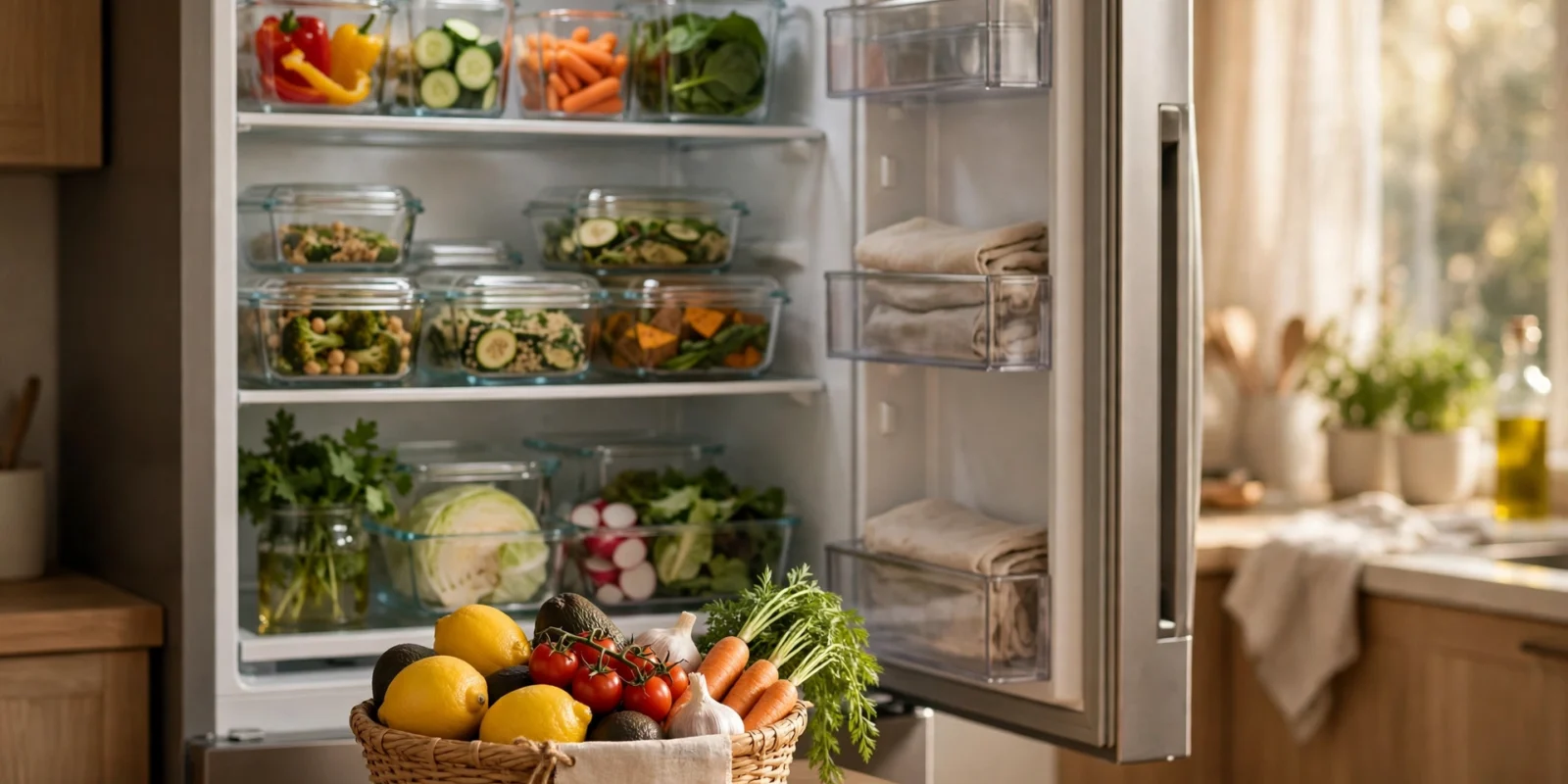
Food you can’t see is food you’ll forget. The “eat me first” box — a designated shelf or clear container at the front of the fridge for items that need using soon — is recommended by Queensland’s food waste programme and councils across the UK. Rotate stock like a shop does: new items go behind, older items move to the front. Clear containers help; opaque tubs are where leftovers go to die.
A few more storage habits that pay off: store leafy greens with a paper towel in an airtight container to absorb moisture; keep herbs upright in a glass of water like flowers; and don’t wash berries until you’re about to eat them — the extra moisture speeds up mould.
Date Labels: What Do “Use By” and “Best Before” Really Mean?
Date-label confusion is one of the most fixable causes of food waste. A significant share of perfectly edible food gets thrown away because a label was misunderstood. The distinction is simple once you know it — but it differs slightly by country, so read carefully.
| Label | What it means | Can you eat it after the date? |
|---|---|---|
| Use by | Safety. The food may be unsafe after this date, even if it looks and smells fine. | No — do not eat after the date. |
| Best before | Quality. The food may lose flavour or texture but is usually still safe. | Often yes — use your senses first. |
| Sell by / Display until | For shop staff, not for you. | Ignore it; follow use-by or best-before instead. |
Use By = Safety
“Use by” dates appear on perishable foods like meat, fish, dairy, and ready meals. The rule is strict for a reason: as Adur & Worthing Councils explain, food should not be eaten after the use-by date even if it looks or smells alright, because the bacteria that cause food poisoning are invisible, odourless, and tasteless. There is one legitimate escape route: most food can be frozen any time before its use-by date, which pauses the clock.
Best Before = Quality
“Best before” is about peak condition, not safety. A biscuit a week past its best-before date might be slightly less crisp; it is not dangerous. UN guidance confirms that food is often still safe after its best-before date — give it a look and a sniff, and trust your judgement. This is where enormous amounts of edible food are currently wasted for no reason.
One Country Difference Worth Knowing
In the United States, date labels work a little differently: except for infant formula, they are generally not federally regulated for safety, and manufacturers use a mix of “best if used by,” “sell by,” and similar phrases that mostly indicate quality. The practical upshot is the same — treat quality dates as guidance and safety dates with respect — but if you’re in the US, the label wording alone doesn’t tell you the item is unsafe. When in doubt, the sniff-and-look test plus the food safety rules below are your fallback.
Making the Most of Leftovers — Safely
Leftovers are the great untapped resource of the home kitchen. Tonight’s roast becomes tomorrow’s sandwiches; a pot of rice becomes fried rice; a tray of roast vegetables becomes soup. But leftovers only save food if they’re stored and reheated safely — and the rules differ by country, which trips people up.
Cool It Fast, Store It Right
Get leftovers into the fridge quickly — ideally within 90 minutes of cooking, according to UK council guidance, or within two hours per FoodSafety.gov. Divide big pots of soup or stew into smaller, shallow containers so they cool evenly. It’s fine to put hot food straight into a modern fridge.
Know Your Country’s Fridge Window
This is the detail most guides gloss over. In the United States, FoodSafety.gov says refrigerated leftovers should be used within 3 to 4 days. In the UK, council guidance is stricter: use refrigerated leftovers within two days. The difference comes down to how each country’s food safety bodies set their margins — both are erring on the side of caution. If you’re unsure which applies to you, follow your own country’s guidance, and when in doubt, freeze it: the freezer pauses the countdown entirely.
Reheat Once, Reheat Thoroughly
Reheat leftovers until steaming hot all the way through — FoodSafety.gov specifies at least 165°F (74°C). UK guidance adds: don’t reheat leftovers more than once. That half-portion you warmed up but didn’t finish? It’s done — serve only what you’ll eat. And never refreeze thawed food unless you’ve cooked it first into a new dish.
Preserve It Before It Spoils: Freezing and Beyond
Freezing is the closest thing to a pause button on food waste. Used well, it rescues the bread going stale, the berries about to turn, the batch of soup nobody can face eating twice this week. Used badly, it’s just a colder bin. The difference is technique.
Freeze Early, Not as a Last Resort
Freeze food while it’s still good — ideally the day you buy it or cook it, and always before any use-by date. UK councils confirm you can safely freeze most foods any time before the use-by date. In the freezer, food stays safe indefinitely at 0°F/–18°C, but quality declines — the guidance suggests eating frozen food within three to six months for best quality.
Pack It Like You Mean It
Freezer burn — those dry, discoloured patches — is just dehydration, and it’s preventable. Squeeze air out of freezer bags, wrap tightly in foil or freezer wrap, and use airtight containers. Label everything with the contents and the date; a mystery container from March is far less appealing than one that says “chicken curry – 12 Oct”. Queensland’s guidance specifically recommends labelling so you can track use-by dates even in the freezer. Freeze in portion sizes you’ll actually use — single servings for lunches, family portions for dinners.
Don’t Forget the Old Ways
Freezing isn’t the only preservation method. Pickling, fermenting, and making preserves turn a glut of produce into food that keeps for months — a core tip in the Queensland Government’s household guidance. Drying works too: herbs, chillies, and apple slices all dry well with minimal equipment. These methods take a little effort once, then pay off for months.
What About the Scraps You Can’t Eat?
Even the best-run kitchen produces inedible bits: peelings, cores, bones, coffee grounds, eggshells. Prevention comes first — but what you can’t prevent, you can still divert from landfill, where rotting food releases methane.
Compost the Inedible Parts
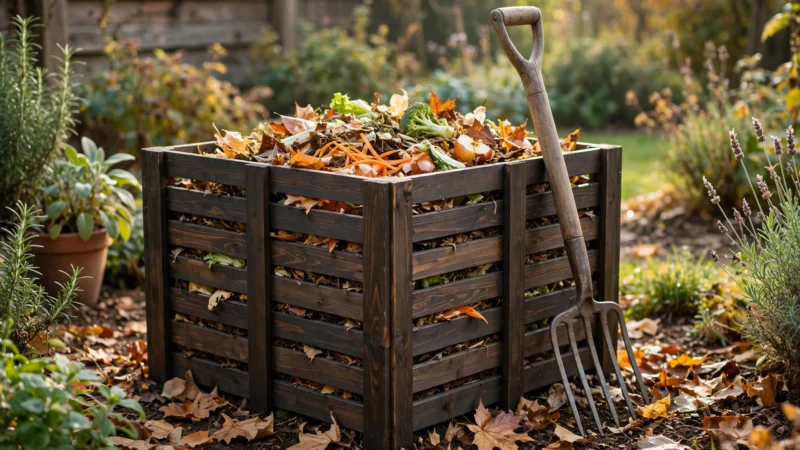
Composting turns peels, cores, and eggshells into garden gold instead of landfill methane. UN guidance lists composting as the final step after all prevention efforts. If you’ve never composted, it’s simpler than its reputation suggests — our beginner’s guide to composting at home walks through the whole setup. Many councils also offer kerbside food-waste collection now; check yours before assuming the bin is the only option.
Cook the Scraps You’d Normally Bin
Quite a few “scraps” are perfectly edible. Vegetable peelings, stalks, and herb stems make excellent stock — keep a bag in the freezer and simmer it when full. Stale bread becomes breadcrumbs, croutons, or bread pudding. Overripe bananas become banana bread. Wilted greens revive in soups and frittatas where texture doesn’t matter. The line between “scrap” and “ingredient” is mostly habit.
Share and Donate the Surplus
Bought too much, or growing more courgettes than any family can eat? Food-sharing apps and community fridges exist in most cities across the US, UK, Canada, and Australia — neighbours collect surplus food before it spoils. Unopened, in-date packaged food can go to food banks. And if you share your home with animals, check our guide to eco-friendly pet care — it covers how to cut waste in pet feeding too, from buying the right bag size to storing pet food properly so it doesn’t spoil. Reducing waste is a whole-household project, and our eco living basics guide puts food waste in the context of the other easy wins around your home.
What Recent Research Shows
The science of household food waste has moved quickly in the last few years. A few findings worth knowing:
WRAP’s 2024 Household Food Management Survey — based on 4,740 interviews — found self-reported waste rising again after the pandemic-era dip, driven by overbuying, “displaced meals,” and fading concern about food prices. The researchers’ blunt conclusion: competencies around food management haven’t improved since 2022, and the key weaknesses are avoiding temptation and overbuying — both shopping-stage problems, not cooking-stage ones.
The UNEP Food Waste Index Report 2024 added a striking global perspective: hotter countries tend to waste more food at home, likely because of more fresh produce and less reliable refrigeration — a reminder that storage infrastructure matters as much as behaviour. And the EPA’s April 2025 cost report reset the economic conversation in the US, nearly doubling the long-cited household cost figure and framing food waste explicitly as a household budget issue: cut the waste by a third, and a family of four keeps roughly $1,000 a year.
Taken together, the research points the same way: the highest-impact interventions happen before food is bought, not after it’s cooked.
Common Mistakes That Cause Food Waste
1. Shopping without checking the fridge first. You buy milk when there’s already an unopened bottle behind the juice. Fix: a 60-second fridge scan before every shop — or a photo of the fridge shelves on your phone.
2. Treating “best before” as “use by.” Perfectly good pasta, tinned food, and biscuits get binned over a quality date. Fix: learn the distinction in the table above, and use your eyes and nose for best-before items.
3. Cooking for a full house on an empty-house night. The classic “displaced meal” — cooking Tuesday’s planned dinner when half the family is out. Fix: check the calendar when planning, and keep one flexible “use-it-up” night per week.
4. Burying food at the back of the fridge. Out of sight, out of mind, into the bin. Fix: an “eat me first” box at the front, clear containers, and rotating new items behind old ones.
5. Freezing mystery containers. Unlabelled, oversized portions that nobody dares to defrost. Fix: label with contents and date, freeze in usable portions, and keep a simple freezer list on the fridge door.
6. Reheating the whole pot “just in case.” Warming four portions when you’ll eat one — then binning the rest because reheated food can’t be reheated again. Fix: portion before you store, and reheat only what you’ll eat.
Final Recommendations
- Plan weekly, shop from the plan. Check the fridge, plan around your real schedule, and write a list. This one habit prevents more waste than all the others combined.
- Set your fridge to 5°C/41°F or below (1–5°C in Australia/NZ guidance) and verify it with a thermometer. Cold food lasts measurably longer.
- Separate ethylene producers (bananas, apples, avocados, tomatoes) from sensitive produce (leafy greens, berries, herbs).
- Respect “use by,” interpret “best before.” Never eat past a use-by date; use judgement on best-before items. Freeze before the use-by date to buy time.
- Run an “eat me first” shelf and a weekly use-it-up meal. Visibility beats willpower.
- Follow your country’s leftover rules — 3 to 4 days refrigerated in the US, two days in the UK — cool quickly, reheat once until steaming hot.
- Freeze early, label everything, and keep portions realistic. The freezer is a pause button, not a postponement bin.
- Compost or share what you can’t eat. Peelings to the compost, surplus to neighbours or food banks, scraps to stock.
Frequently Asked Questions
Start with the three highest-impact habits: plan meals and shop with a list so you buy only what you need, store food properly with the fridge at 5°C (41°F) or below, and eat oldest items first using an eat-me-first shelf. Freezing food before it spoils and learning the difference between use-by and best-before dates prevent a large share of household waste with minimal effort.
Use-by dates are about safety: do not eat food after its use-by date, even if it looks and smells fine, because harmful bacteria are invisible. Best-before dates are about quality: food is often still safe after the date but may have lost flavour or texture. In the US, date labels are mostly unregulated quality indicators except on infant formula, so use the sniff-and-look test and follow food safety rules.
It depends on your country. In the United States, FoodSafety.gov advises using refrigerated leftovers within 3 to 4 days. In the UK, council guidance says within two days. Cool leftovers quickly, ideally within 90 minutes to two hours of cooking, store them in airtight containers, and reheat only once until steaming hot throughout. When in doubt, freeze leftovers instead.
Fresh produce tops the list in nearly every country that measures it. In the UK, WRAP found potatoes, bread, and broccoli among the most wasted foods, while US data shows produce is the largest category of household food waste at around 10.5 million tonnes. Leftovers, dairy, and bakery items follow. These are exactly the foods that benefit most from better planning and storage.
Yes, effectively. At 0°F (-18°C) or below, frozen food stays safe indefinitely because bacterial growth stops. Quality does decline over time, so most guidance suggests eating frozen food within three to six months for best taste and texture. Freeze food while it is still fresh, ideally before any use-by date, pack it airtight to prevent freezer burn, and label it with the contents and date.
In the US, the EPA estimates wasted food costs each consumer about $728 a year, or $2,913 for a household of four, roughly $56 a week. Cutting that waste by a third would save a family of four around $1,000 annually. In the UK, WRAP estimates households could save around £700 a year by eliminating avoidable food waste. The savings come with no subscription to cancel and no habit to replace, just food you already bought.
Usually, yes. Best-before dates indicate when food is at its peak quality, not when it becomes unsafe. Dry goods like pasta, rice, biscuits, and tinned food are often fine weeks or months past the date. Check for signs of spoilage such as off smells, mould, or damaged packaging, and use your judgement. Never apply this logic to use-by dates on perishable foods like meat, fish, and dairy.
Compost inedible parts like peelings, cores, coffee grounds, and eggshells to keep them out of landfill, where they release methane. Many councils offer kerbside food-waste collection, or you can compost at home. Edible surplus can go to neighbours through food-sharing apps, community fridges, or food banks. Vegetable scraps can also be simmered into homemade stock before composting.
This content is for educational purposes only and does not replace professional advice. Always consult a qualified food safety authority in your country if you are unsure whether food is safe to eat.
Conclusion
Reducing food waste at home isn’t about perfection. It’s about a handful of small, repeatable systems: a shopping list built from a real plan, a fridge cold enough to do its job, an eat-me-first shelf that keeps older food visible, and the confidence to know which date labels matter and which don’t. None of these takes more than a few minutes. All of them compound.
The stakes justify those few minutes. The average household bins hundreds of pounds, dollars, or euros of food yearly — food that cost money, land, water, and fuel to produce, and that releases methane rotting in landfill. And the fix is almost entirely in your control: 60% of the world’s food waste happens in homes.
Start with one change this week. Maybe it’s the pre-shop fridge check. Maybe it’s finally learning your fridge’s actual temperature. Maybe it’s the use-it-up meal on Thursdays. Pick the one that fits your household, do it for a month, and watch the bin get lighter and the grocery bill get smaller. Then add the next one. That’s how low-waste kitchens are built — not in a weekend overhaul, but one habit at a time.
References
- US Environmental Protection Agency — Estimating the Cost of Food Waste to American Consumers — 2025 — https://www.epa.gov/land-research/estimating-cost-food-waste-american-consumers
- WRAP — Understanding Household Food Waste in the UK: the Household Food Management Survey — 2024 — https://www.wrap.ngo/resources/report/understanding-household-food-waste-uk-household-food-management-survey
- Al Jazeera — Which Countries Waste the Most Food, and How to Reduce Waste at Home — October 2026 — https://www.aljazeera.com/amp/news/2026/10/16/which-countries-waste-the-most-food-and-how-to-reduce-waste-at-home (summarising UNEP Food Waste Index Report 2024 and FAO data)
- Adur & Worthing Councils — Preventing Food Waste at Home — updated March 2026 — https://www.adur-worthing.gov.uk/environmental-health/food/preventing-food-waste-at-home/
- Queensland Government — Reduce Food Waste at Home — https://www.qld.gov.au/environment/waste-reduction-recycling/reduction/reduce-food-waste/at-home
- FoodSafety.gov — Game Day Food Safety Tips — updated October 2025 — https://www.foodsafety.gov/blog/game-day-food-safety-tips