
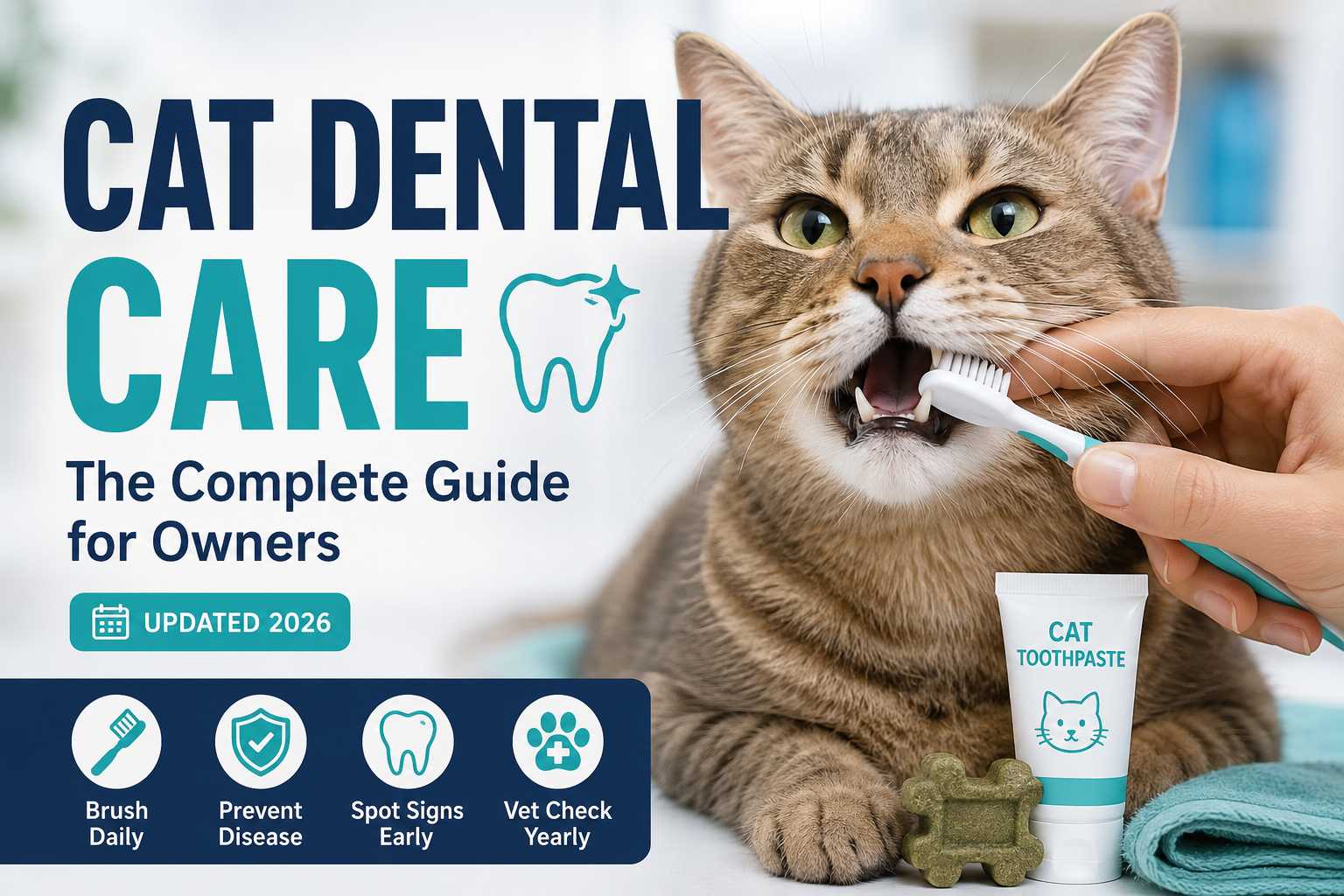
Cat Dental Care: The Complete Guide for Owners (2026)
Your cat’s breath probably doesn’t smell great, and you’ve probably decided that’s just how cats are. It isn’t. Cornell University’s Feline Health Center reports that somewhere between 50 and 90 percent of cats over four years old have some form of dental disease, and most owners have no idea it’s happening until a vet lifts the lip during a checkup.
Cat dental care isn’t about chasing a perfect smile. It’s about catching pain your cat can’t tell you about, before it costs them teeth, comfort, or worse. This guide walks through what actually causes feline dental disease, how to brush teeth your cat will tolerate, which toothpastes and chews are genuinely worth using, and how to spot trouble early — all sourced from veterinary and animal-welfare organizations rather than guesswork.
Good cat dental care means daily tooth brushing with a cat-specific toothpaste, VOHC-accepted dental chews as a backup (never a replacement), regular at-home mouth checks, and a professional veterinary dental exam — usually done under anesthesia — at least once a year. Watch for bad breath, red gums, drooling, and reduced appetite as early warning signs.
What Causes Dental Disease in Cats, and Why It’s So Common
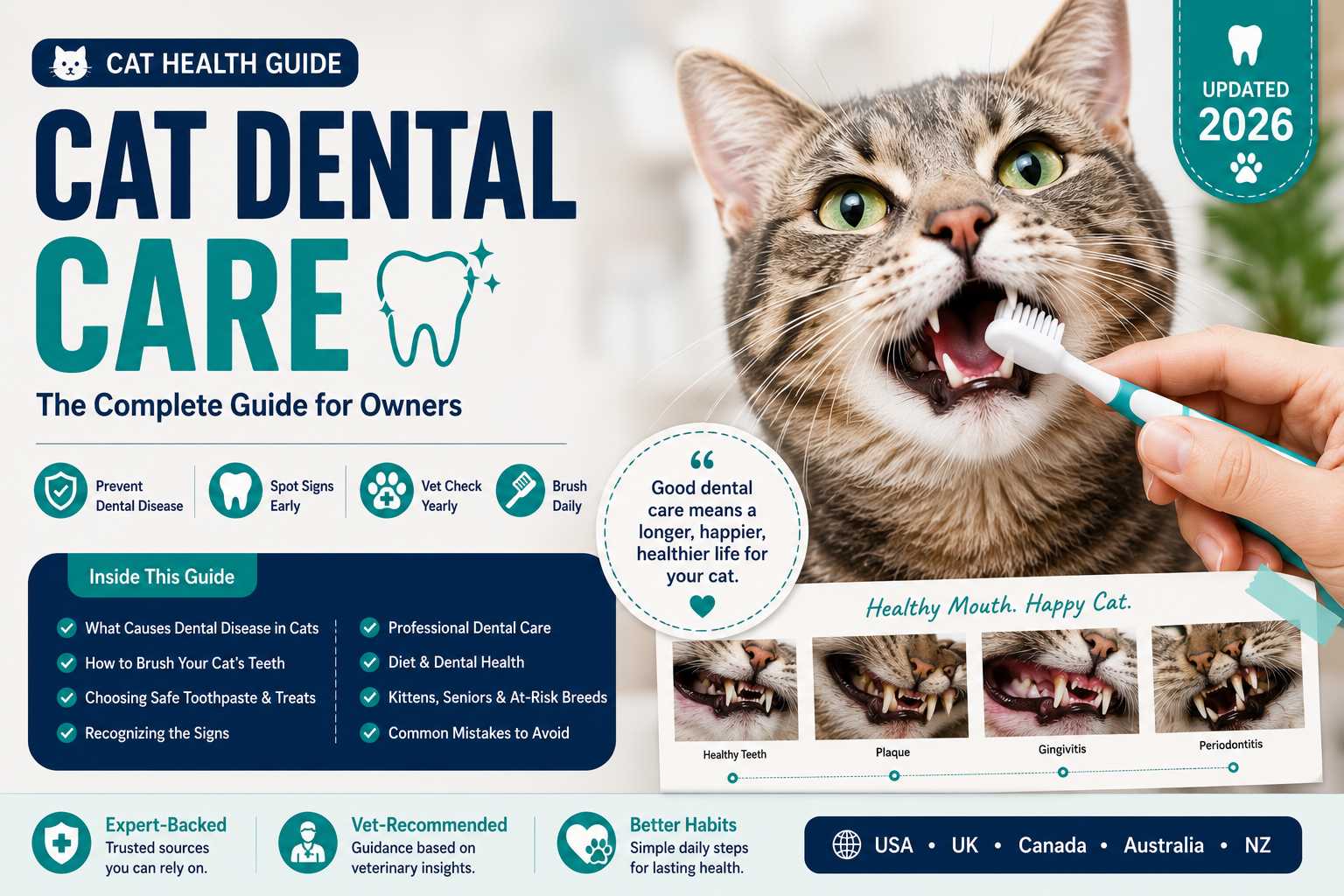
Dental disease in cats almost always starts the same way: with plaque. VCA Animal Hospitals describes plaque as a barely visible bacterial film that builds up on the tooth surface within hours of a cleaning. Left alone, it mineralizes into tartar — the hard, yellow-brown buildup you can actually see and feel along the gumline.
Once tartar irritates the gum tissue, you get gingivitis: red, swollen, sometimes bleeding gums. RSPCA Australia notes that around 70 percent of cats show some level of dental disease by age three, which gives you a sense of how early this process tends to start.
How Plaque Turns Into Tartar
If gingivitis isn’t addressed, it can progress into periodontitis — inflammation that reaches the deeper structures holding the tooth in place. VCA explains that the periodontium includes the gum, the cementum covering the root, the periodontal ligament, and the surrounding bone, and that advanced disease here can lead to bone loss, abscesses, and even jaw fractures in severe cases.
Tooth Resorption: The Painful Condition Unique to Cats
Tooth resorption is largely a cat-specific problem. Cornell’s Feline Health Center estimates it affects roughly half of cats, though other studies put the range much wider. The tooth’s hard tissue is slowly destroyed from the inside, and once the lesion reaches the nerve, it’s intensely painful. Extraction is currently the only reliable treatment once that point is reached.
Stomatitis and Other Inflammatory Conditions
A smaller but more severe condition, feline chronic gingivostomatitis, causes widespread inflammation across the mouth, not just around individual teeth. Cornell notes it occurs in roughly one in a hundred cats, most often linked to viral or immune conditions, and can require extensive treatment, sometimes including removing most or all of the affected teeth.
How to Brush Your Cat’s Teeth (And Make It a Habit)
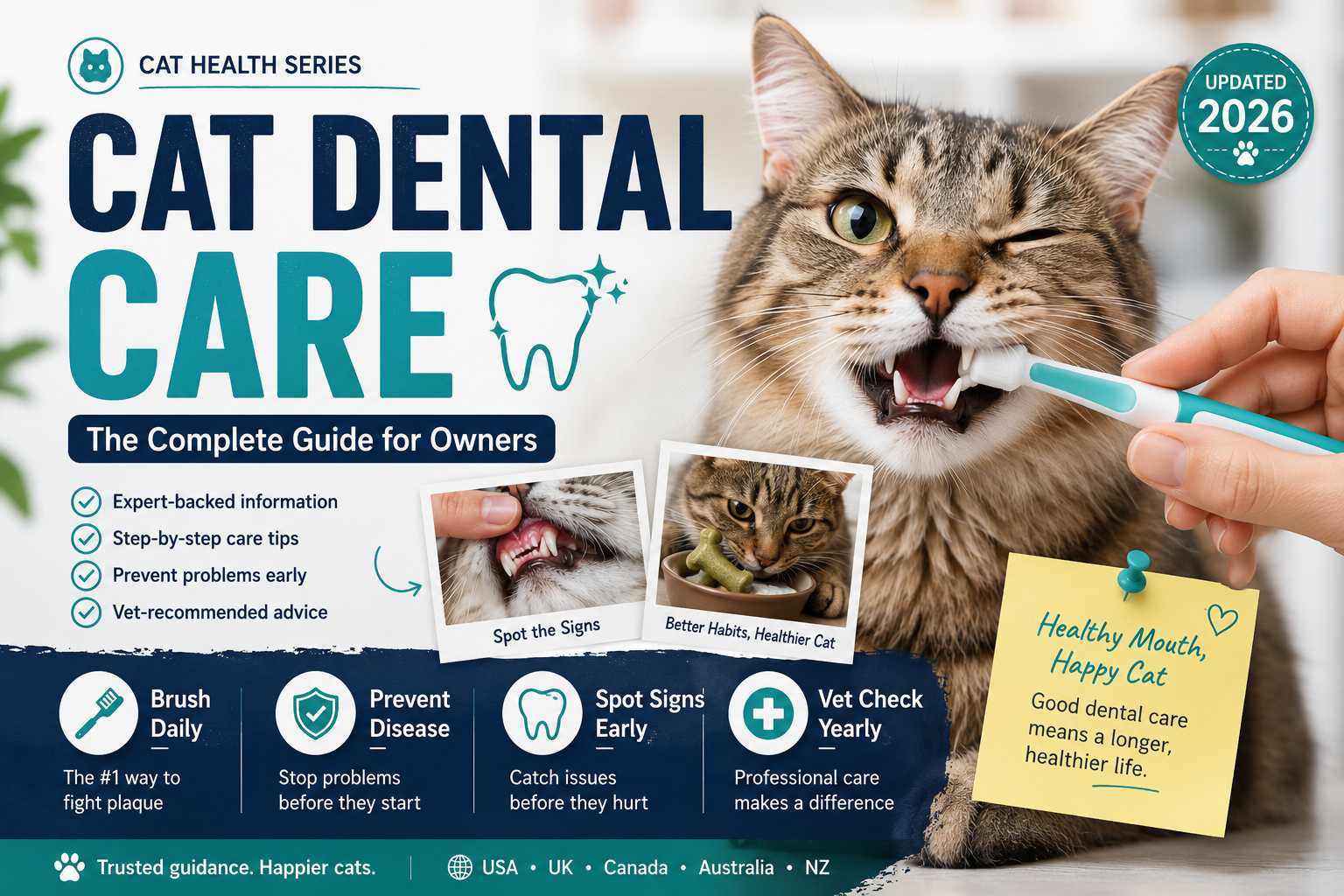
Brushing is, by a wide margin, the single most effective thing you can do for your cat’s teeth at home. Cornell’s veterinary dentistry team notes that plaque starts rebuilding within about 12 hours of a cleaning, which is why consistency matters more than intensity.
The Four-Week Training Method
Most cats won’t tolerate a toothbrush on day one, and that’s expected. Cornell recommends a gradual, four-week introduction: let your cat get used to the smell and taste of the toothpaste first, then progress to applying it to a tooth with your finger, then to letting them lick it off a toothbrush, and only then to actual brushing.
- Week 1: Let your cat sniff and lick toothpaste off your finger, followed by a reward.
- Week 2: Apply a dab directly to a canine tooth daily.
- Week 3: Introduce the toothbrush itself, paste and all.
- Week 4: Begin gently brushing the outer tooth surfaces.
Brushing Technique That Actually Works
Cornell’s guidance is to angle the bristles at roughly 45 degrees toward the gumline and use small circular motions, focusing on the outer (cheek-facing) surfaces of the teeth for about 60 seconds. You generally don’t need to brush the inner surfaces — a cat’s tongue does a reasonable job of keeping those clean on its own.
How Often Should You Brush a Cat’s Teeth?
Daily is the target endorsed across veterinary sources. If that’s genuinely not realistic for your household, the RSPCA still considers brushing several times a week meaningfully better than not brushing at all. The key is not letting long gaps become the norm, since tartar that’s already hardened can no longer be removed by a toothbrush.
Pick a time you already brush your own teeth, and do your cat’s right before or after. Anchoring the habit to something you already do daily makes it far more likely to stick.
Choosing a Safe Cat Toothpaste
Not every toothpaste in your bathroom cabinet is safe for your cat — in fact, the one you use yourself almost certainly isn’t.
Why Human Toothpaste Is Off-Limits
VCA Animal Hospitals is direct on this point: human toothpaste should never be used on cats. It’s formulated to be spat out, and cats swallow whatever’s in their mouths. The detergents that create foaming action can upset a cat’s stomach, and added fluoride isn’t meant for repeated feline ingestion. Baking soda is also discouraged — its high alkalinity can disturb the stomach’s acid balance if swallowed.
It’s worth noting that the ingredient most people worry about, xylitol, works differently across species: the ASPCA notes that xylitol is genuinely dangerous for dogs but does not appear to cause the same harm in cats. That doesn’t make human toothpaste safe for cats — the detergents, fluoride, and salt content are the real concerns — it just means the specific xylitol danger associated with dogs isn’t the mechanism at play here.
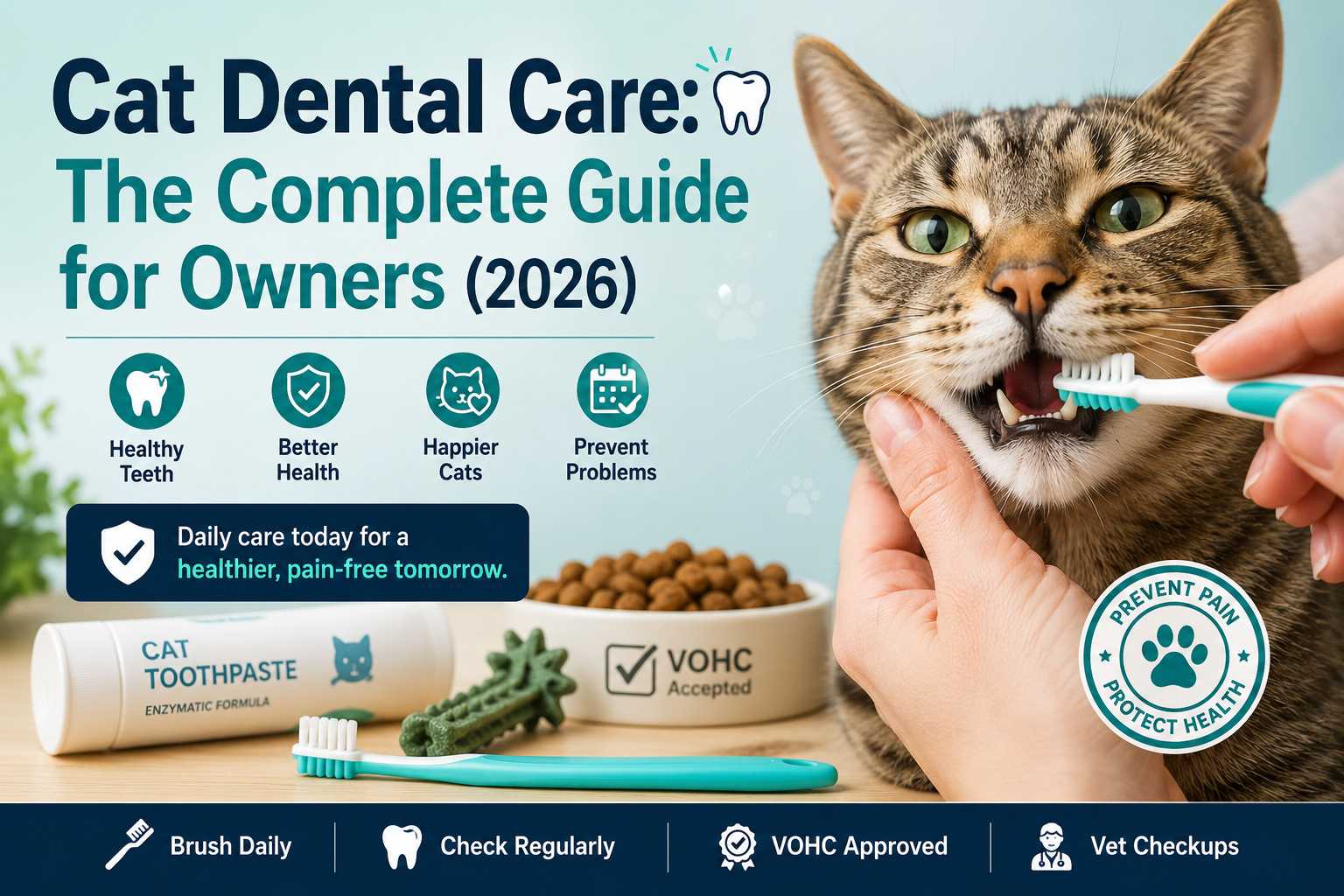
Use only toothpaste labeled specifically for cats. VCA notes these are formulated to be safely swallowed and come in flavors cats actually tolerate, including poultry, malt, and fish, rather than the mint flavoring most humans expect.
What to Look for in Cat Toothpaste
Beyond being cat-specific, look for an enzymatic formula, which helps chemically break down plaque rather than relying purely on the mechanical scrubbing of the brush. Avoid any product containing added aloe vera, mint essential oils, or salt, all of which veterinary toxicology resources flag as potentially problematic for cats in concentrated form.
Gels, Rinses, and Other Brushing Alternatives
For cats who won’t tolerate a brush at all, the PDSA suggests dental gels containing mild enzymes and abrasives, applied directly to the teeth and gums or licked from a fingertip. They’re not as effective as brushing, but they’re a reasonable fallback when brushing genuinely isn’t an option.
Dental Chews, Treats, and the VOHC Seal
Walk down any pet store aisle and you’ll see dozens of products claiming to clean your cat’s teeth. Most of those claims aren’t independently verified. A small number are.
What the VOHC Seal Actually Means
The Veterinary Oral Health Council exists specifically to evaluate these claims, operating under the American Veterinary Dental College since 1997. According to PetMD, a product only earns the VOHC Seal of Acceptance after two separate clinical trials demonstrate at least a 20 percent reduction in plaque or tartar compared to a control group. The council doesn’t run the trials itself — manufacturers fund and conduct them, and VOHC reviews the data.
You can check VOHC’s current list of accepted dental products for cats before buying, since formulations and approved products change over time.
Chews vs. Brushing: Realistic Expectations
Even VOHC-accepted chews are not a substitute for brushing. They’re a supplement for cats who tolerate them, and a fallback for the cats who genuinely won’t accept a toothbrush no matter how gradually you introduce one. Treat them as one layer of a broader routine, not the whole routine.
Choosing Chews That Are Safe for Your Cat
Size and texture matter. A chew should be firm enough to provide some mechanical cleaning action without being so hard that it risks fracturing a tooth. As with any treat, factor the calories into your cat’s daily intake — treats generally shouldn’t exceed about 10 percent of total calories.
Recognizing the Signs of Dental Disease in Cats
This is the section worth bookmarking, because cats are remarkably good at hiding how much pain they’re in.
Physical Signs to Check at Home
PDSA recommends a monthly at-home mouth check between veterinary visits: gently lift the lips and look for redness or bleeding along the gumline, visible tartar (a brownish crust near the gum edge), loose teeth, or unusual swelling.
Behavioral Changes That Signal Pain
Watch for drooling, pawing at the mouth, head-tilting while chewing, dropping food mid-bite, chewing only on one side, or a sudden preference for soft food over kibble. VCA points out that dental pain in cats can present very differently depending on the individual cat’s personality — some become withdrawn, others irritable.
Why Cats Hide Dental Pain So Well
As predators that are also prey to larger animals in the wild, cats are wired to mask weakness. That instinct doesn’t disappear in a domestic setting. A cat can have severe, X-ray-confirmed dental disease and still eat every meal without obvious hesitation, which is exactly why regular professional exams matter more for cats than visible symptoms alone.
Professional Veterinary Dental Care: What to Expect
At-home care reduces plaque. It cannot reach below the gumline, where most serious dental disease actually develops.
What Happens During a COHAT
A Comprehensive Oral Health Assessment and Treatment, or COHAT, is the standard professional protocol. The American Animal Hospital Association’s 2019 Dental Care Guidelines outline a 12-step protocol covering anesthesia, a tooth-by-tooth exam, full-mouth dental radiographs, scaling above and below the gumline, and polishing.
The Anesthesia Question
Fear of anesthesia is, according to AAHA’s own guidelines, the reason owners most commonly cite for delaying dental care. The guidelines note that pre-anesthetic bloodwork and continuous monitoring during the procedure make modern veterinary anesthesia low-risk for the great majority of patients, including many seniors who are otherwise healthy.
The Truth About “Anesthesia-Free” Cleanings
Some non-veterinary services offer to scale visible tartar from a conscious cat. Veterinary professional bodies are unusually unified in discouraging this. AAHA’s feline dental care guidelines state plainly that anesthesia-free dentistry is not appropriate, citing patient stress, injury risk, the danger of aspiration, and the simple fact that a conscious cat can’t be radiographed or probed for hidden disease. A cleaning that only addresses what’s visible above the gumline can leave the more damaging disease below it completely undiagnosed.
If a service offers to clean your cat’s teeth without anesthesia, ask what happens to disease that’s already below the gumline — because that visit won’t be able to find or treat it.
Diet and Your Cat’s Dental Health
Diet plays a role in dental health, but the evidence here is genuinely mixed, and it’s worth being honest about that rather than overstating it.
Wet Food vs. Dry Food: What the Evidence Actually Shows
PDSA suggests a mix of wet food and dry biscuits, reasoning that the chewing required for kibble can help knock away some surface plaque. That mechanical effect is real but modest — dry food alone does not “clean” teeth the way brushing does, and plenty of cats on an all-dry diet still develop significant dental disease. Research findings on diet’s overall contribution to tooth resorption specifically are mixed, and more study is needed before drawing firm conclusions there.
Prescription Dental Diets
Veterinary dental diets are different from standard dry food — they’re engineered with a specific kibble size, shape, and texture designed to maximize the cleaning effect of chewing, and several carry the VOHC Seal. VCA notes these prescription diets are usually recommended on a case-by-case basis by a veterinarian rather than as a default for every cat.
Treats, Human Food, and Hidden Sugars
Sugary human foods don’t just add calories; they feed the same bacteria responsible for plaque. Keeping treats minimal, and steering clear of sugary table scraps, supports the same goals as brushing — just indirectly.
Special Considerations: Kittens, Seniors, and At-Risk Breeds
Kitten Teething and When to Start Brushing
Kittens are born with 26 deciduous (baby) teeth that are gradually replaced by 30 permanent teeth, usually finishing by around six to seven months. Most veterinary sources recommend waiting until the permanent teeth have fully come in before introducing an actual toothbrush, since teething gums are sensitive — but you can absolutely get a kitten comfortable with having its mouth and gums touched well before then.
Senior Cats and Dental Disease
Risk climbs steadily with age. A large UK study of cats under primary veterinary care found periodontal disease was significantly more common in older cats, with the median age of affected cats nearly double that of unaffected ones. Senior cats are also more likely to have other health conditions that need to be factored into anesthesia planning, which is exactly why a thorough pre-anesthetic workup matters at this life stage.
Breeds More Prone to Dental Problems
PDSA notes that cats with misaligned teeth — common in short-nosed pedigree breeds such as Persians — tend to accumulate plaque and tartar more readily because their teeth don’t sit as neatly against each other. The same UK study found Siamese and Maine Coon cats showed comparatively higher rates of periodontal disease, though breed alone is far from the only factor at play.
What Recent Research Shows
A 2023 study from the Royal Veterinary College’s VetCompass programme, drawing on a random sample of over 18,000 UK cats, found a one-year period prevalence of periodontal disease of about 15 percent under primary veterinary care — notably lower than the lifetime estimates cited by some other sources, which illustrates how much prevalence figures can shift depending on study design, population, and how disease is defined and detected.
On tooth resorption specifically, estimates vary widely across the literature — some studies put the figure as low as 1 to 2 percent, others as high as 67 percent, depending heavily on whether cats were examined with full-mouth radiographs or visual exam alone. As one veterinary dental specialist writing in Today’s Veterinary Practice put it, resorptive lesions begin in a location that’s generally hidden from the naked eye and easily missed without anesthetized, tooth-by-tooth examination and radiography. Research findings here are genuinely mixed, and more standardized, radiograph-based studies are needed to pin down a reliable figure.
Separately, a controlled clinical trial using video-based pain assessment found that cats with severe oral disease needed rescue pain relief after their dental procedure far more often than cats with minimal disease — a useful, measurable confirmation that advanced dental disease in cats is genuinely painful, not just cosmetically unpleasant.
Common Mistakes Cat Owners Make
Using human toothpaste or baking soda
Both can upset a cat’s stomach, and human toothpaste’s detergents and fluoride aren’t meant to be swallowed.
Better ApproachUse a toothpaste made and labeled specifically for cats, in a flavor they’ll tolerate.
Assuming dry food alone keeps teeth clean
Kibble offers some mechanical cleaning, but it’s nowhere near as effective as daily brushing, and plenty of cats on all-dry diets still develop dental disease.
Better ApproachTreat diet as one supporting factor, not a substitute for brushing and professional checks.
Skipping the introduction period and forcing a toothbrush
Jumping straight to brushing without any prior training almost always ends in a struggle, and can make a cat permanently wary of the whole process.
Better ApproachUse the gradual, multi-week introduction method, with rewards at every step.
Avoiding the vet because of anesthesia fear
Delaying a needed dental exam over anesthesia worries often means the disease has more time to progress, sometimes making the eventual procedure more complex, not less.
Better ApproachTalk through pre-anesthetic screening and monitoring with your vet so you understand the actual safeguards in place.
Choosing dental chews without checking for the VOHC seal
Many products marketed as “dental” have no independent evidence behind the claim.
Better ApproachCheck the current VOHC accepted-products list before buying, and ask your vet if you’re unsure.
Treating occasional brushing as “good enough”
Brushing once a week or less gives plaque plenty of time to harden into tartar between sessions, limiting how effective the brushing you do can be.
Better ApproachAim for daily brushing, and treat anything less as a temporary fallback, not the routine.
Final Recommendations
- 1Brush daily with a cat-specific toothpaste, using the gradual training method if your cat is new to it.
- 2Do a monthly at-home mouth check for redness, tartar, or swelling between vet visits.
- 3Book an annual professional dental exam, and don’t skip it out of anesthesia anxiety — ask your vet about the specific safeguards used.
- 4Choose dental chews and treats with the VOHC Seal of Acceptance rather than unverified “dental” marketing claims.
- 5Watch for early behavioral signs — drooling, dropped food, one-sided chewing — rather than waiting for obvious pain.
- 6Avoid human toothpaste, baking soda, and sugary table scraps entirely.
- 7If your cat is a short-nosed breed or a senior, ask your vet whether more frequent dental checks make sense for them specifically.
- 8Remember that visible tartar is only part of the picture — most serious disease happens below the gumline, where only radiographs can find it.
Frequently Asked Questions
How often should I brush my cat’s teeth?
Once a day is the goal. Plaque begins forming again within about 12 hours of a cleaning, so daily brushing gives you the best chance of keeping it from hardening into tartar. If daily isn’t realistic, brushing three to four times a week still helps noticeably more than not brushing at all.
What is the best toothpaste for cats?
The best toothpaste is one made specifically for cats, in a flavor your cat will actually tolerate, such as poultry, malt, or fish. Cat toothpaste is formulated to be safe if swallowed and contains no foaming detergents, fluoride, or salt. Never use human toothpaste or baking soda.
Are dental chews actually effective for cats?
Some are. Chews and treats that carry the Veterinary Oral Health Council (VOHC) Seal of Acceptance have been shown in clinical trials to reduce plaque or tartar by at least 20 percent. Chews without that seal may still offer some mechanical cleaning benefit, but the evidence behind them is far less consistent, and none fully replace brushing or professional cleanings.
Why does my cat’s breath smell so bad?
Persistent bad breath in cats, like persistent bad breath in dogs, is usually a sign of bacterial buildup from plaque and tartar rather than something to dismiss as normal “pet breath.” In both species it’s one of the most overlooked early warning signs of dental disease, and it’s worth a veterinary check rather than a breath freshener.
What are the signs of dental disease in cats?
Watch for bad breath, red or bleeding gums, visible tartar, drooling, pawing at the mouth, dropping food, chewing on one side, reduced appetite, and a preference for soft food over kibble. Because cats are skilled at masking pain, even one or two of these signs is worth a veterinary look.
Is anesthesia safe for a cat’s dental cleaning?
Modern veterinary anesthesia, with pre-anesthetic bloodwork and continuous monitoring, is considered safe for the vast majority of cats, including many seniors. Veterinary organizations consider it necessary for a thorough oral exam, since radiographs and periodontal probing cannot be done safely or accurately on a conscious cat.
Can tooth resorption be prevented?
There’s no proven way to prevent tooth resorption outright, since its exact cause isn’t fully understood. Good home dental care and regular veterinary checks won’t guarantee a cat avoids it, but they make early detection far more likely, before the lesion becomes intensely painful.
At what age should kittens start dental care?
You can get a kitten used to having its mouth touched and gums rubbed as soon as it comes home. Most veterinary sources recommend holding off on an actual toothbrush until after the permanent teeth have fully erupted, typically around six months, since teething gums can be sore.
Conclusion
Cat dental care doesn’t require perfection. It requires consistency: a daily brushing habit your cat actually tolerates, a monthly mouth check so you notice changes early, and a professional dental exam at least once a year that can see what you can’t.
The biggest shift most owners need to make isn’t technique — it’s attention. Bad breath, a little drooling, or eating slightly more carefully than usual aren’t quirks to wait out. They’re often the only signals a cat will give before a problem becomes a painful one.
None of this replaces your veterinarian’s judgment for your specific cat. Breed, age, health history, and temperament all affect what a sensible dental care plan looks like in practice, which is exactly why a real exam — not a guide, however thorough — should always be the next step if you’re noticing any of the warning signs above.
See our full Best Puppy Food 2026 for a week-by-week breakdown.
References
- American Veterinary Medical Association — “Doggie breath” could be a sign of serious disease — AVMA / PR Newswire — 2026 — https://www.prnewswire.com/news-releases/avma-doggie-breath-could-be-a-sign-of-serious-disease-302679358.html
- American Veterinary Medical Association — Pet dental care — AVMA — https://www.avma.org/resources-tools/pet-owners/petcare/pet-dental-care
- Cornell Feline Health Center — Feline Dental Disease — Cornell University College of Veterinary Medicine — https://www.vet.cornell.edu/departments-centers-and-institutes/cornell-feline-health-center/health-information/feline-health-topics/feline-dental-disease
- Cornell Feline Health Center — When Kitty Needs a Dentist — Cornell University College of Veterinary Medicine — https://www.vet.cornell.edu/departments-centers-and-institutes/cornell-feline-health-center/health-information/feline-health-topics/when-kitty-needs-dentist
- Cornell University College of Veterinary Medicine — Veterinary tips for pet dental care — 2018 — https://www.vet.cornell.edu/about-us/news/20180221/veterinary-tips-pet-dental-care
- VCA Animal Hospitals — Dental Disease in Cats — https://vcahospitals.com/know-your-pet/dental-disease-in-cats
- VCA Animal Hospitals — Dental Pain in Cats — https://vcahospitals.com/know-your-pet/dental-pain-in-cats
- VCA Animal Hospitals — Dental Cleaning in Cats — https://vcahospitals.com/know-your-pet/dental-cleaning-in-cats
- PDSA — Dental Disease in Cats — https://www.pdsa.org.uk/pet-help-and-advice/pet-health-hub/conditions/dental-disease-in-cats
- PDSA — How To Check Your Cat’s Teeth — https://www.pdsa.org.uk/pet-help-and-advice/pet-health-hub/other-veterinary-advice/how-to-check-your-cat-s-teeth
- PDSA — Vet Q&A: Am I doing enough for my cat’s dental care? — https://www.pdsa.org.uk/what-we-do/blog/vet-qa-am-i-doing-enough-for-my-cats-dental-care
- RSPCA Australia — Importance of dental health — https://www.rspca.org.au/latest-news/blog/importance-dental-health/
- RSPCA Knowledgebase — How should I take care of my cat or dog’s teeth? — https://kb.rspca.org.au/knowledge-base/how-should-i-take-care-of-my-cat-or-dogs-teeth/
- Ontario Veterinary Medical Association — Your pet’s dental care — https://www.ovma.org/news/your-pet’s-dental-care-a5128cbc2f4e84dfd48cd5500065f102
- SPCA Pet Insurance (New Zealand) — Guide to cat dental care — https://www.spcapetinsurance.co.nz/pet-insurance/the-good-life/a-guide-to-cat-dental-health
- Veterinary Oral Health Council — About the VOHC — https://vohc.org/about/
- Veterinary Oral Health Council — Accepted Products for Cats — https://vohc.org/accepted-products/
- PetMD — What Is VOHC? Understanding the Veterinary Oral Health Council and What They Do — 2025 — https://www.petmd.com/dog/general-health/what-is-VOHC-what-does-it-do
- ASPCA — Xylitol: The Sweetener That Is Not So Sweet for Pets — https://www.aspca.org/news/xylitol-sweetener-not-so-sweet-pets
- American Animal Hospital Association — Feline Dental Care, 2021 AAHA/AAFP Feline Life Stage Guidelines — https://www.aaha.org/resources/2021-aaha-aafp-feline-life-stage-guidelines/feline-dental-care/
- American Animal Hospital Association — 2019 AAHA Dental Care Guidelines for Dogs and Cats — https://www.aaha.org/resources/2019-aaha-dental-care-guidelines-for-dogs-and-cats/
- O’Neill DG, Blenkarn A, Brodbelt DC, Church DB, Freeman A — Periodontal disease in cats under primary veterinary care in the UK: frequency and risk factors — Journal of Feline Medicine and Surgery, 2023 — https://www.ncbi.nlm.nih.gov/pmc/articles/PMC10812011/
- Today’s Veterinary Practice — Prevalence of Oral Disease (commentary by Jan Bellows, DVM, Dipl. AVDC & ABVP) — 2022 — https://todaysveterinarypractice.com/dentistry/pet-health-by-the-numbersprevalence-of-oral-disease/
- Pain behaviors before and after treatment of oral disease in cats using video assessment: a prospective, blinded, randomized clinical trial — BMC Veterinary Research — https://www.ncbi.nlm.nih.gov/pmc/articles/PMC7146962/