Raw Dog Food: Everything Pet Owners Need to Know
Safety risks, BARF diets, freeze-dried options, fresh food, and how to make an informed decision for your dog.
Every few months, someone in a Facebook dog group posts: “I switched to raw and my dog’s coat is incredible. Why isn’t everyone doing this?” And every few months, someone else replies with a Tufts University article about Salmonella in raw dog food. Both people are acting in good faith. Both have real points.
Raw dog food is one of the most hotly debated topics in pet nutrition. It attracts passionate advocates and equally passionate sceptics — including most major veterinary organisations. If you’ve found yourself confused about who to believe, you’re in good company. This guide won’t tell you what to do. It will give you a clear, honest picture of what raw dog food actually is, what the science says about its risks and potential benefits, how it compares to kibble and fresh cooked food, and what to consider before making a change. The decision is yours. It should be an informed one.
Raw dog food is uncooked meat, organs, edible bone, and often vegetables and fruit, fed either home-prepared or as a commercial product (frozen, freeze-dried, or air-dried). It can offer nutritional benefits but carries a meaningfully higher risk of bacterial contamination than cooked or kibble diets. Major veterinary organisations including the AVMA, AAHA, CDC, and FDA advise caution, particularly for households with young children, elderly or immunocompromised people. If you choose to feed raw, sourcing from reputable manufacturers that use pathogen-reduction processes like High-Pressure Processing (HPP) and following strict food hygiene practices is essential.
📋 In This Guide
- What Is Raw Dog Food?
- Types of Raw Dog Food: Frozen, Freeze-Dried, BARF & More
- The Safety Question: What the Research Actually Shows
- Raw vs Kibble vs Fresh: A Practical Comparison
- Reported Benefits: What Owners Claim vs What Studies Show
- Nutritional Completeness: Getting It Right
- Who Should NOT Feed Raw (and When to Be Extra Careful)
- What Recent Research Shows
- 6 Common Mistakes Raw Feeders Make
- Evidence-Based Recommendations
- Frequently Asked Questions
- Conclusion
- References
What Is Raw Dog Food?
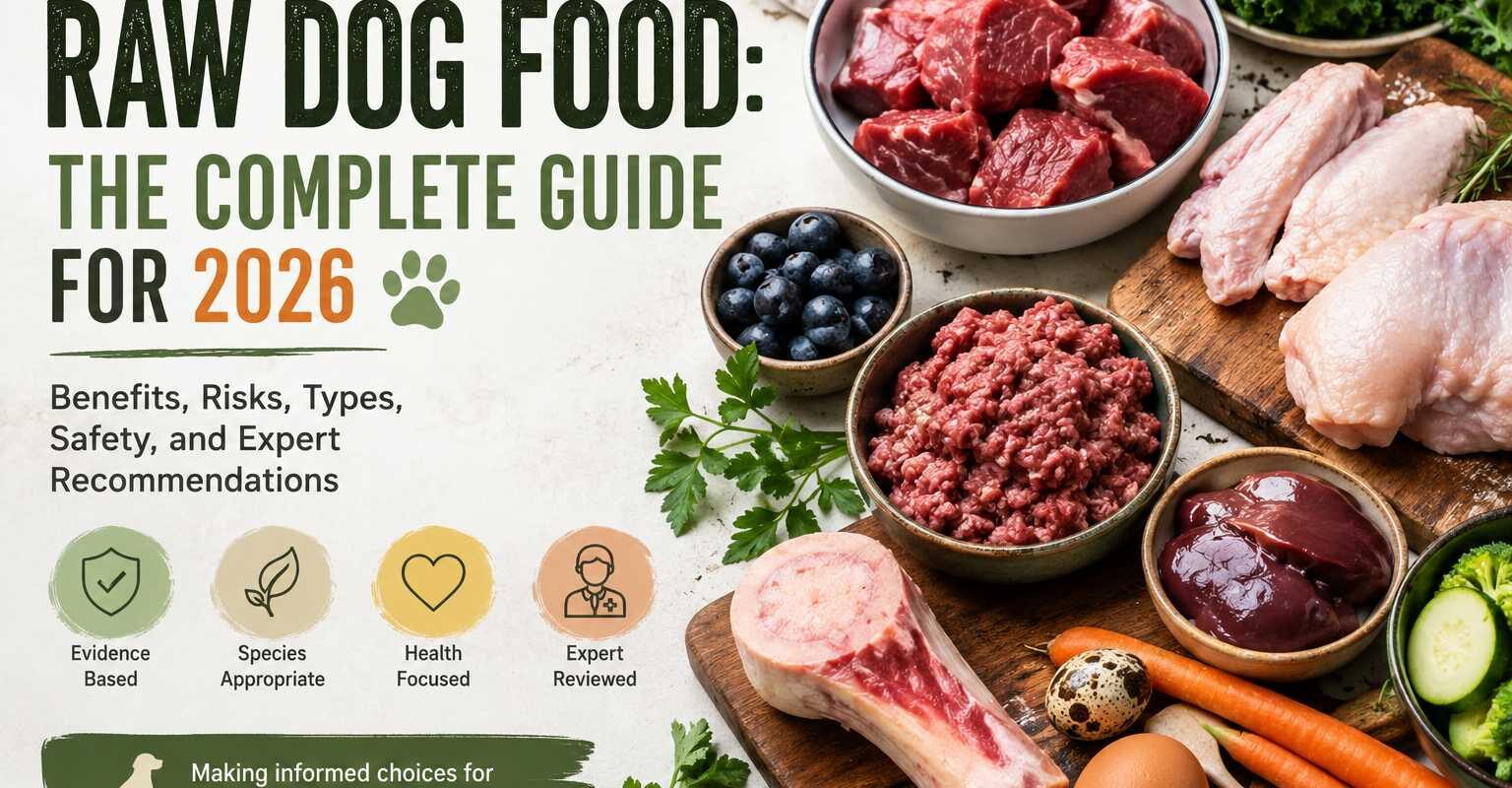
Raw dog food is, at its core, unprocessed animal protein — meat, organs, and edible bones — fed without being cooked or heat-treated. Most commercial and home-prepared raw diets also include vegetables, fruit, eggs, and supplements to round out the nutritional profile.
The modern raw feeding movement was largely popularised in 1993, when Australian veterinarian Ian Billinghurst published Give Your Dog a Bone, which laid the groundwork for the BARF (Biologically Appropriate Raw Food) diet. Billinghurst’s central argument: dogs evolved from wolves and are physiologically suited to eating raw prey rather than processed grains and rendered meat meals.
That argument resonates with a lot of pet owners — especially those who are sceptical of heavily processed commercial food. It’s worth noting, however, that domestic dogs have co-evolved with humans for tens of thousands of years and have developed genetic differences from wolves, including greater ability to digest starches. The “ancestral diet” argument, while intuitively appealing, is not straightforward from an evolutionary biology standpoint. More on that in the research section below.
What a Raw Dog Food Diet Typically Contains
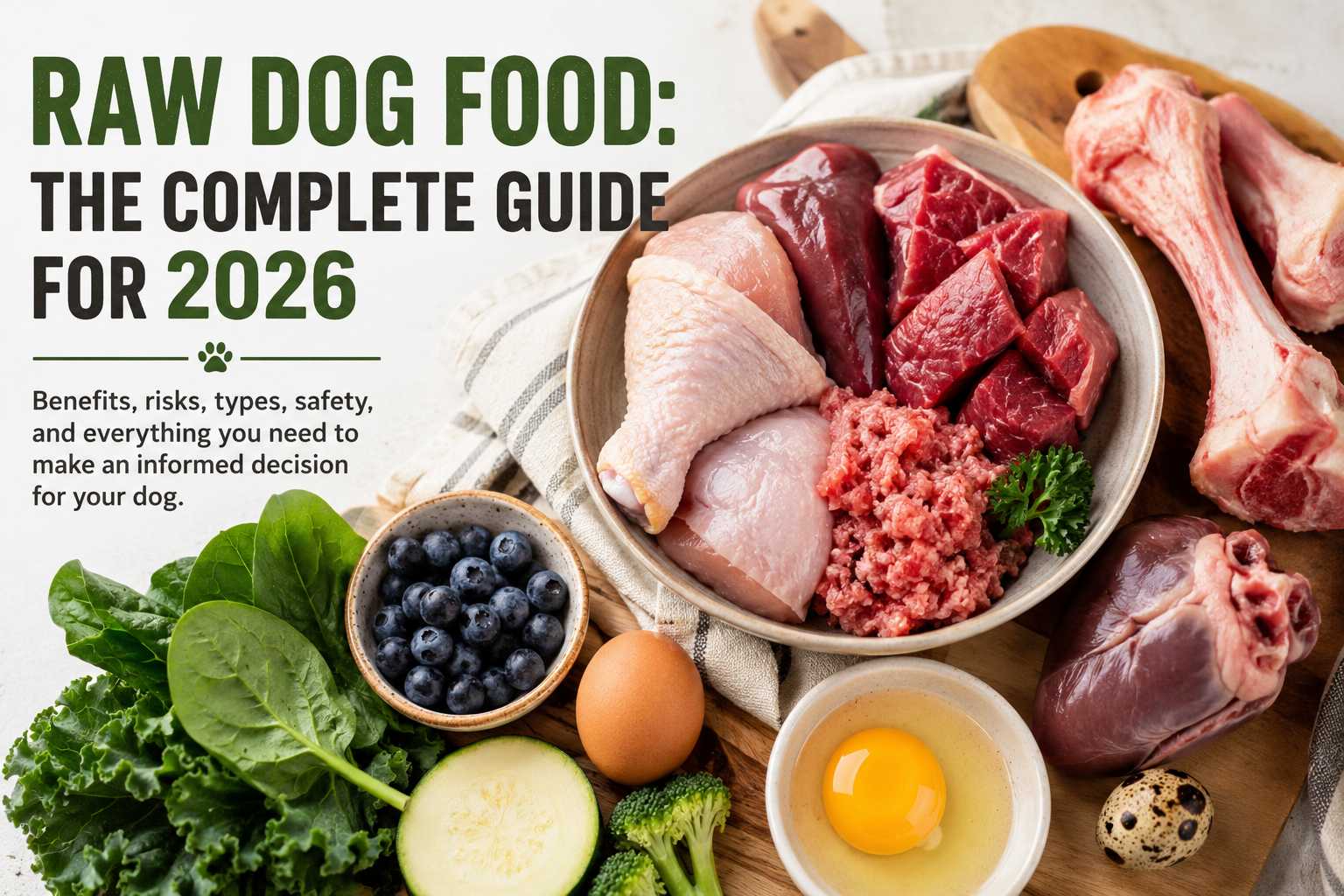
A raw dog food diet generally includes a combination of the following:
- Muscle meat — beef, chicken, turkey, lamb, pork, fish, or game
- Raw edible bone — for calcium, phosphorus, and dental abrasion; must be soft and uncooked (cooked bones splinter and are dangerous)
- Organ meat — liver, kidney, and other secreting organs; nutrient-dense but must be fed in proportion
- Vegetables and fruit — leafy greens, carrots, berries, and similar whole foods for fibre and micronutrients
- Eggs — high-quality protein and fat
- Supplements — omega-3 fatty acids, vitamin E, and others to correct any nutritional gaps
Types of Raw Dog Food: Frozen, Freeze-Dried, BARF & More
Not all raw dog food is the same. Understanding the different formats matters, because they have meaningfully different nutritional profiles, safety considerations, costs, and practicality.
Frozen Raw Dog Food
The most traditional form of commercial raw feeding. Meat, organs, bone, and often vegetables are ground together, portioned into patties, chubs (sausage-like tubes), or medallions, and frozen immediately after production. Frozen raw food is typically sold in pet specialty stores or direct-to-door subscription services.
Frozen raw food preserves nutrients well but requires freezer space, planning ahead for thawing, and careful handling. Importantly, the FDA’s research found that commercially available raw frozen pet food was significantly more likely to harbour Salmonella and Listeria than any other category of pet food tested.
Freeze-Dried Raw Dog Food
Freeze-drying starts with frozen raw meat, which is then placed in a vacuum chamber. The process (called sublimation) removes up to 98–99% of the food’s moisture without using heat, creating a lightweight, shelf-stable product that rehydrates before serving.
The nutrient profile of freeze-dried food is very close to that of the original raw ingredients. However — and this is important — freeze-drying is not a pathogen-elimination step. Bacteria and viruses can survive the process in a dormant state and reactivate once the food is rehydrated. Premium freeze-dried brands often add a second safety step called High-Pressure Processing (HPP) before freeze-drying to address this. Always check the label or manufacturer’s website to see whether HPP is used.
High-Pressure Processing (HPP): What It Is and Why It Matters
HPP is a non-thermal pasteurisation technique — no heat involved. Raw pet food in its final sealed packaging is placed in a chamber filled with water, then subjected to enormous hydraulic pressure (up to 87,000 pounds per square inch). According to PetMD, this pressure destroys the cellular structure of pathogens like Salmonella, Listeria, and E. coli, reducing them below detectable levels — while leaving the food technically raw and most nutrients intact.
HPP is widely used in human food manufacturing for products like deli meats and cold-pressed juices. It’s increasingly standard among reputable commercial raw pet food brands. If you’re considering raw food, choosing a product that uses HPP is one of the most meaningful safety decisions you can make.
HPP does not mean a raw food is completely risk-free — it significantly reduces pathogen loads but does not guarantee zero contamination. Post-processing contamination can still occur during handling. Always follow safe food handling practices regardless of whether a product is HPP-treated.
The BARF Diet Explained
BARF (Biologically Appropriate Raw Food, or Bones and Raw Food) is the most widely followed raw feeding model. It was formalised by Ian Billinghurst and has been refined by raw feeding communities over the past three decades.
A typical BARF diet follows approximate ratios: 70% muscle meat, 10% raw edible bone, 5% liver, 5% other secreting organs, 7% vegetables, and small amounts of fruit, seeds, or nuts. These are starting guidelines — individual dogs may need adjustments based on age, size, health status, and digestive tolerance.
Home-prepared BARF diets can be nutritionally complete, but they require careful ingredient selection and proportioning. Raw feeding resources emphasise that simply feeding meat without correct organ ratios and bone content can result in serious mineral imbalances over time. A consultation with a board-certified veterinary nutritionist before starting a home-prepared BARF diet is strongly advisable.
Prey Model Raw (PMR)
The Prey Model Raw diet takes a stricter approach, aiming to replicate a whole-prey animal without plant ingredients. Typical ratios are roughly 80% muscle meat, 10% raw bone, and 10% organ (including liver). PMR excludes vegetables and fruit on the basis that canine ancestors consumed little plant matter. This approach carries an even higher risk of nutritional deficiency without careful planning and is generally considered more difficult to balance correctly.
Air-Dried and Dehydrated Raw Dog Food
Some products are dried at low temperatures using warm air rather than vacuum-based freeze-drying. Air-dried foods are shelf-stable and convenient, though the drying process can degrade some heat-sensitive nutrients. Like freeze-dried food, they are technically raw and carry similar pathogen considerations unless HPP-treated. Always check the label.
The Safety Question: What the Research Actually Shows
This is where many raw feeding conversations get heated — and where being clear and honest matters most. The safety picture for raw dog food is not simple, but it is not ambiguous either.
The American Veterinary Medical Association (AVMA), the American Animal Hospital Association (AAHA), the US Centers for Disease Control and Prevention (CDC), the FDA, and the Canadian Veterinary Medical Association (CVMA) all advise caution with raw pet food diets, citing risks to both animals and humans — particularly those who are vulnerable.
What the FDA’s Research Found
In a two-year study (2010–2012), the FDA’s Center for Veterinary Medicine screened over 1,000 pet food samples for pathogens. Of the 196 commercially available raw pet food samples tested:
- 15 samples (7.7%) tested positive for Salmonella
- 32 samples (16.3%) tested positive for Listeria monocytogenes
- By comparison, fewer than 0.5% of the 860+ conventional pet food samples (kibble, semi-moist, treats) tested positive for either pathogen
A 2019 review published in the journal Transboundary and Emerging Diseases corroborated these findings, noting that Listeria monocytogenes was isolated from 54% of Dutch frozen raw pet food products in one study, and the FDA figures cited above from another.
The Risk to People, Not Just Dogs
Dogs that are fed contaminated raw food may develop clinical illness themselves, but many carry these pathogens without showing symptoms — and shed them in their faeces, coat, and saliva. This means family members can be exposed simply by petting the dog, being licked, or handling bowls and surfaces.
The groups most at risk from foodborne pathogens include young children, elderly individuals, pregnant people, and anyone who is immunocompromised (including people receiving chemotherapy, living with HIV, or taking immunosuppressant medications). For households that include these individuals, the CDC strongly advises against raw pet food diets.
What Raw Feeding Advocates Say
It’s fair to acknowledge the other side of this debate. Some raw feeding advocates argue that the FDA study used a small sample, that many kibble products have also been recalled for Salmonella contamination, and that a dog’s naturally acidic stomach is better equipped to handle bacterial loads than a human’s. These points are not without merit — kibble has indeed been involved in significant recalls — but the available comparative data consistently shows higher contamination rates in raw products. The debate is ongoing, and more research is needed for a complete picture.
In late 2025, raw pet food recalls and safety advisories continued to emerge. Researchers at Tufts University’s Cummings School of Veterinary Medicine documented a case in which a child was infected with E. coli O157:H7 — a strain that can cause severe kidney failure — linked to a commercial raw frozen pet food consumed by the family dog. In a separate incident, frozen raw pet foods contaminated with avian influenza (H5N1) caused fatalities in cats, with human exposure concerns raised. These incidents underscore that bacterial and viral contamination in raw pet food remains an active, documented public health concern, not a theoretical one.
Raw vs Kibble vs Fresh Pet Food: A Practical Comparison
Choosing a diet for your dog rarely comes down to one factor. Most pet owners are weighing nutrition, safety, convenience, cost, and their dog’s individual needs all at once. Here’s an honest side-by-side comparison.
| Factor | Raw (Frozen/Freeze-Dried) | Kibble (Dry) | Fresh/Gently Cooked |
|---|---|---|---|
| Pathogen Risk | Higher — Salmonella, Listeria, E. coli possible; HPP reduces but doesn’t eliminate | Low — heat processing kills pathogens; recalls occur but less frequently | Low — gentle cooking destroys pathogens while retaining nutrition |
| Nutrient Retention | High for heat-sensitive vitamins; protein bioavailability varies | Lower for heat-sensitive vitamins; synthetic vitamins added back | Moderate–high; some heat-sensitive nutrients preserved via gentle cooking |
| Nutritional Completeness | Variable — commercial products labelled “complete & balanced” meet AAFCO standards; home-prepared diets require expert formulation | Consistently complete & balanced (if AAFCO-labelled) | High — reputable fresh food brands formulated by veterinary nutritionists |
| Digestibility | Generally high; some studies suggest improved stool consistency | Good in premium kibble; varies by ingredient quality and processing | High; whole-food ingredients in bioavailable form |
| Moisture Content | High (frozen) / very low (freeze-dried before rehydration) | Very low (~10%) | High (~70–80%) |
| Convenience | Moderate — requires freezer space, thawing, careful hygiene | Highest — scoop and serve | Good — portioned and delivered; requires fridge space |
| Cost | Higher — especially freeze-dried | Lowest–Moderate depending on brand | Higher — typically subscription-based |
| Handling Requirements | Significant — same as raw meat; hand-washing, surface disinfection essential | Minimal — basic hand-washing recommended | Moderate — basic food hygiene, refrigerator storage |
| Vet/Organisation Position | Caution advised by AVMA, AAHA, FDA, CDC, CVMA | Widely accepted as safe baseline | Generally viewed more favourably than raw; seen as good balance of nutrition and safety |
A Note on Fresh/Gently Cooked Dog Food
Fresh pet food — sometimes called “gently cooked” or “lightly cooked” dog food — has grown significantly as a category. Brands delivering portioned, refrigerated meals made with human-grade ingredients have become popular in the USA, UK, Australia, Canada, and New Zealand. These products reach temperatures that destroy common pathogens, making them viewed more favourably by most veterinary bodies than raw diets, while still offering whole-food nutrition without the heavy processing of conventional kibble. If you like the idea of feeding your dog minimally processed, whole-ingredient meals without the pathogen risks of raw feeding, fresh cooked food is worth serious consideration.
Reported Benefits: What Owners Claim vs What Studies Show
The list of claimed benefits for raw dog food is long and frequently repeated. It’s important to separate what pet owners genuinely report experiencing from what clinical research has rigorously demonstrated.
What Raw Food Advocates Commonly Report
- Shinier coat and healthier skin
- Firmer, smaller, less odorous stools
- Improved energy levels
- Better dental health (particularly from chewing raw meaty bones)
- Reduced allergy symptoms or itching
- Weight management improvements
- Greater palatability — picky eaters often take to raw food more readily
Many of these reports are sincere and consistent across thousands of raw-feeding owners. That doesn’t mean they’re wrong — it means the evidence is primarily anecdotal rather than clinical, and other factors (like switching to higher-quality protein sources overall, or eliminating common allergens) may explain some improvements.
What the Research Actually Supports
Rigorous clinical trials specifically comparing raw diets to high-quality cooked diets in dogs are limited. Most existing studies focus on contamination rates and food safety rather than health outcomes. Organisations including the AVMA note that evidence for the claimed health benefits of raw diets over well-formulated cooked alternatives is not yet robust enough to support definitive clinical recommendations.
What the research does suggest:
- Higher protein and lower carbohydrate content in raw diets may benefit some dogs — though this is achievable in high-quality kibble or fresh cooked food as well.
- Chewing raw meaty bones does appear to reduce tartar accumulation — a genuine, observable benefit. However, raw bone feeding also carries risks of tooth fracture, choking, and intestinal perforation. Veterinary dentists typically recommend safer dental alternatives for at-home use.
- The “dietary enzyme” argument — that raw food’s naturally occurring enzymes aid digestion — is not well-supported. Dogs produce their own digestive enzymes, and most dietary enzymes are inactivated in the stomach anyway.
Most evidence supporting raw dog food benefits is observational or anecdotal. Peer-reviewed clinical trials with control groups are limited. This does not mean the benefits don’t exist — it means we don’t yet have the scientific certainty that allows health professionals to make confident recommendations. More research is needed.
Nutritional Completeness: Getting It Right
One of the most common mistakes people make with raw feeding — especially home-prepared diets — is assuming that “natural” automatically means “nutritionally complete.” It doesn’t.
Understanding AAFCO Standards
In the USA and internationally, the Association of American Feed Control Officials (AAFCO) sets the nutritional standards that commercial pet food must meet to be labelled “complete and balanced.” A food meeting AAFCO standards has been formulated or feeding-trial-tested to provide all the nutrients a dog needs at a given life stage.
In Australia, the Pet Food Industry Association of Australia (PFIAA) references AAFCO nutrient profiles in the Australian Standard for pet food manufacturing (AS5812), though the industry remains largely self-regulated. In the UK, pet food is governed by the Pet Food Manufacturers’ Association (PFMA) and relevant EU-derived legislation. In Canada and New Zealand, AAFCO nutrient profiles are widely used as the reference standard by responsible manufacturers.
When buying commercial raw dog food, look for a nutritional adequacy statement on the label indicating the product meets AAFCO (or equivalent regional) standards for your dog’s life stage. Many raw products are labelled “for supplemental or intermittent feeding only” — meaning they are not intended as a dog’s sole diet.
The Challenge of Home-Prepared Raw Diets
Home-prepared raw diets give you maximum control over ingredients — but they place full responsibility for nutritional balance on you. Research has consistently shown that most home-prepared dog diets, raw or cooked, are nutritionally deficient or imbalanced without professional formulation.
Common deficiencies in home-prepared raw diets include calcium (if bones are not included), iodine, vitamin D, zinc, and iron in appropriate ratios. Excessive organ meat can lead to vitamin A toxicity. Feeding a raw diet based on a generic recipe from the internet without veterinary nutritionist input is a meaningful risk.
If you want to feed a home-prepared raw diet, consult a board-certified veterinary nutritionist (DACVN in the USA and Canada; RCVS-recognised specialists in the UK; a vet with specialist nutrition qualifications in Australia and New Zealand) for a diet formulated specifically for your dog’s age, weight, breed, and health status. Many offer remote consultations. This is not optional if you want to avoid nutritional deficiencies over time.
Commercial Raw Food: What to Look For
- “Complete and balanced” labelling meeting AAFCO standards (or your regional equivalent)
- HPP (High-Pressure Processing) used as a pathogen-reduction step
- Named, whole-meat ingredients as the primary components (not “meat by-products” as the first ingredient)
- Third-party testing for pathogens (some brands publish test results)
- Transparent sourcing and manufacturing information
- A clear recall history — check FDA recall databases (USA), FSA (UK), CFIA (Canada), FSANZ (Australia/NZ)
Who Should NOT Feed Raw (and When to Be Extra Careful)
Even if you personally are comfortable with the risk-benefit tradeoff, there are situations where raw dog food is specifically contraindicated — or requires extra care.
Households Where Raw Diets Are Higher Risk
The AVMA and CDC specifically identify the following as higher-risk situations:
- Households with infants or young children (whose immune systems are still developing)
- Households with elderly individuals
- Households with pregnant people (Listeria in particular poses serious risks in pregnancy)
- Households with immunocompromised individuals — including those receiving chemotherapy, living with HIV/AIDS, on long-term corticosteroids, or with autoimmune conditions
Dogs Who Should Not Eat Raw Without Veterinary Guidance
- Puppies — their immune systems are still developing and they are more susceptible to foodborne pathogens; their nutritional needs during growth phases are complex
- Senior dogs — may have compromised immune function or concurrent health issues
- Dogs with pancreatitis — high-fat raw diets can trigger or worsen pancreatitis
- Dogs with liver or kidney disease — protein content and type need careful management
- Cancer patients — immunosuppression from treatment dramatically increases infection risk
- Dogs recovering from surgery or on immunosuppressant medications
- Dogs with a history of gastrointestinal issues
What Recent Research Shows (2024–2026)
The scientific literature on raw pet food has continued to grow, and several recent findings are worth understanding.
Contamination Risks Remain Consistent
A 2024–2025 testing programme conducted by Consumer Reports on 58 commercial dog foods found Listeria contamination in four samples — all of which were raw frozen products. Zero fresh cooked foods tested positive for Listeria. No Salmonella was detected across all 174 individual samples tested (each product tested in triplicate). This finding suggests that Salmonella contamination in raw pet food, while historically a concern, may be improving with better manufacturing practices — but Listeria risk remains meaningful.
Antibiotic-Resistant Bacteria
Researchers at Tufts University’s Cummings School of Veterinary Medicine have highlighted growing concern over antibiotic-resistance genes found in raw pet food. These genes don’t only affect the animal eating the food — they can be transferred to other bacteria in the environment, contributing to the broader antibiotic-resistance problem in both human and veterinary medicine. This is an emerging area of research that raises concerns beyond individual household safety.
H5N1 Avian Influenza in Raw Pet Food (2024–2025)
In late 2024 and early 2025, contamination of raw frozen pet food with Highly Pathogenic Avian Influenza (H5N1) — bird flu — was documented. Cats consuming contaminated raw food experienced fatalities in some cases, with human exposure concerns raised. The AVMA and Tufts researchers flagged this as a particularly concerning development, given the severity of H5N1 infection in mammals. This contamination vector is unique to raw (not cooked) food, as cooking destroys the virus.
The Microbiome Question
Some raw feeding advocates argue that raw diets support a healthier gut microbiome in dogs. Research on canine gut microbiome differences between raw-fed and kibble-fed dogs does suggest differences exist, but whether these differences are beneficial, neutral, or potentially harmful is not yet clear from the available published evidence. This remains an active area of scientific inquiry.
6 Common Mistakes Raw Dog Food Feeders Make
- 1Feeding Raw Bones Unsupervised
Raw edible bones are a core component of BARF and many raw diets, but they carry real risks: tooth fracture, choking, intestinal obstruction, and internal perforation are all documented. Weight-bearing bones from large animals (like beef femur bones) are particularly risky for tooth fractures.
✔ Better approach: Always supervise bone chewing. Choose appropriately sized, soft raw bones (e.g., chicken necks for smaller dogs). Consult your vet about bone safety for your dog’s size and chewing style.
- 2Skipping the Nutritional Balance Step
Many raw feeding beginners start by feeding just muscle meat — thinking that protein is all a dog needs. A diet of plain meat without organs, bone, and vegetables is seriously deficient in calcium, phosphorus, and key vitamins. This can cause bone disease and other conditions over time.
✔ Better approach: Follow an established BARF ratio, use a commercial raw food labelled “complete and balanced,” or consult a board-certified veterinary nutritionist before formulating a home-prepared diet.
- 3Ignoring Food Safety Protocols
Raw meat is raw meat. The same hygiene rules that apply to handling raw chicken for a human dinner apply — in full — to raw dog food. Many pet owners are more careful preparing their own food than their dog’s, then wonder why someone in the household has a stomach bug.
✔ Better approach: Wash hands thoroughly with soap after every handling. Disinfect all surfaces and bowls with hot, soapy water. Thaw food in the refrigerator only. Keep raw pet food away from human food preparation areas.
- 4Transitioning Too Quickly
Switching a dog from kibble to raw overnight often causes digestive upset — loose stools, vomiting, or refusal to eat. A dog’s digestive system needs time to adjust to a very different food type.
✔ Better approach: Transition gradually over 7–14 days, starting with a small amount of raw food mixed with the existing diet and increasing the ratio slowly. Watch for digestive tolerance at each stage.
- 5Choosing Freeze-Dried Without Checking for HPP
Freeze-drying preserves nutrients well but does not kill pathogens. Many pet owners assume that a freeze-dried product is inherently safer than frozen raw — it may not be, unless the manufacturer uses HPP as an additional safety step.
✔ Better approach: Always check the manufacturer’s website or product label for HPP use. Brands that use HPP will usually state this prominently. If it’s not mentioned, assume it wasn’t used.
- 6Not Checking for Recalls
Raw pet food has a higher recall frequency than other pet food categories. Many owners aren’t subscribed to recall alerts and don’t realise a product they have in the freezer has been flagged.
✔ Better approach: Sign up for recall alerts in your country: FDA (USA) · FSA (UK) · Health Canada · FSANZ (Australia/NZ)
Evidence-Based Recommendations for Pet Owners Considering Raw Feeding
- Talk to your vet first — especially if your dog is a puppy, senior, pregnant, or has any existing health condition. Raw feeding is not appropriate for all dogs.
- Assess your household risk — if anyone in your home is young, elderly, pregnant, or immunocompromised, the risk profile of raw feeding changes significantly. Consider fresh cooked dog food as a safer alternative with similar nutritional values.
- Choose commercial products labelled “complete and balanced” — this tells you the food meets established nutritional standards. Avoid products labelled “supplemental feeding only” as your dog’s sole diet.
- Prioritise HPP-treated products — if you choose commercial raw or freeze-dried food, select brands that use High-Pressure Processing to reduce pathogen risk.
- Follow strict food hygiene protocols — treat raw pet food with the same care as raw meat in your own kitchen. Wash hands, disinfect surfaces, and use dedicated utensils.
- Don’t formulate home-prepared raw diets without professional guidance — consult a board-certified veterinary nutritionist for any home-prepared diet. Generic internet recipes are rarely nutritionally complete.
- Subscribe to recall alerts — register for notifications from your country’s food safety authority so you’re informed about raw pet food recalls immediately.
- Monitor your dog’s health — schedule regular veterinary check-ups that include bloodwork if feeding a raw diet long-term, so any emerging deficiencies are caught early.
- Consider the full range of options — raw is not the only route to a nutritionally rich, minimally processed diet. High-quality fresh cooked dog food offers most of the nutritional benefits with a significantly safer profile.
- Keep the evidence in perspective — raw feeding has real risks and a limited clinical evidence base for its claimed benefits. But for many healthy adult dogs in careful, informed households, it is a viable diet when done correctly. Transparency about what is and isn’t proven matters.
Frequently Asked Questions
Conclusion: Making the Right Choice for Your Dog
Raw dog food is not a simple topic, and anyone telling you it is — whether in favour or against — is probably leaving something out. What we do know is this: the evidence for meaningful contamination risks in raw pet food is real, well-documented, and documented by bodies with no commercial stake in the outcome. The evidence for claimed health benefits is largely anecdotal and awaits stronger clinical research. Both things can be true at once.
That doesn’t mean raw feeding is wrong for every dog. Many healthy adult dogs in careful, well-informed households eat raw food without incident, and their owners are genuinely pleased with the results. It means that going into raw feeding with clear eyes — understanding what the risks are, how to mitigate them, what makes a good commercial raw product, and when to stop — is non-negotiable.
If you’re considering raw dog food, the most important steps are also the simplest ones: talk to your vet first, assess your household risk honestly, choose commercial products that meet nutritional standards and use HPP, practice proper food hygiene consistently, and subscribe to recall alerts so you’re never the last to know about a contaminated product.
And if raw feeding doesn’t feel right for your situation — whether because of household vulnerability, the practical demands of handling, or simply your own comfort level — there are excellent alternatives. High-quality fresh cooked dog food has never been more widely available, and a premium, whole-ingredient kibble from a reputable brand with a full-time veterinary nutritionist on staff is a perfectly respectable choice.
Your dog’s best diet is one that’s nutritionally complete, handled safely, appropriate for their health status and life stage, and sustainable for you to provide consistently. That’s the goal — however you get there.
References
- American Veterinary Medical Association (AVMA) — “Raw or Undercooked Animal-Source Protein in Cat and Dog Diets” — AVMA Policies — 2024 — https://www.avma.org/resources-tools/avma-policies/raw-or-undercooked-animal-source-protein-cat-and-dog-diets
- US Food and Drug Administration (FDA) — “Get the Facts! Raw Pet Food Diets Can Be Dangerous to You and Your Pet” — FDA Animal Veterinary — 2013 (updated) — https://www.fda.gov/animal-veterinary/animal-health-literacy/get-facts-raw-pet-food-diets-can-be-dangerous-you-and-your-pet
- Centers for Disease Control and Prevention (CDC) — “About Pet Food Safety” — Healthy Pets, Healthy People — 2025 — https://www.cdc.gov/healthy-pets/about/pet-food-safety.html
- Cornell University College of Veterinary Medicine, Riney Canine Health Center — “Raw foods for dogs: Evidence-based advice” — Updated December 2025 — https://www.vet.cornell.edu/departments-centers-and-institutes/riney-canine-health-center/canine-health-topics/raw-foods-dogs-evidence-based-advice-riney-canine-health-center
- Tufts University Cummings School of Veterinary Medicine (Petfoodology) — “Raw Pet Food Risks: A Research Update” — October 2025 — https://sites.tufts.edu/petfoodology/2025/10/27/raw-pet-food-research-update/
- VCA Animal Hospitals — “Dogs and Raw Food Diets” — https://vcahospitals.com/know-your-pet/dogs-and-raw-food-diets
- Canadian Veterinary Medical Association (CVMA) — “Safety of Raw Meat-Based Pet Food Products” — Position Statement — https://www.canadianveterinarians.net/policy-and-outreach/position-statements/statements/safety-of-raw-meat-based-pet-food-products/
- Food Safety News — “Pet food dangers: How contaminated raw diets and kibble threaten human health” — September 2025 — https://www.foodsafetynews.com/2025/09/pet-food-dangers-how-contaminated-raw-diets-and-kibble-threaten-human-health/
- PetMD — “Freeze-Dried Dog Food: The Pros and Cons” — July 2024 — https://www.petmd.com/dog/nutrition/freeze-dried-dog-food-pros-and-cons
- PetMD — “High-Pressure Processing and Raw Pet Food Diets: What You Need to Know” — https://www.petmd.com/dog/nutrition/high-pressure-processing-and-raw-pet-food-diets-what-you-need-know
- American Kennel Club (AKC) — “Fresh vs Raw vs Kibble Dog Food” — https://www.akc.org/expert-advice/nutrition/fresh-raw-kibble-dog-food/
- Penn State Extension — “Food Safety Dangers of Raw Pet Food” — Updated October 2025 — https://extension.psu.edu/food-safety-dangers-of-raw-pet-food
- VetsGrade — “Freeze-Dried vs Fresh Dog Food: 2026 Science-Backed Guide” — March 2026 — https://vetsgrade.com/blogs/news/freeze-dried-vs-fresh-dog-food
- Petfood Industry — “Should you use high-pressure processing for your pet food?” — July 2022 — https://www.petfoodindustry.com/production/pet-food-processing/article/15468843/should-you-use-highpressure-processing-for-your-pet-food
- ScienceDirect / Elsevier — “High pressure processing to control Salmonella in raw pet food without compromising the freshness appearance” — Food Control — 2022 — https://www.sciencedirect.com/science/article/abs/pii/S0740002022001630
- Worms & Germs Blog — “Listeria Contamination of Raw Pet Food” — 2024 — https://www.wormsandgermsblog.com/2024/07/articles/animals/cats/listeria-contamination-of-raw-pet-food/
- Transboundary and Emerging Diseases (PMC / NIH) — “Raw diets for dogs and cats: a review, with particular reference to microbiological hazards” — 2019 — https://pmc.ncbi.nlm.nih.gov/articles/PMC6849757/
- Perfectly Rawsome — “Biologically Appropriate Raw Food (BARF) for Adult Dogs” — https://perfectlyrawsome.com/raw-feeding-knowledgebase/biologically-appropriate-raw-food-barf-adult-dogs/
- Revival Animal Health — “Raw Diets for Dogs: Benefits, Risks, and What Every Pet Owner Should Know” — July 2025 — https://www.revivalanimal.com/learning-center/raw-diets-for-dogs
- PFIAA (Pet Food Industry Association of Australia) — “Understanding Pet Food Labels” — https://pfiaa.com.au/understanding-pet-food-labels/