Open a kitchen cupboard in almost any home and you will find it straight away: bags inside bags, tubs stacked inside tubs, a drawer full of lids that fit nothing. To reduce plastic waste at home is not really about becoming perfectly plastic-free. It is about noticing where the plastic keeps coming from, cutting the easy stuff first, and building habits you can actually keep.
Written by Md Masud Rana based on published expert sources. This article has not been professionally reviewed. See our sources below.
Most of us do not set out to fill a bin with plastic. It arrives with the shopping, the takeaway, the bathroom cabinet and the laundry basket, a little at a time, until it feels normal. That is exactly why a room-by-room approach works better than a dramatic clear-out. You change one routine, it sticks, and then you move on to the next.
This guide walks through the whole house — kitchen, bathroom, laundry and beyond — with practical swaps, a simple way to audit your own plastic, and honest advice on recycling. It also covers what the latest research actually says, the mistakes that undo good intentions, and a realistic plan for the next month. No guilt trips. No perfection required.
The quick answer
To reduce plastic waste at home, start with the items you use most: reusable bags, a refillable bottle, food storage you already own, and loose or bulk groceries where you can get them. Refuse what you do not need, reuse what you already have, and check your local recycling rules before you bin anything plastic — because what is accepted varies by area. Small, repeated swaps beat a one-week plastic-free sprint every time.
What is in this guide
- Why does plastic waste at home matter so much?
- Where is all the plastic in your home hiding?
- How do you start reducing plastic waste at home?
- What should you swap first in the kitchen?
- What about the bathroom and laundry?
- How do you recycle plastic properly?
- What does recent research show?
- Common mistakes to avoid
- Final recommendations
- Frequently asked questions
Why does plastic waste at home matter so much?
The scale of the problem is hard to picture until you see the numbers. Since the 1950s, researchers estimate humanity has produced 9.2 billion tonnes of plastic, some 7 billion tonnes of which have become waste, according to the United Nations Environment Programme (UNEP). That is not just a factory problem or an ocean problem. It starts in ordinary homes, with the packaging, bottles and bags we bring through the front door every week.
Single-use items are the worst offenders. UNEP lists water bottles, takeaway bags, disposable cutlery, freezer bags and packaging foam among the most common single-use plastic products, and notes that they are not circulated in the economy — they overwhelm waste systems and enter the environment instead. Think about your own week for a moment. How many of those did you use, often for a few minutes, and then throw away?
It is not only about litter
Plastic pollution damages ecosystems in ways that are easy to miss from a kitchen window. UNEP points out that fish often mistake plastic for food, filling their stomachs with indigestible pieces, and that tiny plastic fragments can slow the growth of phytoplankton, the microscopic algae at the base of several aquatic food webs. The same UNEP analysis notes that plastic has been found in lakes, rivers, deserts, sea ice and even on Mount Everest.
There is a climate angle too. Plastic production is energy-hungry, and UNEP reports it was responsible for more than 3 per cent of planet-warming greenhouse gas emissions in 2020. Cutting the plastic you buy is therefore not only about a tidier bin. It trims demand for new plastic at the source, which is the part of the chain you actually control.
Why recycling alone cannot fix it
Here is the uncomfortable fact that changes how you should think about this whole topic. Only about 9 per cent of plastics are actually recycled, according to a study from the Organisation for Economic Co-operation and Development cited by UNEP. Many products are not designed to be recycled, some are too flimsy, and recycling systems simply cannot keep up — global plastic production doubled between 2000 and 2019.
That does not mean recycling is pointless. It means recycling should be your last resort, not your first plan. Refusing and reducing come first, reusing comes second, and recycling handles what is left. The US Environmental Protection Agency (EPA) puts it the same way: the most effective way to reduce waste is to not create it in the first place, and it lists refuse, reduce, reuse, repair and recycle in that order on its waste guidance page. Keep that order in mind and the rest of this guide falls into place.
Where is all the plastic in your home hiding?
Before you buy a single reusable anything, do a quick audit. It takes about ten minutes and it stops you wasting money on swaps you do not need. Grab a bag, walk through each room, and pull out the plastic items you throw away or replace most often. You are looking for patterns, not perfection.
A common real-world pattern is this: the kitchen produces the most by far, the bathroom comes second, and everything else is a long tail of small items. If that sounds like your home, you are in good company. Most households find the same shape once they actually look.
The kitchen: the biggest source
Start with food packaging. Cling film, freezer bags, produce bags, bread bags, bottles, tubs, trays and the film on ready meals all add up fast. Then check the cleaning cupboard: spray bottles, washing-up liquid bottles, bin liners and sponge packaging. Many homes also have a drawer of single-use cutlery, straws and plates kept “just in case” — items that were free with a takeaway and have sat there for months.
The bathroom, laundry and the rest of the house
In the bathroom, the usual suspects are shampoo and shower gel bottles, toothbrushes, toothpaste tubes, cotton pads, disposable razors and the packaging around all of them. Council guidance from the Royal Borough of Windsor and Maidenhead suggests swapping plastic bottles for bars — shampoo bars, shaving bars and washing-up soap bars — and trying beeswax wraps instead of cling film, as part of a practical set of tips to reduce plastic use. A bar lasts a while, takes up less space, and removes a bottle from the cycle entirely.
In the laundry room, look at detergent bottles, fabric conditioner bottles, dryer sheets and the bags that new clothes arrive in. Around the house, there are bin liners, storage boxes, toy packaging, pet food bags and the plastic film on parcels. If you share your home with a pet, their food and treat packaging is a steady source too — our guide to making your pet care eco-friendly looks at that side of the house in more detail. The point of the audit is not to feel bad. It is to give you a short, honest list to work from.
How do you start reducing plastic waste at home?
The simplest framework is the one the EPA recommends: refuse, reduce, reuse, repair, recycle. In plain language, that means saying no when you can, buying less of what creates plastic, using what you already own for longer, fixing things instead of replacing them, and recycling only what remains. The EPA’s waste guidance notes that refusing can be as simple as declining extra packaging or plastic cutlery when you do not need them.
Start with five swaps, not fifty. Pick the ones that fit your life as it actually is. If you cook most nights, kitchen swaps will matter most. If you buy lunch out, a reusable container and cutlery set will do more than a bathroom overhaul. The best swap is the one you will still be doing in three months.
A realistic first-month plan
Week one is the audit above, plus one change: carry a reusable bag and a refillable bottle. That is it. Week two, tackle food storage — use containers and jars you already own instead of buying new ones, and try beeswax wraps or a lidded container instead of cling film. Week three, look at your shopping: buy loose fruit and vegetables where you can, choose larger packs over multipacks of small ones, and try a refill shop or bulk section if one is near you.
Week four is the boring but important one: learn your local recycling rules. Rules differ by area, and guessing wrong can contaminate a whole load. The EPA warns that non-recyclable items in a recycling bin can contaminate a whole load of recyclables, causing them all to be thrown out, in its frequent questions on recycling. A ten-minute check with your local provider is worth more than a cupboard full of good intentions.
Make the easy choice the default
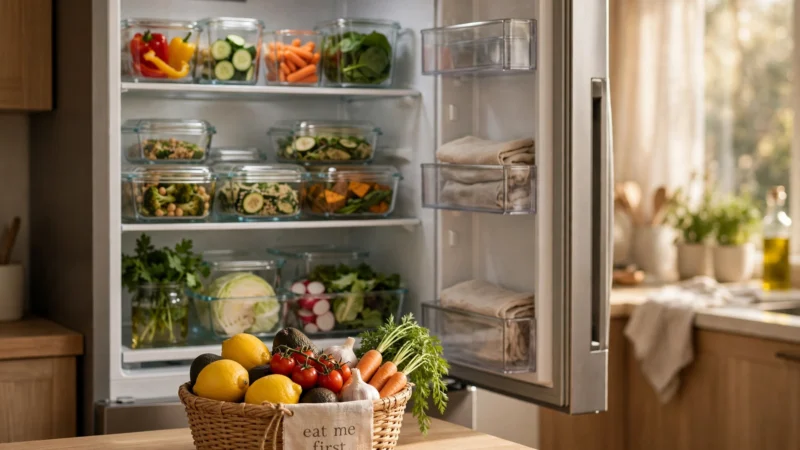
Willpower runs out. Systems do not. Put reusable bags by the front door, not in a drawer you never open. Keep a water bottle where you actually fill it. Store leftovers in clear containers at eye level in the fridge so they get eaten instead of forgotten. Put a small box near the door for bags and containers to take back to the shop.
Imagine you come home to a kitchen where the reusable stuff is simply the stuff that is to hand. That is the goal — not a display of eco products, but a home where the low-plastic option is the lazy option. When a swap feels like extra work every single time, it is the wrong swap for you right now. Pick an easier one and come back later.
What should you swap first in the kitchen?
The kitchen is where most homes will make the biggest dent, so it deserves the most attention. Work through it in order of impact and ease, not in order of what looks impressive online.
Food storage and shopping
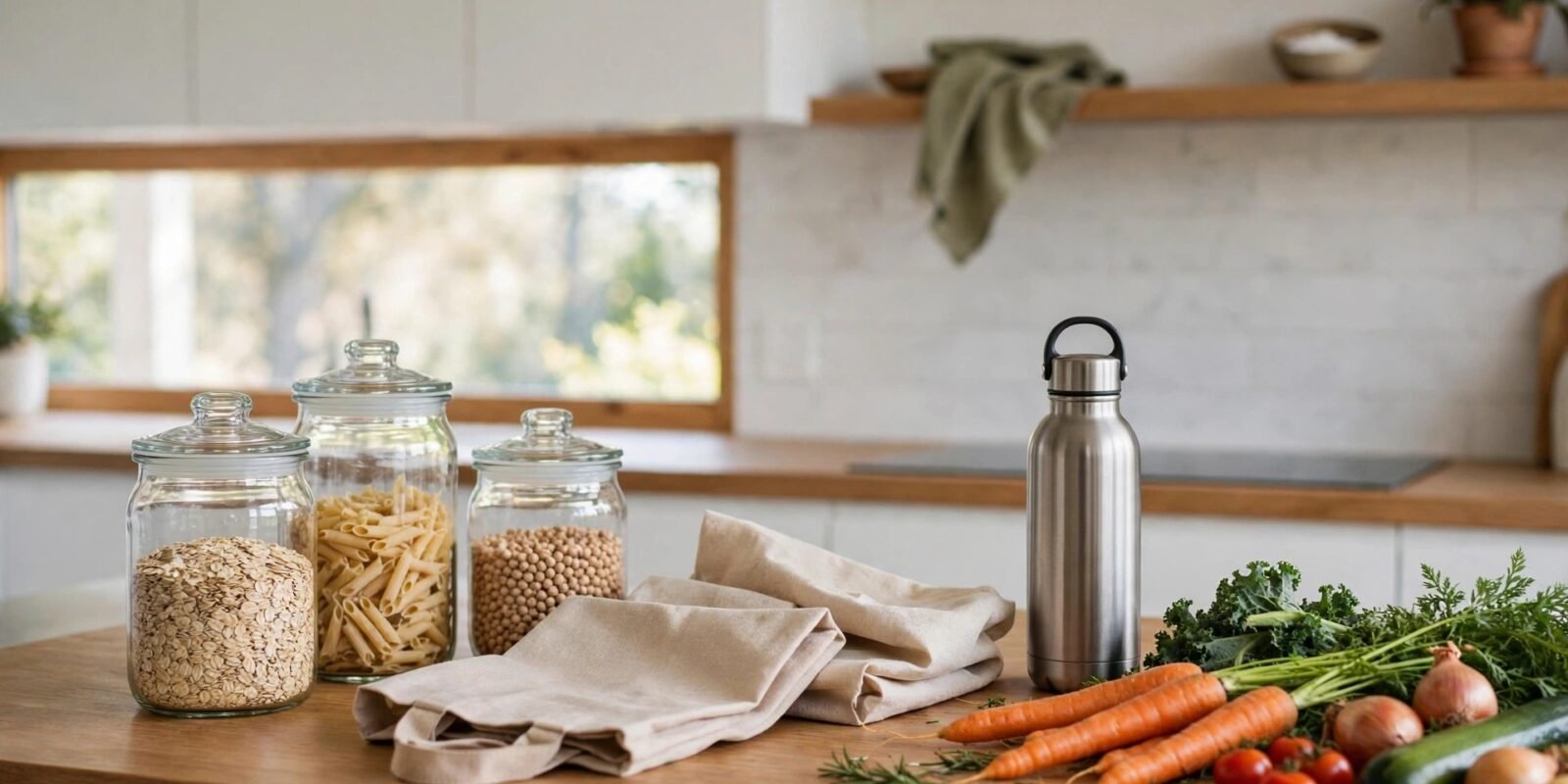
First, use what you already own. Glass jars, old takeaway tubs and lidded containers you already have are better than buying a brand-new matching set in plastic or anything else. Reusing items such as grocery bags and containers is exactly what the EPA recommends before you reach for the recycling bin.
Next, change how you shop. Buy loose fruit and vegetables when you can, take your own bags, and choose products in glass, metal or cardboard where the choice is genuinely available and the food will still keep well. Buying in bulk usually cuts packaging, and council guidance notes it is often cheaper too. If you cook from scratch more often and freeze leftovers, you will cut ready-meal packaging as a side effect — and our guide on how to reduce food waste at home pairs naturally with this, since wasted food and plastic packaging often arrive together.
Cooking, cleaning and takeaways
Cling film is a good second target. A lidded container, a plate over a bowl, or a beeswax wrap covers most jobs. Freezer bags can often be replaced by reusable containers, though it is worth being honest here: for some foods, a sturdy reusable bag that you wash and reuse many times is a better fit than a rigid tub. Choose the version you will actually wash.
For takeaways, keep a small kit by the door: a container, a set of reusable cutlery and a cloth napkin. Refuse the plastic cutlery and extra sachets when you order — the EPA’s “refuse” step is built for exactly this moment. And in the cleaning cupboard, consider refillable bottles or concentrated refills where your local shops offer them, and use washable cloths and sponges instead of disposable wipes. Small switches, repeated daily, are what move the total.
What about composting?
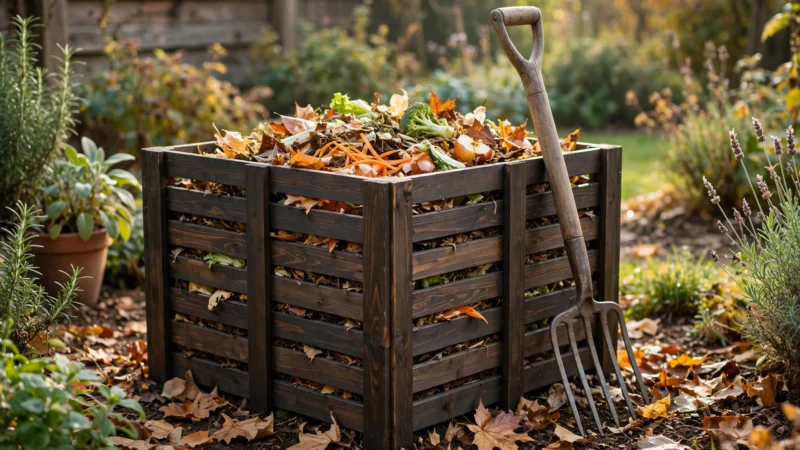
Composting does not directly cut plastic, but it belongs in this guide for a practical reason: once food scraps have somewhere to go, you stop reaching for plastic bin liners and food bags to deal with them. If you have space, our guide on how to start composting at home walks through the basics. Even a small countertop caddy lined with newspaper changes the routine.
What about the bathroom and laundry?
The bathroom is smaller than the kitchen, which makes it a satisfying second project. You can work through it in a single weekend and actually see the difference.
Bathroom swaps that tend to stick
Bar versions of shampoo, conditioner and soap remove a bottle each time you finish one. A bamboo toothbrush, a razor with replaceable heads and reusable cotton pads are the swaps council guidance most often suggests, and they work because they slot into routines you already have — you do not have to learn a new habit, just buy a different version of the same thing. The RBWM tips also note that buying in bulk or from refill shops can cut bathroom plastic further.
Be honest about what you will not use, though. If a shampoo bar leaves your hair feeling awful, you will go back to a bottle within a month and feel like you failed. You did not fail; that product was wrong for you. Try a refillable bottle from a shop or brand you already like instead. The goal is less plastic over a year, not a perfect bathroom this weekend.
Laundry and microplastics
Laundry deserves a careful word. Synthetic clothes shed tiny fibres in the wash, and those fibres are a form of microplastic. UNEP notes that microplastics and nanoplastics can build up in the human body, though researchers are still working out what they do to us — its plastic pollution analysis is frank that “we don’t know yet” about the health effects. That uncertainty is a reason for sensible caution, not panic.
Practical steps are simple: wash clothes less often when they are not dirty, wash at cooler temperatures where the care label allows, and choose natural fibres when you buy new clothes and the option genuinely suits you. A laundry bag designed to catch fibres can help, but check it actually fits your machine and that you will empty it. As with everything else in this guide, the unglamorous habit you keep beats the impressive product you abandon.
How do you recycle plastic properly?
Recycling matters, but only if you do it right — and “right” depends on where you live. That is the single most important sentence in this section, so it bears repeating: check your local provider’s list before you assume something is recyclable.
What usually goes in, and what usually does not
The EPA lists plastic bottles and caps, jugs and plastic jars among the items most commonly accepted in curbside recycling in the United States, but it stresses that you must confirm with your local provider first, since acceptance depends on your area. Its recycling guidance also warns that a plastic resin code on a product does not guarantee it is recyclable where you live. That little triangle with a number in it is a material identifier, not a promise.
Plastic bags and wraps are the classic trap. The EPA states that plastic bags and wraps, electronics and textiles generally cannot go in a curbside recycling bin, and that many grocery and department stores accept bags and film for recycling instead. Soft plastics — the film around bread, the wrap on multipacks, the bag inside a cereal box — need to go to a store collection point if one exists near you, or in the general waste if it does not. Putting them in the curbside bin does not help; it risks contaminating the load.
The rinse rule and the “wishcycling” trap
Plastic, metal and glass items should be empty and rinsed clean of food debris before recycling, according to the EPA. You do not need to scrub them spotless — a quick rinse is enough — but a tub half full of last week’s sauce helps nobody. Paper must be empty, clean and dry; wet or food-soiled paper may be compostable instead.
“Wishcycling” is the habit of putting something in the recycling bin because you hope it can be recycled. Coffee pods, crisp packets, polystyrene and compostable plastics that look like plastic are common examples. When in doubt, leave it out. One wrong item can spoil a whole truckload, which is a worse outcome than that one item going to general waste. If your area offers a dedicated collection for an item — pods, batteries, electronics — use that route instead of the curbside bin.
| Item | Usually curbside? | Better option |
|---|---|---|
| Plastic bottles and caps | Usually yes — check locally | Rinse, replace cap, recycle |
| Plastic bags and film | Usually no | Store drop-off, or reuse first |
| Food tubs and trays | Often, if clean | Rinse; check local list |
| Polystyrene foam | Usually no | Refuse where you can; check local options |
| Crisp packets and pouches | Usually no | Refuse or use a dedicated collection |
What does recent research show?
The picture has sharpened considerably in the last few years, and it points in one direction: cutting plastic at the source matters more than cleaning it up afterwards. UNEP’s 2025 analysis of pressing questions on plastic pollution summarises the current state of knowledge, and it is worth reading in full if this topic interests you.
One finding stands out. UNEP notes that only about 9 per cent of plastics are recycled, and that recycling systems cannot keep up with production, which doubled between 2000 and 2019. The same UNEP analysis reports that the Organisation for Economic Co-operation and Development forecasts plastic waste will nearly triple to one billion tonnes a year by 2060 if current trends continue. That forecast is a warning, not a certainty — forecasts change when behaviour and policy change, which is precisely the point.
Microplastics: what we know and what we do not
Microplastics are now found in more places than researchers expected, and the science is still catching up. UNEP reports that microplastics have been found in livers and even breast milk, and cites one study finding an average of around 240,000 microplastics in a litre of bottled water. At the same time, it is explicit that researchers do not yet know what microplastics do to humans. Both halves of that sentence matter. It would be wrong to claim proven harm, and equally wrong to claim proven safety.
For your home, that supports the same advice this guide already gives: prefer tap water in a reusable bottle where your local water is safe to drink, and cut single-use plastic where you easily can. Sensible reduction, not fear-driven buying, fits the science.
The lifecycle approach
Researchers and policymakers increasingly talk about a “lifecycle approach”: looking at every stage of a product’s life, from production and design through use to disposal. UNEP argues this means reducing dependence on single-use products, redesigning products to last longer and be reusable, finding alternatives, and preventing plastic from leaking into the environment. For a household, that means the habits in this guide: buy less, choose durable versions, reuse what you have, and recycle what is left properly.
Common mistakes to avoid
1. Trying to go plastic-free overnight. A dramatic clear-out feels good for a weekend and collapses by week three. Better approach: change one room at a time, starting with the kitchen, and let each habit settle before adding the next.
2. Buying a cupboard full of new “eco” products. New reusable items still took resources to make. Better approach: use what you already own first, and only buy a reusable version when a disposable one genuinely runs out.
3. Wishcycling. Putting doubtful items in the recycling bin in hope does more harm than good, since contamination can send a whole load to landfill. Better approach: when in doubt, leave it out, and check your local provider’s list.
4. Forgetting that recycling rules differ by area. Advice from another country or city may not apply to your bin. Better approach: find your local council or provider’s list once, save it, and check it when you are unsure.
5. Choosing swaps you hate using. A shampoo bar you dread, a bottle that leaks, a wrap that never sticks — all of them lead back to the disposable version. Better approach: if a swap does not work for you, try a different version rather than giving up on the whole idea.
6. Ignoring the biggest sources. It is easy to fuss over straws while ignoring the weekly shop’s packaging, which dwarfs them. Better approach: do the ten-minute audit, find your top three sources, and start there.
Final recommendations
Do the audit this week. Ten minutes, one bag, every room. Your list of top sources is your plan.
Start with five swaps. Reusable bags, a refillable bottle, containers you already own, loose produce where you can get it, and refusing cutlery and extras you do not need.
Learn your local recycling rules. Save your provider’s list. Rinse containers, keep bags and film out of the curbside bin, and use store drop-offs where they exist.
Buy less before you buy “better”. Refusing and reducing beat any product swap, however well marketed.
Make it easy. Put reusables where you actually use them. Systems beat willpower.
Review monthly, not daily. Once a month, look at what is still filling your bin and pick the next swap. Progress, not perfection, is the whole game.
This content is for educational purposes only and does not replace professional advice. Always consult a qualified professional before making significant household or health decisions.
Conclusion: a lighter bin, one habit at a time
Reducing plastic waste at home is not a test you pass or fail. It is a direction you move in, at a pace your household can sustain. The homes that make the biggest difference are rarely the ones with the most impressive eco cupboards. They are the ones where a few good habits became automatic: the bag by the door, the bottle that gets refilled, the leftovers that get eaten, the bin that gets sorted properly.
Start where this guide started — with the audit. Find your three biggest sources, change one this week, and see how it feels. If it sticks, add another. If it does not, try a different version. Over a year, those small decisions add up to hundreds of items that were never made, never bought and never thrown away.
For a broader look at greener everyday living, our Eco Living Basics guide pulls the whole topic together, and it sits well alongside this one. Take the next step that fits your home, and let the rest follow.
Frequently asked questions
Start with the items you throw away most often, which for most homes means reusable shopping bags, a refillable water bottle, and food storage you already own. Refuse plastic cutlery and extra packaging when you do not need them, buy loose produce where you can, and learn your local recycling rules. Five small habits, kept for months, will cut more plastic than a dramatic one-week clear-out that you abandon.
For almost everyone, no, and aiming for perfection usually backfires. Plastic is built into food packaging, medicine, electronics and many household essentials, and some of it has no practical alternative right now. A realistic goal is to cut the avoidable single-use plastic sharply while accepting what you cannot change yet. Progress matters more than purity, and a home that halves its plastic waste for years beats a home that is plastic-free for a fortnight.
It depends on where you live, so always check your local provider first. In general, plastic bottles, caps, jugs and jars are commonly accepted, while plastic bags, wraps and films usually are not and should go to a store drop-off if one exists near you. Rinse containers clean of food, and remember that a resin code on a product does not guarantee it is recyclable in your area. When in doubt, leave the item out rather than risking contamination.
A reusable bag only earns its keep if you actually reuse it many times, so the honest answer is that it depends on your habits. A sturdy bag used week after week for years is clearly better than a fresh single-use bag on every shop. A bag bought, used once and forgotten in a cupboard is not. Keep bags by the door, carry a foldable one for unplanned trips, and use the bags you already own before buying more.
Microplastics are now found widely in the environment, and researchers are still studying what they mean for human health, so neither panic nor dismissal fits the evidence. Sensible steps include using tap water in a reusable bottle where your local water is safe to drink, washing synthetic clothes less often, and cutting single-use plastic where you easily can. Be sceptical of products claiming to remove microplastics from your body, since no such claim is supported by current evidence.
For most jobs, a lidded container, a plate over a bowl, or a beeswax wrap will do the same work as cling film without the waste. Containers are best for leftovers you will reheat, while wraps suit covering bowls and wrapping sandwiches. Choose the option you will actually wash and reuse, since a reusable item that sits unused in a drawer helps nobody. Keep a few of each near where you prepare food so reaching for them becomes automatic.
Start with changes nobody has to think about, like keeping reusable bags by the door and containers at eye level in the fridge, rather than announcing a new set of rules. Let each person pick one swap they are happy with, and avoid turning every shop into a lecture. Children often respond well to a visible goal, such as counting how many single-use items the household avoids in a month. When the easy option is also the low-plastic option, most people follow it without a debate.
References
- United Nations Environment Programme — Answering 10 pressing questions about plastic pollution — UNEP — 2025 — http://www.unep.org/en/news-and-stories/story/answering-10-pressing-questions-about-plastic-pollution
- US Environmental Protection Agency — What You Can Do About Climate Change: Waste — US EPA — https://www.epa.gov/climate-change/what-you-can-do-about-climate-change-waste
- US Environmental Protection Agency — Frequent Questions on Recycling — US EPA — https://www.epa.gov/recycle/frequent-questions-recycling
- Royal Borough of Windsor and Maidenhead — Tips to Reduce Plastic Use — RBWM Together — https://rbwmtogether.rbwm.gov.uk/tips-to-reduce-plastic-use