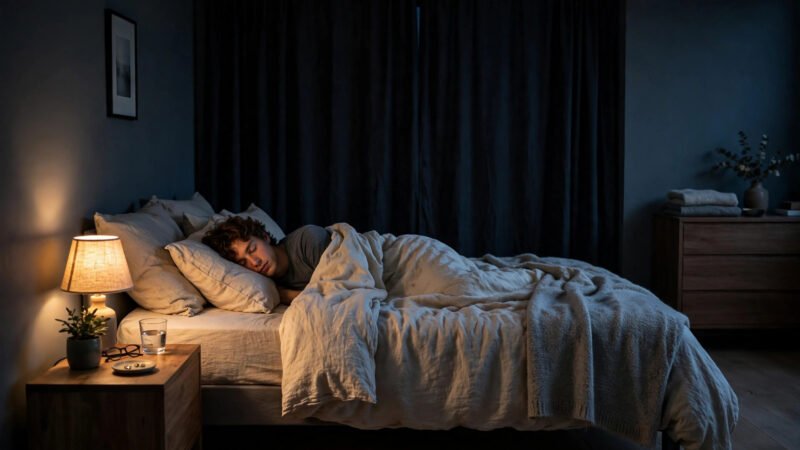

It’s 2pm. Your eyelids feel heavy, the words on your screen blur, and the sofa is calling your name. You give in, set an alarm for “just twenty minutes” — and wake up forty-five minutes later feeling worse than before. Foggy. Disoriented. Annoyed with yourself for even trying.
If that sounds familiar, you are not bad at napping. You probably just napped for the wrong length of time. How long should a nap be? For most adults, the answer is surprisingly short: about 10 to 20 minutes. Or, if you have the time, a full 90. Almost everything in between is where naps go wrong.
This guide explains why nap length matters, what the research actually says, and how to take a nap that leaves you sharper instead of groggier — including the famous 26-minute NASA nap, the caffeine nap, and the mistakes that turn a good idea into a wasted afternoon.
Written by Md Masud Rana based on published expert sources. This article has not been professionally reviewed. See our sources below.
Quick Answer
How long should a nap be? For most adults, 10 to 20 minutes is the sweet spot. That is long enough to restore alertness and lift your mood, but short enough to stay in light sleep — so you wake up clear-headed. If you have 90 minutes free, a full sleep cycle is the other good option. Avoid the 30-to-60-minute middle ground: it is long enough to drop into deep sleep but too short to finish the cycle, which is why you wake up groggy. Nap in the early afternoon, ideally between 1pm and 3pm, and always set an alarm.

Contents
- Why Nap Length Matters More Than You Think
- How Long Should a Nap Be? Every Length Compared
- Why Do I Feel Worse After a Nap?
- When Is the Best Time to Nap?
- How to Take a Good Nap in 7 Steps
- What Is the NASA Nap?
- What Is a Caffeine Nap — and Does It Work?
- Can You Nap at Work?
- What Recent Research Shows
- Common Nap Mistakes
- Final Recommendations
- Frequently Asked Questions
Why Nap Length Matters More Than You Think
A nap is not one thing. It is several different experiences depending on how long you sleep — because sleep is not a single state. It moves through stages, and each stage does something different to your brain.
Keep sleeping, though, and you sink into deep sleep — the slow, restorative stage where your brain produces slow delta waves and your body does its heavy repair work. Deep sleep is wonderful at night. In a daytime nap, it is a trap. Wake up from it and your brain needs time to come back online: thinking is slow, mood is flat, and simple tasks feel oddly hard.
That is the whole secret of napping. Length decides which stage you wake from. Get it right and a nap is one of the cheapest, most reliable energy tools available. Get it wrong and you feel worse than if you had stayed awake.
The sleep stages, in plain English
Sleep researchers describe four stages. Stage 1 is the lightest — you have barely drifted off. Stage 2 is still light sleep, lasting roughly 10 to 25 minutes, and it is where most of a short nap happens. Stage 3 is deep sleep, harder to wake from, and it usually begins after 20 to 40 minutes. Then comes REM sleep, the dreaming stage. A full cycle through all of them takes about 90 minutes.
A short nap never reaches stage 3. A 90-minute nap completes the whole cycle and returns you to light sleep, which is why it can feel so refreshing. The danger zone sits between the two: long enough to enter deep sleep, too short to complete the cycle.
What a good nap actually does for you
The benefits of a well-timed nap are real and well documented. The Mayo Clinic lists relaxation, reduced tiredness, better mood, improved alertness, and better performance — including quicker reaction time and better memory — among the benefits for healthy adults. Short naps can also sharpen the kind of thinking that work demands: memory, logical reasoning, and completing complex tasks.
Many people describe the same pattern in real life. A twenty-minute lie-down after lunch, and the second half of the afternoon suddenly feels manageable. That is not imagination — it is light sleep doing exactly what it is supposed to do.
How Long Should a Nap Be? Every Length Compared
There is no single perfect nap length for everyone, because your goal matters. A quick lift before a meeting is different from recovering after a terrible night. Here is how each length actually plays out.
| Nap length | What happens | Best for | Grogginess risk |
|---|---|---|---|
| 5–10 minutes | Light sleep only; a small but immediate lift in alertness | A fast reset when you are short on time | Very low |
| 10–20 minutes | Light sleep; alertness, focus and mood improve | The everyday power nap — the safest default | Low |
| 30 minutes | Borderline; you may begin slipping into deep sleep | When 20 minutes is not quite enough | Moderate |
| 45–60 minutes | Deep sleep; memory consolidation begins | Studying or learning, if you can tolerate grogginess | High |
| 90 minutes | A full sleep cycle, including REM sleep | Real sleep debt, shift work, or a free afternoon | Low (if you complete the cycle) |
10 to 20 minutes: the power nap
This is the length almost every sleep authority recommends as the default. The Sleep Foundation puts the ideal nap at about 20 minutes and no longer than 30, and the Mayo Clinic agrees: a 20-to-30-minute nap is ideal, and the longer you nap, the more likely you are to feel groggy afterwards.
The science backs the advice. In a well-known 2006 laboratory study, 24 healthy young adults who had slept only about five hours the night before took naps of 5, 10, 20 or 30 minutes. The 10-minute nap produced immediate improvements in alertness and mood that lasted for hours, while the 30-minute nap left people groggy at first. The researchers concluded that the 10-minute nap was the most effective of the lengths they tested. One detail matters: the study measured actual minutes asleep, not minutes lying in bed. Setting a 10-minute alarm does not guarantee 10 minutes of sleep — allow a few minutes to drift off.
30 minutes: the borderline
Thirty minutes is where opinions split. Some people feel fine after a 30-minute nap; others wake up sluggish and stay that way for half an hour. The reason is simple: around the 30-minute mark, your odds of entering deep sleep climb sharply. If you wake mid-deep-sleep, you get sleep inertia — the heavy, foggy feeling that gives naps a bad name.
If 20 minutes never feels like quite enough, 30 can work — but plan a buffer afterwards. Give yourself 15 to 30 minutes to come back online before driving or doing anything that needs sharp reactions.
60 minutes: the memory nap with a cost
An hour-long nap reaches deep sleep properly, and deep sleep helps consolidate memories — particularly facts and things you have been learning. Research has found that 60-minute naps can improve memory recall compared with shorter ones. The catch is the wake-up. You will almost certainly surface from deep sleep, and the grogginess can last 30 minutes or more. A 60-minute nap only makes sense when you have time to recover afterwards and the memory benefit is worth the fog.
90 minutes: the full cycle
Ninety minutes takes you through one complete sleep cycle — light sleep, deep sleep, REM, and back to light sleep — so you wake at a natural, easy point. It can feel genuinely restorative, and it supports creativity, emotional processing and learning physical skills. The downsides are practical: it takes a big chunk out of your day, and a nap that long late in the afternoon can steal sleep from the night ahead. The Sleep Foundation notes that this length may be especially helpful for emergency workers and shift workers trying to manage fatigue.
Why Do I Feel Worse After a Nap?
“Why do I feel worse after a nap?” is one of the most searched questions about napping — and the answer has a name: sleep inertia.
Sleep inertia is the temporary grogginess and reduced alertness that follows waking, especially waking from deep sleep. Your brain does not switch on like a light. Different regions wake at different speeds, and the prefrontal cortex — the part responsible for decision-making and attention — is one of the last to come online. That is why you can feel slow, irritable and oddly clumsy for a while after a too-long nap.
How long it lasts depends on where you woke from. After a short nap, it is usually gone within a few minutes. After waking from deep sleep, it can take 15 to 30 minutes, and sometimes longer if you were already sleep-deprived. The Mayo Clinic notes that the groggy feeling often goes away within about 35 minutes — so if you feel awful for ten minutes after a nap, it may simply be inertia passing, not proof that the nap failed.
Three reasons a nap leaves you feeling worse
You woke from deep sleep. This is the most common reason. Any nap that runs past 30 minutes risks it, and the 45-minute accidental nap is the worst of both worlds: long enough to enter deep sleep, too short to complete the cycle.
You were already sleep-deprived. When you are short on sleep, your brain dives into deep sleep faster — sometimes within minutes. That means even a short nap can tip into deep sleep, and the grogginess hits harder.
You napped too late. A late-afternoon nap can leave you groggy and then interfere with the night ahead, creating a cycle where you nap because you slept badly and sleep badly because you napped.
How to shake off sleep inertia faster
If you wake up foggy, do not just sit there and wait. Get up as soon as the alarm sounds — hitting snooze risks sliding back into deep sleep. Open the curtains, splash cold water on your face, stretch or walk around for a few minutes, and drink a glass of water. Most of the fog lifts within 15 to 30 minutes. Never drive or operate machinery until you feel fully alert again.
When Is the Best Time to Nap?
Length is only half the story. Timing decides whether a nap refreshes you or wrecks your night.
Most adults experience a natural dip in alertness in the early afternoon — roughly between 1pm and 3pm. This is the post-lunch dip, driven by your circadian rhythm, your body’s internal 24-hour clock, not just by what you ate. Napping during this window works with your biology: you fall asleep more easily, and the nap is least likely to disturb your night.
The rule most experts agree on is simple: finish your nap at least eight hours before bedtime. For most people that means no naps after 3pm. The Sleep Foundation recommends napping eight or more hours before bed, and the Mayo Clinic warns that napping after 3pm can make it harder to sleep soundly at night.
Your own bedtime matters here. If you go to bed at 10pm, a 2pm nap is fine. If you sleep at 1am, a 4pm nap may be harmless. The eight-hour gap is the principle; 3pm is the rule of thumb for a typical schedule.
Should you nap every day?
A regular short nap can be part of a healthy routine, especially if your nights are short. But daily napping is not for everyone. If you have insomnia or trouble falling asleep at night, naps can make it worse — in that case, skip them and focus on fixing the night first. Our guide to how to fall asleep faster covers the evening habits that matter most. And if you find yourself needing a nap every single day despite sleeping a full night, that is worth mentioning to your doctor.
How to Take a Good Nap in 7 Steps
A good nap is a small piece of planning, not luck. Follow these steps and the odds of waking up refreshed go way up.
1. Pick your length before you lie down. Decide in advance: 20 minutes for a quick refresh, or 90 if you have the time and the sleep debt. Do not “see how it goes” — that is how 20 minutes becomes 50.
2. Set an alarm — and allow time to fall asleep. If you want 20 minutes of actual sleep, set the alarm for 25 to 30 minutes. It takes most people a few minutes to drift off, and the research counts minutes asleep, not minutes in bed. Set a second alarm a few minutes after the first as insurance.
3. Nap in the early afternoon. Aim for the 1pm to 3pm window, when your body naturally dips. Never nap within eight hours of bedtime.
4. Make it dark, cool and quiet. A cool, dark, quiet room is ideal — the same conditions that help at night. An eye mask and earplugs are cheap and surprisingly effective, especially if you are napping at work or in a bright room. Keep your phone on silent and face-down.
5. Lie down properly. A bed or sofa beats a desk chair. If you are at work, recline your chair, put your feet up and use a small cushion. Lying flat helps you fall asleep faster and sleep better than slumping upright.
6. Get up the moment the alarm sounds. No snooze. Sit up, open the curtains, stretch, and walk around for a minute or two. The first minute of grogginess is normal and passes fast if you move.
7. Give yourself a buffer. Do not schedule a nap to end five minutes before a meeting or a drive. Leave 15 to 30 minutes to shake off any sleep inertia before you need to be sharp.
If you struggle to fall asleep during the day, do not force it. Just lying quietly with your eyes closed for 20 minutes still gives your brain a break, even if you never fully drop off. Our bedtime routine guide has more on the wind-down habits that make sleep — day or night — come more easily.
What Is the NASA Nap?
You may have seen the claim online: a 26-minute nap improves alertness by 54% and performance by 34%. It comes from a real NASA study — but the full story is more interesting, and more honest, than the headline.
In the early 1990s, NASA researchers led by Mark Rosekind studied long-haul airline pilots on overnight trans-Pacific flights. Twelve pilots were given a planned 40-minute rest opportunity during cruise, while a colleague flew the plane. They fell asleep in about 6 minutes and slept for an average of 26 minutes — that is where the famous number comes from. Compared with pilots who did not rest, the napping pilots showed better physiological alertness and better performance, and the benefit lasted through descent and landing, when it mattered most.
The Sleep Foundation’s NASA nap guide reports the headline figures: up to a 54% increase in alertness and a 34% increase in performance. But two caveats matter. First, the 26 minutes was an average, not a prescribed target. Second, these were exhausted pilots on overnight flights, compared with equally tired pilots who got no rest at all. The nap helped tired people stay alert; it did not turn them into superhumans.
So should you set your alarm for exactly 26 minutes? There is no magic in the number itself. The practical lesson is the same as the rest of this guide: a short nap in the 20-to-30-minute range is the sweet spot, and the NASA study is strong evidence that it works under real-world pressure.
What Is a Caffeine Nap — and Does It Work?
A caffeine nap — also called a coffee nap or “nappuccino” — sounds like a contradiction. You drink a coffee, then immediately lie down for a short nap. Yet small studies suggest it can work better than either one alone.
The idea is simple. Caffeine takes about 20 to 30 minutes to reach your brain, so if you drink a coffee and nap for 15 to 20 minutes straight away, you wake up just as the caffeine starts working. Meanwhile the nap clears some of the sleepiness chemical, adenosine, from your brain — so when the caffeine arrives, it meets less resistance. The two effects stack.
The evidence is promising but thin. In the best-known experiments, small groups of sleepy volunteers — often only 10 to 12 people — took 200mg of caffeine (roughly two cups of coffee) followed by a short nap, then did a driving simulator task. In one study, the caffeine-plus-nap combination cut driving incidents to 9% of placebo levels, compared with 34% for caffeine alone. A review of the research on coffee naps reaches the same conclusion: the combination beat either one on its own, but the studies were small and mostly involved young, healthy adults.
Drink your coffee quickly — within a few minutes — then lie down immediately and set an alarm for 20 minutes. Use a normal cup of coffee, roughly 100 to 200mg of caffeine; an espresso or a cooled coffee is easier to finish fast than a large hot mug. Do it in the early afternoon, never late in the day, because the caffeine will still be in your system at bedtime.
Who should skip it? Anyone sensitive to caffeine, anyone with anxiety, reflux or certain heart-rhythm conditions, and anyone who struggles to fall asleep at night. A caffeine nap is a tool for occasional sleepiness, not a daily habit and never a substitute for proper sleep. And never use one to keep driving when you are drowsy — if you are too tired to drive safely, pull over and rest properly instead.
Can You Nap at Work?
For many people, the 2pm slump hits hardest at a desk. Napping at work is becoming more accepted — some offices even provide nap pods or quiet rooms — but it still takes a little planning.
First, check your workplace. If there is a quiet room, a wellness space or a break room with a sofa, use it. If not, your car can work for a short nap, provided it is parked safely and the weather is not too hot or cold. Recline your office chair, put on an eye mask, use earplugs or noise-cancelling headphones, and set a vibrating alarm so you do not disturb colleagues.
Keep it short and keep it discreet. Twenty minutes is the length that fits a lunch break and leaves you sharper for the afternoon. A 90-minute nap at work is rarely realistic, and a 45-minute one risks leaving you groggy in front of your team. If you work from home, you have it easier — your bedroom is right there, and our guide to reducing eye strain while working from home pairs well with a proper afternoon break.
Shift workers: a special case
For night-shift workers, naps are not a luxury — they are a safety tool. A short nap before a night shift, or a planned nap during a long shift where the workplace allows it, can reduce dangerous drowsiness. If your job involves driving, operating machinery or making safety-critical decisions, treat napping as part of your safety routine, not a perk.
What Recent Research Shows
Napping research has moved well beyond “naps are nice”. Here is what the recent evidence actually says — and where it is still uncertain.
A 2021 systematic review and meta-analysis of short daytime naps found that brief naps improved cognitive performance, including alertness, memory and attention. The effect was consistent across the studies reviewed, and it held even for naps as short as 10 minutes. The review, published in the International Journal of Environmental Research and Public Health, is one of the stronger pieces of evidence that short naps genuinely help thinking, not just mood. You can read the review on PubMed.
Longer naps are a different story. Research linking naps of more than an hour a day with higher risks of high blood pressure, type 2 diabetes and heart disease keeps appearing in large observational studies — the Mayo Clinic flags the same link. But correlation is not causation: people who nap for hours every day may already be unwell, and the nap may be a symptom rather than a cause. The Sleep Foundation is careful on this point too — it notes that the relationship between nap length, frequency and health is still not fully understood.
One honest summary of where things stand: short naps help, clearly and consistently. Long daily naps are associated with health problems in observational data, but nobody has shown that the nap itself causes them.
Common Nap Mistakes
Most bad naps are not bad luck. They are one of these mistakes.
1. Napping for 45 minutes. The accidental 45-minute nap is the single most common mistake. It is long enough to enter deep sleep and too short to complete a cycle, so you wake up at the worst possible moment. Stick to 20 or go all the way to 90.
2. Hitting snooze. Snoozing after a nap alarm can drag you straight back into deep sleep. Get up the first time the alarm sounds, even if you feel groggy for a minute.
3. Napping after 3pm. A late nap borrows energy from the night. If you regularly nap at 5pm and then lie awake at midnight, the nap is the problem, not the solution. Keep naps eight or more hours before bedtime.
4. Napping in a bright, noisy room. Light and noise keep you in the shallowest stage of sleep, so you never properly rest — or they wake you repeatedly. An eye mask and earplugs cost almost nothing and change the experience completely.
5. Using naps to replace night sleep. A nap is a top-up, not a substitute. If you are sleeping five hours a night and napping to compensate, the nap will help a little — but it will not fix the deficit. Fix the night first; our sleep health basics guide is a good place to start.
6. Napping when you have insomnia. If you struggle to fall asleep or stay asleep at night, daytime naps can make it worse by reducing the sleep pressure you need at bedtime. Sleep specialists generally advise people with insomnia to skip naps entirely.
7. Driving straight after a nap. Sleep inertia slows reaction time. Always give yourself 15 to 30 minutes to fully wake up before driving, and never drive if you still feel drowsy. If you are on a long drive and feel sleepy, pull over and take a proper 20-minute nap in a safe place.
Final Recommendations
Here is the whole guide boiled down to what actually works:
- Default to 20 minutes. Set your alarm for 25 to 30 minutes to allow a few minutes to fall asleep. This is the safest, most reliable nap length for most adults.
- Go 90 minutes when you have real sleep debt. A full cycle is the only long nap that consistently leaves you refreshed.
- Avoid 30 to 60 minutes. This is the groggy zone. If you accidentally oversleep into it, give yourself 15 to 30 minutes to recover before expecting to be sharp.
- Nap between 1pm and 3pm. Work with your body’s natural afternoon dip, and stay at least eight hours clear of bedtime.
- Set an alarm every time. A nap without an alarm is a gamble with deep sleep.
- Make it dark, cool and quiet. Eye mask, earplugs, comfortable temperature — the same basics as night sleep.
- Try a caffeine nap when you need an extra edge. Coffee first, then a 20-minute nap — but only in the early afternoon, and only occasionally.
- Do not use naps to cover chronic short sleep. If you need a nap every day despite a full night’s sleep, or you keep falling asleep unexpectedly, talk to your doctor. Excessive daytime sleepiness can be a sign of a sleep disorder or another health condition.
- Keep a nap diary for a week. Note when you napped, for how long, and how you felt afterwards. Your ideal length may be 15 minutes or 25 — a week of notes will tell you more than any general rule.
This content is for educational purposes only and does not replace professional medical advice. Always consult a qualified healthcare professional before making health decisions for yourself, especially if you have a sleep disorder or a condition that affects your sleep.
Frequently Asked Questions
For most adults, 10 to 20 minutes is the sweet spot. That length improves alertness and mood while keeping you in light sleep, so you wake up without significant grogginess. If you have 90 minutes free, a full sleep cycle is also a good option. Avoid the 30-to-60-minute middle zone, where waking from deep sleep tends to leave you foggy.
Keep your nap to 10 to 20 minutes, and set your alarm for 25 to 30 minutes to allow a few minutes to fall asleep. Grogginess — sleep inertia — happens when you wake from deep sleep, which usually starts after about 30 minutes. If you do wake up foggy, get up, get some bright light and move around; most of the fog lifts within 15 to 30 minutes.
You almost certainly woke from deep sleep. Naps longer than about 30 minutes let your brain sink into slow-wave deep sleep, and waking mid-stage leaves you groggy, slow and irritable — a state called sleep inertia. Being sleep-deprived makes it worse, because your brain dives into deep sleep faster. Shorten your nap to 20 minutes, or extend it to a full 90-minute cycle, and the problem usually disappears.
Yes — for most people, 20 minutes is the best all-round nap length. Research shows it improves alertness, mood, reaction time and memory without the grogginess that longer naps cause. A 2006 laboratory study found that even a 10-minute nap produced immediate improvements in alertness that lasted for hours. Set your alarm for about 25 minutes so you get roughly 20 minutes of actual sleep.
Yes, when you have the time. Ninety minutes completes one full sleep cycle — light sleep, deep sleep, REM and back to light sleep — so you wake at a natural, easy point and feel genuinely rested. It is the best option when you are carrying real sleep debt or working a night shift. The main downsides are the time it takes and the risk of disturbing your night if you nap too late in the day.
The 30-60-90 rule describes how different nap lengths affect your brain. A 30-minute nap boosts alertness and energy but risks grogginess. A 60-minute nap may support memory but is more likely to leave you foggy, because you wake from deep sleep. A 90-minute nap completes a full sleep cycle, including REM, and feels the most restorative. In practice, most sleep experts recommend either 10 to 20 minutes or 90 — the middle lengths are the hardest to get right.
Yes — a 20-minute nap fits a lunch break and can sharpen your afternoon. Use a quiet room, your car, or a reclined chair with an eye mask and earplugs, and set a vibrating alarm. Keep it short and discreet: 20 minutes leaves you refreshed, while 45 minutes risks leaving you groggy in front of colleagues. If your workplace has a nap room or wellness space, use it — napping at work is increasingly accepted.
A caffeine nap means drinking a coffee and then immediately napping for 15 to 20 minutes, so you wake up just as the caffeine starts to work. In small driving-simulator studies, the combination improved alertness more than caffeine or a nap alone. Drink your coffee quickly, set an alarm for 20 minutes, and only do it in the early afternoon — caffeine late in the day can disturb your night. Skip it if you are sensitive to caffeine or struggle to fall asleep at night.
Usually not. If you have trouble falling asleep or staying asleep at night, daytime naps can make it worse by reducing the sleep pressure you need at bedtime. Sleep specialists generally advise people with insomnia to avoid naps and focus on fixing the night first — a consistent bedtime, a proper wind-down routine and a cool, dark bedroom. If insomnia persists, speak to your doctor rather than managing it with naps.
About 20 minutes, taken between 1pm and 3pm, is ideal for most people. The post-lunch dip is a natural circadian low, not just the effect of eating, so this is the easiest time of day to fall asleep and the least disruptive to your night. Keep the nap short, set an alarm, and finish it at least eight hours before your bedtime.
Conclusion
Napping is not complicated — but it is specific. The length of your nap decides whether you wake up sharper or foggier, and the research is unusually clear on what works: 10 to 20 minutes for a quick refresh, 90 minutes for a full cycle, and nothing in between unless you have time to recover from the grogginess.
The rest is timing and setup. Nap in the early afternoon, make it dark and quiet, set an alarm every single time, and get up the moment it sounds. Try a caffeine nap when you need an extra edge, and keep a nap diary for a week to find your own ideal length — it might be 15 minutes, it might be 25.
Most of all, remember what a nap is for. It is a top-up for a tired afternoon, not a replacement for a good night. If you are napping every day and still exhausted, that is a signal worth listening to — and worth raising with your doctor. But for the ordinary 2pm slump? Twenty minutes, an alarm, and a dark room. It works.
References
- Sleep Foundation — Napping: Benefits and Tips — https://www.sleepfoundation.org/napping
- Mayo Clinic — Napping: Do’s and don’ts for healthy adults (2024) — https://www.mayoclinic.org/healthy-lifestyle/adult-health/in-depth/napping/art-20048319
- Sleep Foundation — NASA Nap: How to Power Nap Like an Astronaut — https://www.sleepfoundation.org/sleep-hygiene/nasa-nap
- Rosekind, M. R., et al. (1995). Alertness management: strategic naps in operational settings. Journal of Sleep Research, 4(S2), 62–66 — https://pubmed.ncbi.nlm.nih.gov/10607214/
- Dutheil, F., et al. (2021). Effects of a short daytime nap on the cognitive performance: A systematic review and meta-analysis. International Journal of Environmental Research and Public Health, 18(19), 10212 — https://pubmed.ncbi.nlm.nih.gov/34639511/
- SleepTrace — How long to nap: the ideal lengths (2026) — https://www.sleeptrace.app/blog/how-long-to-nap/
- Sleep.com — What Is a Coffee Nap and How Do You Take One? — https://www.sleep.com/sleep-health/coffee-nap
- Koala — Power Nap Guide: Length, Timing & Benefits — https://au.koala.com/blogs/sleep/power-napping