
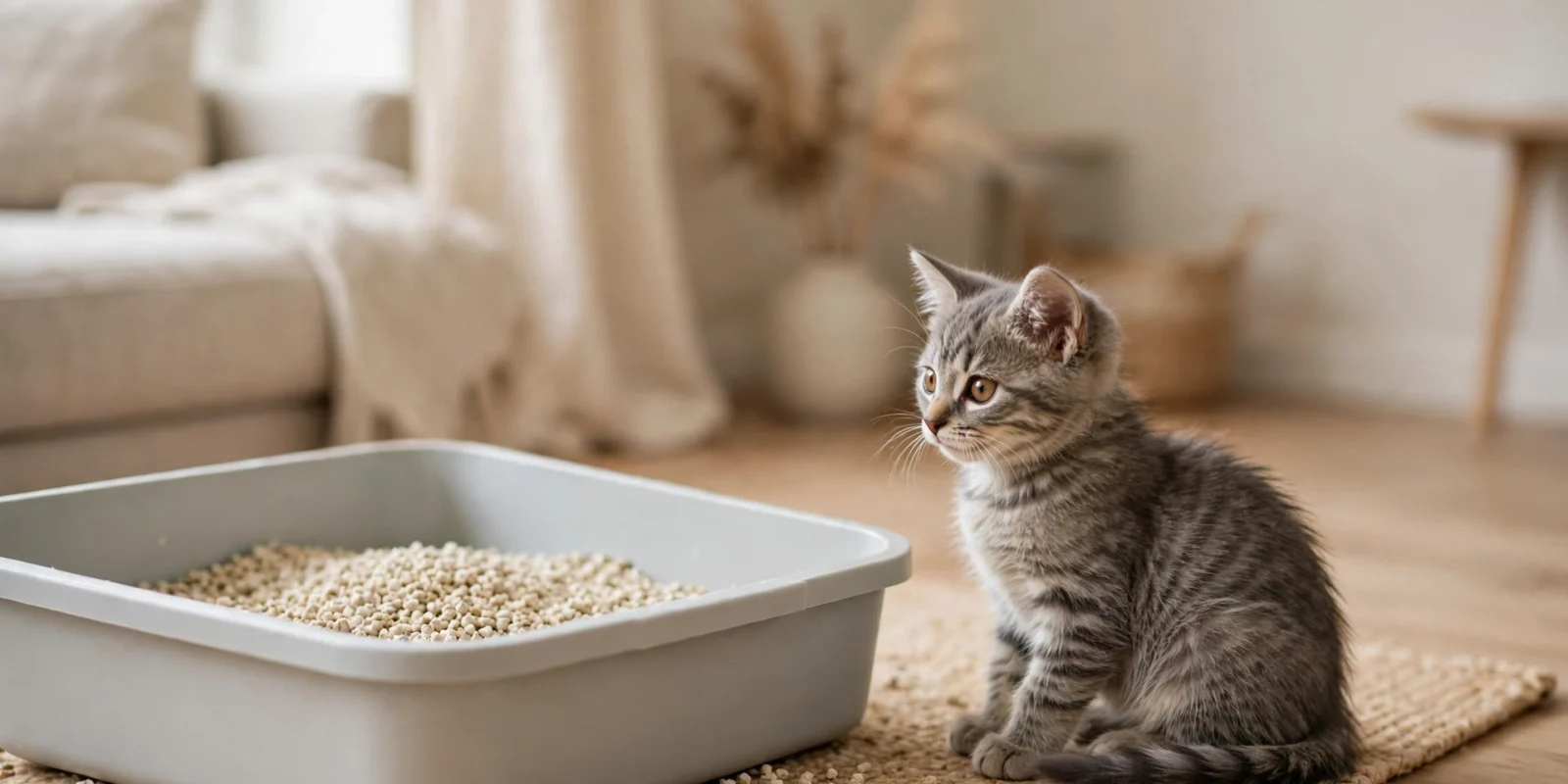
You bring the kitten home, set down the carrier, and within an hour there is a small damp patch on the rug. The question lands straight away: how do you actually litter train a kitten, and how long will it take? The good news is that kittens are easier than puppies by a wide margin. Most of them already want to dig in something soft and bury what they leave behind. Your job is mostly to make the right spot obvious, easy to reach, and clean — then get out of the way.
The details matter more than people expect. The wrong litter can be dangerous for a very young kitten, a box with sides too high might as well be a wall, and one badly placed tray can quietly undo a week of good progress. This guide walks through the whole thing step by step, using guidance from PetMD, the ASPCA, the Cornell Feline Health Center, VCA Animal Hospitals and International Cat Care — so you can set it up right the first time and know what to do when accidents happen.
Written by Md Masud Rana based on published expert sources. This article has not been professionally reviewed. See our sources below.
Quick Answer
To litter train a kitten, give it a low-sided open tray filled with unscented non-clumping litter, in a quiet spot away from food and water, and put the kitten in the tray after every meal, nap and play session. Start at around three to four weeks, or on the day an older kitten comes home. Most kittens understand within a few days and use the tray reliably within one to two weeks. Never punish accidents — clean them with an enzyme cleaner and fix the setup instead.
Contents
- When Can You Start Litter Training a Kitten?
- What You Need Before Day One
- How to Litter Train a Kitten Step by Step
- Which Litter Is Safest for Kittens?
- Where Should the Litter Box Go?
- What to Do When Your Kitten Won’t Use the Litter Box
- How Long Does Litter Training Take?
- What Recent Research and Expert Guidance Shows
- Common Mistakes That Slow Litter Training Down
- Final Recommendations
- Frequently Asked Questions
When Can You Start Litter Training a Kitten?
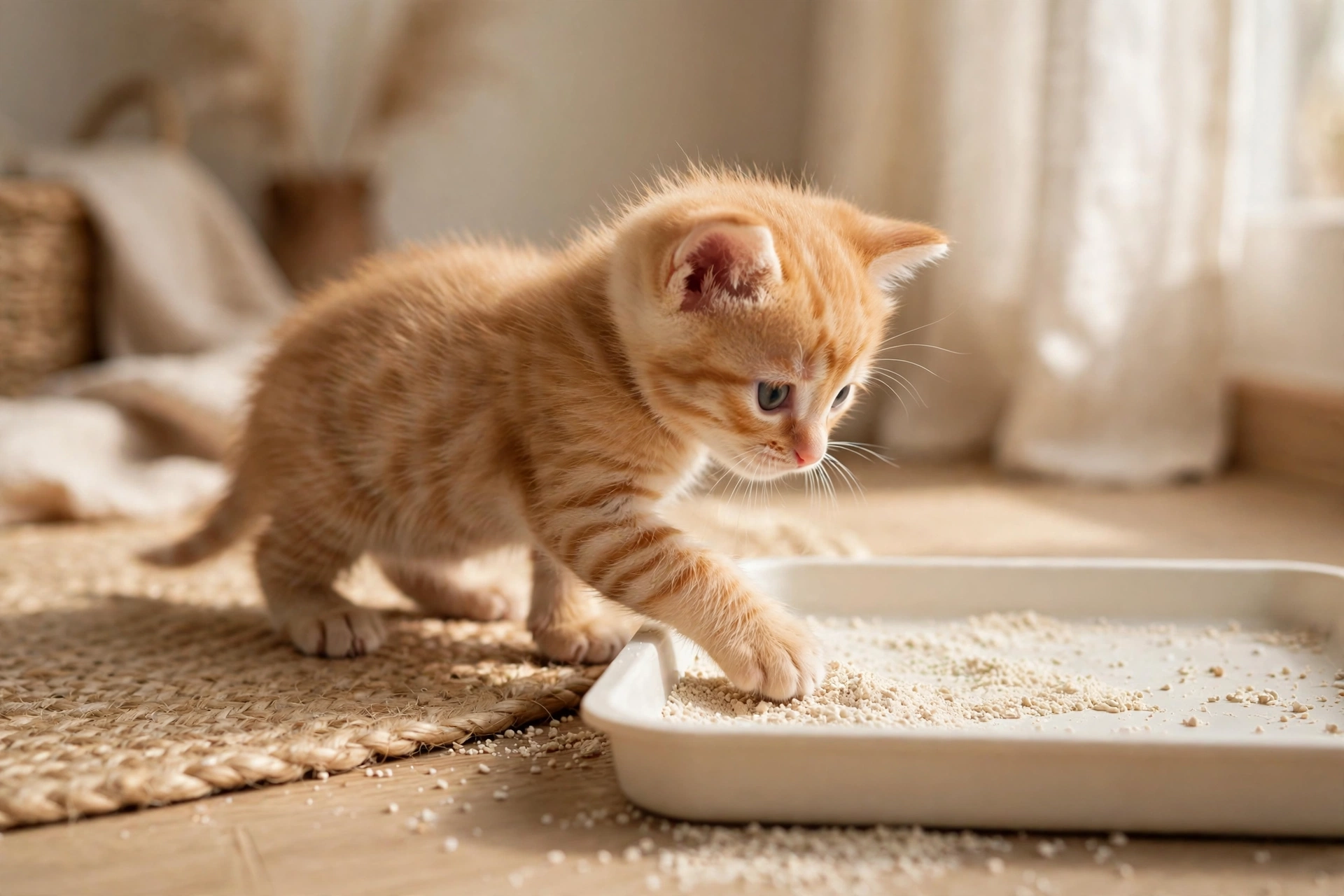
Earlier than most new owners expect. PetMD advises starting at around four weeks of age, which lines up with weaning — when kittens begin eating solid food and no longer need their mother to stimulate them to go. International Cat Care suggests a low-sided tray from around three weeks. Before then, a kitten physically cannot manage it alone: the mother licks the kitten to trigger elimination and cleans up afterwards.
If you adopt an older kitten, start the day it comes home, whatever its age. Kittens adopted at eight to ten weeks often arrive already knowing the basics from copying their mother. Your work then is showing the kitten where the tray is in a new house, and making sure it can find it again when it needs to.
Orphaned and bottle-fed kittens need more patience. With no mother to copy, they rely entirely on you, and training may take a few days longer. Kittens under about four weeks still need gentle stimulation after feeds before they can eliminate at all — ask your vet or a rescue to walk you through it.
Before training begins, make sure the kitten is healthy enough to learn. A kitten with diarrhoea, worms, or a urinary infection cannot hold it the way a healthy kitten can. PetMD advises a vet check for intestinal parasites or urinary tract infections if a kitten keeps going outside the box. If your kitten strains, cries while trying to go, or produces little or nothing, call your vet the same day — the ASPCA describes feline interstitial cystitis, a bladder condition, as very serious and potentially life-threatening.
What You Need Before Day One
Most litter training failures are setup failures. Get the equipment right before the kitten arrives and half the job is done: the right tray, the right litter, the right spot, and enough trays. Add a scoop, a litter mat, and an enzyme-based cleaner — ordinary cleaners, especially ammonia-based ones, can smell like urine to a cat.
The tray: low, open, and big enough to turn around in
A full-size adult litter box is too big and too intimidating for a small kitten. The sides alone can be a barrier — a kitten that has to climb to get in will often give up and go on the floor beside it. PetMD cites feline behaviour consultant Sally J. Foote, who recommends a tray around 13 by 9 inches for kittens, and notes that a cat’s box should be roughly one and a half times its body length so it can turn and dig without touching the sides.
Start with a simple open tray. Most cats prefer uncovered boxes — the ASPCA explains that cats like to see who might be approaching and to have more than one way out, and that covers trap odours in. A shallow baking tray, a storage box lid, or a cheap open litter pan all work for the first weeks. Skip covered, top-entry and self-cleaning boxes until the kitten is at least four to six months old; VCA warns that some automatic boxes are not suitable for young kittens. Size up as the kitten grows — when its body brushes the sides while it turns, it is time for a bigger box.
The litter: unscented, fine, and — for now — non-clumping
Most cats prefer a fine-grained, unscented litter that feels soft under their paws. Scented litter is a common turn-off. The important choice is clumping versus non-clumping: PetMD advises non-clumping litter for kittens younger than eight to ten weeks, because young kittens explore everything with their mouths and swallowed clumping litter can swell and block the gut. VCA gives the same threshold, some vets suggest twelve weeks, and other sources say four or five months. The experts disagree on the exact age — what they agree on is the safe default: non-clumping litter while your kitten is small and still mouthing things. Paper, wood or corn-based litters are the usual starting point, and silica gel litter should not be used for kittens under eight weeks, according to International Cat Care.
How many trays: one per cat, plus one
This is the rule every major source agrees on, and the most skipped advice in litter training. PetMD, the ASPCA, VCA and Cornell all give the same formula: one litter box per cat, plus one extra. One kitten means two trays; two cats means three. The spare is not decoration — cats are territorial about toileting, some prefer to urinate in one tray and defecate in another, and a single dirty or guarded tray leaves a kitten with nowhere acceptable to go. In a multi-storey home, put at least one tray on each floor. Our guide to why cats pee outside the litter box goes deeper on what happens when the count is wrong.
How to Litter Train a Kitten Step by Step
Litter training a kitten is mostly a matter of setting the stage and repeating a small routine at the right moments. Kittens that grow up with their mother often need almost no teaching — they watch her and copy her. Your job is to make the right choice the easy choice, several times a day, until it becomes a habit.
Step 1: Start in one small room
For the first few days, keep your kitten in one room with the tray, its bed, food and water. A bathroom or spare bedroom works well. This is the single most useful advice in this guide, and the one new owners skip most often. A kitten loose in a whole house will not search three rooms for a tray it has seen once — it will go behind the sofa. VCA recommends confining a new kitten to a room while it adapts, ideally the room where the tray will live, and keeping it there whenever you cannot supervise. Make the room cosy and spend time in there with the kitten so it does not feel isolated.
Step 2: Show the kitten the tray
As soon as your kitten arrives, carry it calmly to the tray and set it down gently inside. Let it sniff, step around, and dig if it wants to. Do not hold it in place, and do not force it to stay. If it hops straight out, that is fine — it has still learned where the tray is. If it just stands there, scratch at the litter with your finger or a spoon; VCA suggests this, and International Cat Care says you can gently guide a forepaw through the litter. Some kittens object, so stop if yours pulls away. A little soiled litter left in the tray can help too — the familiar scent reminds the kitten what the tray is for.
Step 3: Go back at the likely times
Kittens almost always need to go at predictable moments: right after eating, after drinking, after waking from a nap, and after a burst of play. PetMD recommends placing the kitten in the tray at each of those moments until it starts going on its own. Watch for the signs too — sniffing the floor in circles, scratching at the ground, squatting slightly, restlessness, or suddenly breaking off from play to wander with intent. When you see those, pick the kitten up calmly and set it in the tray.
Step 4: Step back, then reward the win
Once the kitten is in the tray, give it space. Watching closely can put a kitten off, and many will not go while someone hovers over them. If it does not go, lift it out calmly and try again at the next likely moment. When it does use the tray, reward it straight away — a quiet word, a gentle stroke, or a small treat the moment it steps out. PetMD is specific about the timing: the treat must come immediately after the kitten leaves the box, so it connects the reward with what it just did.
Step 5: Keep the tray clean, every day
Cats are famously fastidious, and kittens are no exception. A dirty tray is one of the commonest reasons a kitten that was doing well suddenly starts going elsewhere. While training, PetMD suggests scooping after every elimination if you can; once the habit is solid, daily scooping is the minimum. The ASPCA advises scooping at least once a day and rinsing the tray out with baking soda or unscented soap once a week. Top the litter up as you scoop so the depth stays steady.
Step 6: Expand the territory slowly
Once your kitten has used the tray reliably for several days in its room, open up one more room. Then another. VCA’s rule is clear: a kitten should not roam the house unsupervised until it consistently uses the tray, and when you cannot watch it, it goes back to its room. Add a second tray in the new area as the kitten’s range grows. Most kittens get the idea within a few days, but the habit needs about two weeks of steady routine before it is solid.
Which Litter Is Safest for Kittens?
Young kittens taste-test everything, including their litter. Clumping clay litter is made of sodium bentonite, which absorbs many times its weight in liquid and binds into a solid mass. Swallowed, it can expand inside a small digestive tract and cause a blockage. That is why the guidance is cautious: non-clumping litter while the kitten is small, switching only once it has stopped mouthing things.
For the first weeks, buy a paper-based, wood-based or corn-based non-clumping litter, unscented, with a fine texture that feels soft under small paws. Skip scented and crystal litters while training. Once your kitten is past three months, reliably using the tray, and no longer trying to eat the litter, you can move to a fine, unscented clumping litter, which is what most adult cats prefer.
How to switch litter types without a setback
Never switch litter suddenly. Cats form strong preferences young, and an abrupt change is a classic trigger for accidents. Mix the change over about a week: three parts old litter to one part new, then half and half, then mostly new, then fully new. If the kitten starts avoiding the tray, step back to the previous mix for a few days. If you can, use the same litter the kitten had in its previous home for the first week or two — International Cat Care suggests this, because familiarity removes one source of stress.
Where Should the Litter Box Go?
Location is the single most common reason litter training stalls — more common than the wrong litter or the wrong tray. Cats are private, cautious animals about toileting, and a tray in the wrong spot will simply not be used, however good the rest of your setup is.
Put the tray in a quiet, low-traffic corner that the kitten can reach easily, with some light and at least two ways in and out. Never put it next to the food and water bowls — cats do not eliminate where they eat, and the ASPCA lists food bowls placed right beside the tray as a classic mistake. Keep it away from washing machines, dryers and other noisy appliances, and out of busy hallways. Do not hide it in a closet or a dark corner either: PetMD warns that cats do not like feeling cornered or trapped while they go.
Spread trays out rather than clustering them: two trays side by side in one corner count as a single location, and in a multi-cat home one cat can guard both. Once you find a spot that works, leave the tray there. If you must move it, shift it a few inches a day, and stop if the kitten stops using it.
What to Do When Your Kitten Won’t Use the Litter Box
Accidents in the first week or two are normal. A kitten that misses the tray is not being naughty or slow — it is usually telling you something about the setup. The right response is detective work, not discipline. Never shout at, spray, or punish a kitten for an accident, and never rub its nose in it: punishment teaches a kitten to hide where it goes, not to use the tray. Cornell puts it bluntly — cats cannot connect the punishment with the mess, even moments later, and fear only makes house soiling worse.
First, clean the accident properly
Blot up what you can, then clean the spot thoroughly with an enzyme-based cleaner, soaking past the visible edge. Enzyme cleaners break down the scent markers that would otherwise invite a repeat in the same place. Avoid ammonia-based and vinegar cleaners: both smell like urine to a cat. If the kitten keeps returning to one spot, place a tray there temporarily, or put the food bowl, bed or toys in that area.
Then run through the setup checklist
Work through these in order, changing one thing at a time: is the tray easy to get into? Does it have a cover or a liner — the ASPCA lists both as common turn-offs. Is the litter the right texture, or should you offer a second tray with a different litter beside the first and let the kitten choose? VCA calls this a “litter box cafeteria”. Is the tray clean enough? Is the location wrong? Is another pet ambushing the kitten near the tray? Cornell advises an open tray with a 360-degree view and more than one escape route. Is the kitten stressed — a move, a new baby, a new pet?
When accidents mean a vet visit
Some patterns are not setup problems at all. See your vet promptly if the kitten strains or cries while trying to go, produces only tiny amounts of urine, has blood in its urine or stool, suddenly stops using a tray it was using reliably, or keeps having accidents after two weeks with a correct setup. PetMD notes that intestinal parasites and urinary tract infections are rare in kittens but should not be overlooked. The ASPCA advises a thorough vet check before treating the problem as behavioural — a cat in pain will associate the tray with that pain and avoid it long after the illness is gone.
How Long Does Litter Training Take?
Most kittens understand the idea within a few days and use the tray reliably within one to two weeks, if the setup is right and the routine is steady. Some get it in two or three days, especially kittens that arrived already trained. Very young, hand-raised, or rescue kittens may need up to three weeks. What matters more than speed is consistency: a kitten given full run of the house too soon will often regress, and that is normal.
Accidents mean different things at different ages. What is normal at five weeks would be a red flag at four months:
| Kitten’s age | What is normal | When to worry |
|---|---|---|
| 3–4 weeks | Just starting; needs placing in the tray after feeds and naps | Cannot eliminate at all, or cries trying |
| 4–6 weeks | Finding the tray alone sometimes; accidents during play or sleep | Straining, crying, blood in urine or stool, refusal to enter the tray |
| 7–9 weeks | Seeks the tray independently most of the time; one or two accidents a day | A sudden increase in accidents after improvement |
| 10–12 weeks | Near-adult control; rare accidents, usually when stressed | Daily accidents, or the same non-tray spot repeatedly |
| 13+ weeks | Rare to no accidents | Any regular accidents — see a vet |
What Recent Research and Expert Guidance Shows
Litter training looks like a small domestic skill, but the guidance behind it rests on a serious body of feline behaviour work.
First, the scale of the problem. The ASPCA reports that at least 10% of all cats develop elimination problems at some point, and Cornell Feline Health Center calls house soiling the most common behaviour problem cat owners report. A kitten that struggles is not unusual, and prevention is worth far more than cure: once a cat avoids its tray, Cornell notes, the avoidance can become a habit that is hard to undo.
Second, punishment does not work and actively harms. Cornell’s guidance explains that cats cannot connect a punishment now with a mess from minutes ago, and that fear makes house soiling worse. VCA agrees: punishing a kitten for a natural act can make it secretive about toileting and damage its trust.
Third, the clumping-litter question shows how guidance evolves. The eight-to-ten-week threshold from PetMD and VCA is the most commonly cited, but other guides suggest waiting until four or five months. The evidence is mixed, so this guide gives you the cautious default — non-clumping while the kitten is small.
Common Mistakes That Slow Litter Training Down
Most of these are easy to make and easy to fix. If training has stalled, one of these is usually why.
1. Using clumping litter too early
A young kitten that mouths clumping litter can swallow enough to risk a gut blockage. Use non-clumping litter until the kitten is past eight to ten weeks at the earliest — longer if it still tries to eat the litter.
2. Giving the kitten the whole house on day one
A new home is enormous to an eight-week-old kitten. Loose in four rooms, it will not find a tray it saw once in the bathroom. Keep the kitten in one room for the first days and expand slowly, one room at a time, once the tray habit is solid.
3. One tray for the whole house
One tray is not enough, even for one kitten. One kitten needs two trays, in different spots, on different floors if you have them.
4. Putting the tray next to the food or in a noisy spot
Cats will not eliminate where they eat, and they will not use a tray beside a washing machine, in a busy hallway, or in a dark cupboard. Quiet, lit, easy to reach, away from food and water — if your tray breaks any of those rules, move it.
5. Punishing accidents
Shouting, spraying, or rubbing a kitten’s nose in a mess does not teach it to use the tray. It teaches it to go where you cannot see, and it damages trust.
Final Recommendations
- Start early. Offer a low-sided tray from three to four weeks, or on the day an older kitten comes home.
- Start with the safe litter. Unscented, fine, non-clumping litter while the kitten is small; switch to clumping only once it has stopped mouthing litter, mixing the change over a week.
- Follow the n+1 rule. One tray per cat, plus one extra, spread across different rooms and floors.
- Confine first, expand slowly. One room for the first days; new rooms only once the tray habit is reliable.
- Use the golden moments. Place the kitten in the tray after every meal, drink, nap and play session, and whenever you see the signs.
- Reward immediately. A quiet word or a small treat the moment the kitten steps out of the tray.
- Keep it clean. Scoop daily at minimum — after every elimination while training — and wash the tray weekly with unscented soap or baking soda.
- Never punish. Accidents are information about the setup, not misbehaviour.
- Watch for the red flags. Straining, crying while going, blood, or accidents past two weeks with a good setup all mean a vet visit.
Frequently Asked Questions
Start at around three to four weeks, when kittens begin eating solid food and can eliminate on their own. PetMD advises around four weeks; International Cat Care suggests a low-sided tray from about three weeks. Adopted an older kitten? Start on the day it comes home.
Most kittens understand the idea within a few days and use the tray reliably within one to two weeks, with the right setup and a steady routine. Some learn in two or three days. Very young, hand-raised or rescue kittens may need up to three weeks. Accidents past two weeks with a correct setup mean a vet visit.
Not while they are very young. PetMD and VCA advise non-clumping litter for kittens under eight to ten weeks, because young kittens mouth everything and swallowed clumping litter can swell and block the gut. Some vets suggest twelve weeks, other guides say four to five months. The safe default is non-clumping until your kitten stops tasting litter, then switch gradually over a week.
Usually the setup is wrong, not the kitten. Check the tray: are the sides too high, is it covered, is the litter scented or the wrong texture, is the tray dirty, or is it in a noisy spot or next to the food bowls? Check whether another pet guards the kitten near the tray. If the setup is right and the kitten still refuses, see your vet.
The commonest reasons are a tray that is dirty, too small, too far away, or in a spot the kitten dislikes — or too few trays in the house. Stress from a move, a new pet, or a new baby can also do it. Clean the spot with an enzyme cleaner and add a tray where the accidents happen. If a kitten that was using the tray suddenly stops, see your vet.
Two. The rule every major source agrees on is one litter box per cat, plus one extra — the n+1 rule from the ASPCA, VCA, Cornell and the American Association of Feline Practitioners. A single kitten needs two trays in different spots, so it always has a clean, unguarded option. In a multi-storey home, put at least one tray on each floor.
Unscented, fine-textured, non-clumping litter — paper, wood or corn-based — is the safest starting point for young kittens. It feels soft under small paws and carries no blockage risk if the kitten mouths it. Avoid scented litter, crystal litter and silica gel for kittens under eight weeks. Once your kitten is past three months and no longer tries to eat litter, a fine unscented clumping litter is the usual adult choice.
A little tasting in the first days is normal, but deliberate eating needs action. Switch to a paper-based non-clumping litter straight away — the least risky if swallowed — and distract the kitten with a toy. Call your vet if the kitten vomits, stops eating, seems in pain, or has a swollen belly. Persistent litter-eating in an older kitten can signal a health problem such as anaemia.
This content is for educational purposes only and does not replace professional veterinary advice. Always consult your veterinarian before making health decisions for your pet.
Conclusion
Litter training a kitten is one of the kindest surprises of new cat ownership: the animal mostly wants to do this, and your real job is to stay out of its way while making the right choice easy. A low-sided tray, unscented non-clumping litter, a quiet spot away from the food bowls, one tray per cat plus one — that setup, repeated patiently after meals, naps and play, gets most kittens reliable within a week or two. Accidents are information, not misbehaviour, and they almost always point at something fixable.
Keep the routine steady for the full two weeks even when it feels unnecessary, expand the kitten’s territory slowly, and never punish a miss. And remember the line that matters most: if your kitten strains, cries, or suddenly stops using a tray it was using well, that is a vet visit, not a training problem. Get the first weeks right and you are building a habit for life. If your new kitten is still settling in, our Pet Care Basics guide covers the rest of the first weeks, and our pet wellness plan guide explains the vet check-ups worth booking in the first year. For another gentle training project, try our crate training guide for puppies.
References
- PetMD — How To Litter Train a Kitten — Jamie Lovejoy, DVM — Updated 2026 — https://www.petmd.com/cat/general-health/how-to-litter-train-kitten
- ASPCA — Litter Box Problems — https://www.aspca.org/pet-care/cat-care/common-cat-behavior-issues/litter-box-problems
- Cornell University College of Veterinary Medicine, Cornell Feline Health Center — Feline Behavior Problems: House Soiling — Updated January 2015 — https://www.vet.cornell.edu/departments-centers-and-institutes/cornell-feline-health-center/health-information/feline-health-topics/feline-behavior-problems-house-soiling
- VCA Animal Hospitals — Housetraining for Kittens and Cats — https://vcahospitals.com/know-your-pet/kitten-behavior-and-training—litter-box-training
- International Cat Care — Bringing up a litter of kittens: health considerations — Updated 26th Sep 2025 — https://icatcare.org/articles/bringing-up-a-litter-of-kittens-health-considerations