

Written by Md Masud Rana based on published veterinary sources. This article has not been clinically reviewed by a veterinarian. See our sources below.
Best Natural Calming Treats for Dogs With Firework Anxiety: The Complete 2026 Guide
If your dog starts pacing, panting, or trying to squeeze under the bed the moment fireworks crack outside, you’re dealing with one of the most common — and most treatable — behavior concerns in dogs. The best calming treats for dogs with firework anxiety are usually just one piece of a bigger picture that includes a safe space, gradual desensitization, and, for some dogs, a conversation with your veterinarian about medication. This guide walks through what natural calming treats can and can’t do, how they compare to CBD and prescription options like Sileo, and how the same underlying anxiety shows up around separation, vet visits, and everyday panic-attack-style episodes at home.
You’ll also find practical, non-drug strategies you can start using tonight, an honest look at what the research does and doesn’t support, and guidance on when it’s time to loop in a professional. Nothing here replaces a conversation with your own vet — but it should help you walk into that conversation better informed.
Quick Answer
There’s no single “best” calming treat for every dog, but natural options with the most research behind them include L-theanine, pheromone products such as dog-appeasing pheromone (DAP), and certain probiotic strains. CBD has more clinical backing for pain than for anxiety specifically. For dogs with genuine noise aversion — a recognized medical condition, not just fear — natural remedies for dog panic attacks at home work best alongside a safe space and desensitization training, and severely affected dogs may need a vet-prescribed option like Sileo (dexmedetomidine) rather than an over-the-counter treat.
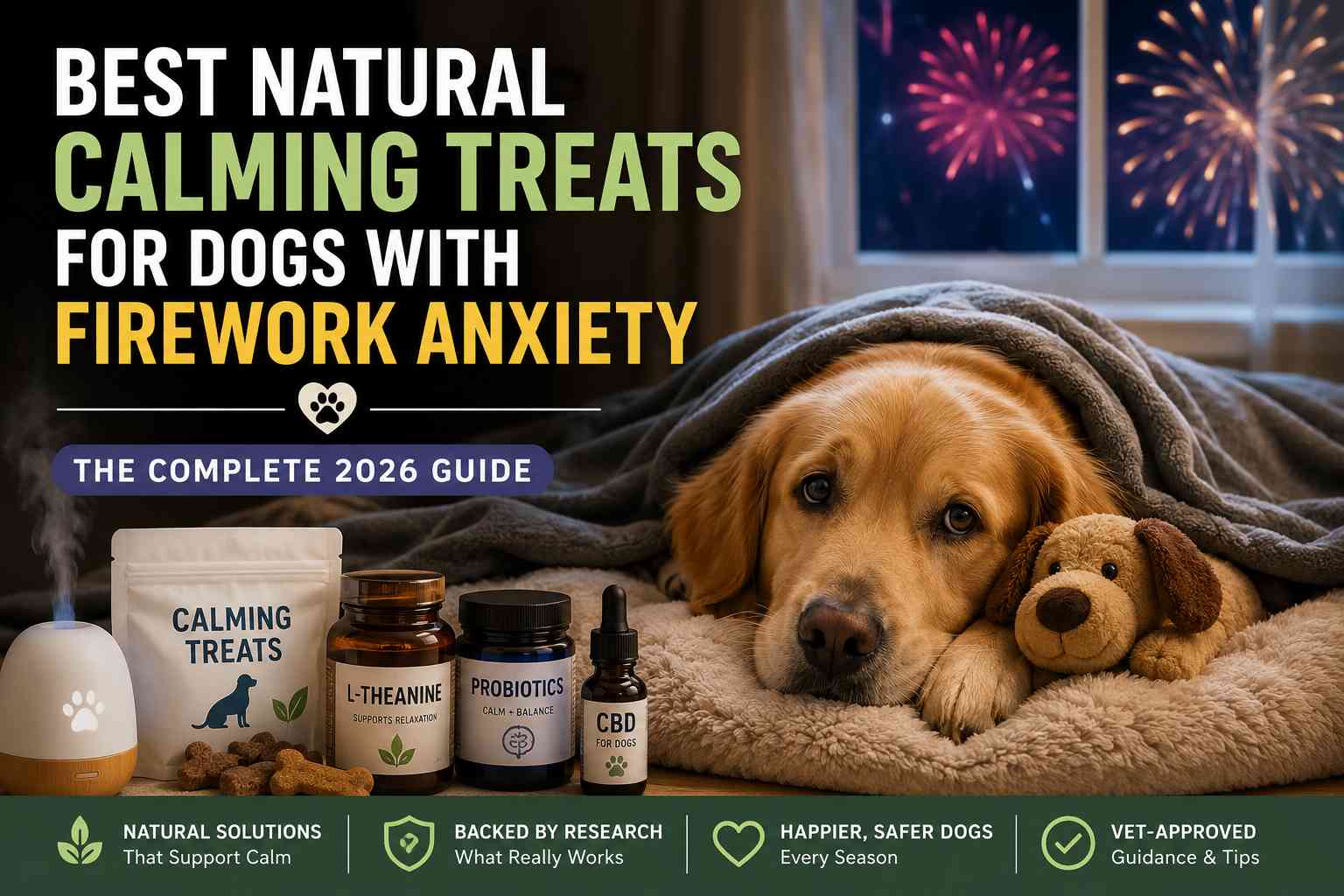
Table of Contents
- Understanding Dog Anxiety: Situational vs. Behavioral
- Firework and Noise Anxiety: Why It Happens and How to Help
- How to Stop Dog Separation Anxiety Without Medication
- Natural Calming Supplements: What the Research Actually Shows
- CBD vs. Calming Treats for Dogs: Which Works Better?
- The Best Supplement for Dog Anxiety Before a Vet Visit
- Non-Supplement Tools That Also Help
- What Recent Research Shows
- Common Mistakes Owners Make
- Final Recommendations
- Frequently Asked Questions
Understanding Dog Anxiety: Situational vs. Behavioral
Not all dog anxiety looks or behaves the same way, and the label gets used loosely. Veterinary behaviorists at Cornell note that “anxiety” is often used as a catch-all description for behavior an owner doesn’t like, when in reality there’s usually something more specific going on underneath — separation distress, sound sensitivity, resource guarding, territorial behavior, or age-related cognitive decline.
Signs to Watch For
Common signs of anxiety in dogs include panting, drooling, pacing, whining, destructive chewing, house-soiling, ears pulled back, lip-licking, and the whites of the eyes showing. Some dogs freeze or try to hide; others become clingy or vocal. During a genuine panic episode — the kind associated with severe noise aversion — reactions can escalate to trembling, attempts to escape, or self-injury from scrabbling at doors and crates.
Situational vs. Ongoing Anxiety
Situational anxiety is tied to a specific trigger — a thunderstorm, a car ride, a vet visit — and tends to resolve once the trigger passes. Ongoing (or trait) anxiety is more persistent and can show up as general nervousness, hypervigilance, or reactivity across many contexts. The two often overlap: a dog with generalized anxiety is more likely to also struggle with noise events or being left alone.
Age, Breed, and Individual Differences
Genetics and breed temperament play a real role. Herding breeds such as Border Collies and Australian Shepherds are, on average, more prone to noise-related distress than hunting breeds like pointers and setters, according to the American Animal Hospital Association (AAHA). If you’re working with a breed known for higher anxiety sensitivity, our guide to breed-specific needs covers temperament traits worth knowing before you start any calming plan. Senior dogs are a separate case: restlessness, disorientation, and nighttime pacing can signal cognitive dysfunction syndrome (CDS) rather than “just” anxiety, a distinction that matters for treatment — our senior dog care guide has more on age-related behavior changes.
Firework and Noise Anxiety: Why It Happens and How to Help
Fireworks are, by a wide margin, the most commonly reported trigger for noise-related fear in dogs. In the UK, a 2025 industry poll cited by the RSPCA found that roughly 60% of dogs showed negative effects from fireworks, and the charity has logged more than 14,000 firework-impact reports from pet owners since 2021. Veterinary literature puts the figure even higher: a review in Today’s Veterinary Practice cites estimates that between 17% and 49% of dogs experience clinically meaningful noise aversion, while some veterinary hospital sources put the figure closer to one in three dogs overall.
It’s worth naming what this actually is: noise aversion isn’t “being a bit jumpy.” The American Veterinary Medical Association (AVMA) and veterinary behaviorists describe it as a recognized medical welfare issue, not a training failure or a personality quirk — which is exactly why it deserves real management rather than being brushed off until the next fireworks season.
Before the Noise Starts
Preparation matters more than anything you do in the moment. The RSPCA recommends setting up a permanent safe space — a covered crate, a quiet interior room, or a den lined with your dog’s favorite bedding — that’s accessible to your dog at all times, not just brought out on fireworks night. Close curtains and windows in advance to muffle sound and block light flashes, exercise your dog during daylight hours so triggers don’t overlap with walk time, and confirm your dog’s microchip details are current in case they bolt. Ask your vet about pheromone diffusers well ahead of the season, since these products typically need days to reach full effect in a room.
During the Event
Play music, TV, or white noise to help mask the bangs. Let your dog pace, hide, or seek their safe space without being coaxed out — the RSPCA and VCA Animal Hospitals both advise against forcing interaction, since a dog that isn’t eating or accepting treats is telling you their fear is too high for food-based comfort. Offering a long-lasting chew or a stuffed food toy can help dogs who are still willing to engage. Stay calm and act normally yourself; dogs read our body language closely, and an anxious owner can reinforce an anxious dog. Never punish fear-driven behavior like barking or house-soiling during an event — it isn’t disobedience, and punishment tends to make noise aversion worse over time.
A note from Owner: Our office dog, a twelve-year-old beagle mix named Biscuit, used to pace and pant through every Fourth of July until we changed our routine. Now, about an hour before the first fireworks usually start, she gets her calming chew, a snug-fitting anxiety wrap, and settles into a crate covered with a heavy blanket in our quietest room, with a white noise machine running. She still perks her ears at the loudest booms, but she stays in her bed instead of trying to squeeze behind the couch. It took two or three firework seasons of consistent practice before the routine really “clicked” for her — so if your dog doesn’t settle right away this year, that’s normal, not a sign that nothing is working.
When to Consider FDA-Approved Medication
For dogs whose reaction goes beyond mild pacing — real panic, self-injury, or attempts to escape — natural remedies and a safe space may not be enough on their own. Sileo (dexmedetomidine oromucosal gel) is the first and, as of this writing, only medication specifically FDA-approved to treat canine noise aversion. It’s a prescription-only gel applied between the cheek and gum, and it’s designed to keep a dog calm without heavy sedation. This is genuinely a case where “natural first, medication if needed” is the wrong framing for some dogs — a severely noise-averse dog is, in AVMA’s words, suffering, and delaying appropriate treatment doesn’t make the condition better on its own. Talk to your vet about whether your dog’s reaction warrants this option alongside — not instead of — the behavioral strategies above.
How to Stop Dog Separation Anxiety Without Medication
Separation anxiety is one of the most common behavioral concerns diagnosed in pet dogs worldwide, and unlike noise aversion, it’s almost always addressed primarily through behavior modification rather than supplements or drugs — medication, when used, tends to support training rather than replace it.
Desensitization and Counterconditioning
The Cornell Riney Canine Health Center recommends starting small: walk out of the room and immediately return, then gradually extend the time you’re out of sight. The goal is to build up your dog’s tolerance for absence in increments small enough that they never reach full-blown panic. Departure cues — picking up keys, putting on shoes — can be practiced separately from actually leaving, so they stop predicting abandonment. This is slow work; rushing the process tends to set dogs back rather than move them forward.
Environmental and Routine Strategies
Predictability itself appears to reduce anxiety. Cornell behaviorist Dr. Katherine Houpt notes that dogs do best when they can reliably predict what happens next in their day — consistent meal times, walks, and rest periods give a nervous dog a sense of control even in your absence. A well-stuffed food puzzle at departure time, left-on radio or TV, and a comfortable crate or safe room (if your dog already finds crates comforting rather than confining) can all reduce distress during the actual absence.
Working With a Certified Trainer or Behaviorist
Separation anxiety that doesn’t improve with basic desensitization is a good reason to bring in a professional rather than escalating alone. Look for evidence-based, reward-focused credentials rather than self-styled titles. The American Veterinary Society of Animal Behavior (AVSAB) recommends reward-based methods exclusively and specifically advises against aversive tools such as shock, prong, or choke collars for anxiety-related behavior, since these can increase fear rather than resolve it. Depending on where you live, look for a trainer certified through the Certification Council for Professional Dog Trainers (CCPDT) in the US and internationally, an Animal Behaviour and Training Council (ABTC)-registered Clinical Animal Behaviourist in the UK, a member of the Canadian Association of Professional Dog Trainers (CAPDT) in Canada, a trainer affiliated with the Pet Professional Guild Australia (PPGA) or Delta Institute in Australia, or a member of the Association of Professional Dog Trainers New Zealand (APDTNZ). For dogs whose separation anxiety is severe, a veterinary behaviorist can also assess whether short-term medication would support — rather than replace — the training plan.
Natural Calming Supplements: What the Research Actually Shows
“Natural” is a marketing word, not a safety guarantee — the American Kennel Club (AKC) points out that labels like “all-natural” don’t guarantee a product is safe for every dog, and dosage and individual sensitivity still matter. That said, several natural ingredients do have real research behind them.
Herbal & Amino-Acid Calming Chews
👍 Pros
- Widely available over the counter
- generally fast-acting (often within 30–60 minutes)
- few reported side effects at label doses
- useful for mild-to-moderate situational stress
👎 Cons
- Products are not FDA-regulated for consistency or potency
- evidence is strongest for L-theanine and weaker for many herbal blends
- may not be enough alone for dogs with severe or diagnosed anxiety disorders
Pheromones (DAP / Adaptil)
Dog-appeasing pheromone (DAP) is a synthetic copy of the pheromone nursing mother dogs release to calm their puppies. According to PetMD, several studies support DAP’s effectiveness for reducing anxiety-related behavior in various situations, though many of those studies are limited by methodology and often combined DAP with concurrent training, making it hard to isolate the pheromone’s effect on its own. It’s sold as a collar, spray, or plug-in diffuser and is widely considered low-risk to try alongside other strategies.
L-Theanine, Melatonin, and Herbal Blends
L-theanine, an amino acid found in green tea, has some of the better-designed research behind it among natural calming ingredients: a small study on noise phobia found daily L-theanine reduced owner-reported intensity of anxious behavior during real thunderstorms, though the researchers themselves flagged placebo effect as a limitation, per Today’s Veterinary Practice‘s review of the literature. A separate placebo-controlled study on a botanical supplement containing Souroubea and Platanus triterpenes found measurable anxiolytic effects in a thunderstorm-noise model in Beagles, published in the journal Animals. Melatonin is commonly used for its sedative and sleep-regulating properties, and chamomile, valerian root, and lavender aromatherapy show up frequently in veterinary-adjacent sources as calming aids, though rigorous double-blind trials in dogs are limited for most herbal ingredients — talk to your vet before combining any of these with other medications, since some can interact.
Probiotics and the Gut-Brain Axis
One of the more interesting recent developments is the gut-brain axis — the idea that gut bacteria influence behavior. In a blinded, placebo-controlled study at the Purina Pet Care Center described by PetMD, the probiotic strain Bifidobacterium longum BL999 reduced anxious behaviors — excessive vocalization, jumping, pacing, and spinning — in a small population of Labrador Retrievers. It’s an emerging area rather than settled science, but it fits with a broader pattern in veterinary nutrition connecting gut health to overall wellbeing, including behavior.
CBD vs. Calming Treats for Dogs: Which Works Better?
This is one of the most-asked questions from anxious dog owners, and the honest answer is: it depends what you’re treating, and the research base for each is different.
CBD Oil for Dogs
👍 Pros
- Stronger clinical evidence for pain than for anxiety specifically
- generally well tolerated in short-term studies
- non-intoxicating when THC content is minimal
👎 Cons
- Not FDA-regulated
- product quality varies significantly between brands
- no published double-blind placebo-controlled anxiety trial in dogs yet exists
- can affect liver enzymes and interact with other medications
What Cornell’s Research Found
Cornell University’s College of Veterinary Medicine has done some of the earliest and most-cited CBD research in dogs. Their landmark osteoarthritis study found that more than 80% of dogs with osteoarthritis experienced reduced pain on CBD oil, with improved comfort and activity. For anxiety specifically, the picture is less settled: in a separate Cornell study, dogs given CBD chews before a stressful event showed an 83% owner-reported decrease in stress-related behavior — a promising anecdotal signal, but Cornell’s own researchers caution that no double-blind, placebo-controlled clinical anxiety trial has yet been published in the veterinary literature, and that effective anxiety dosing may need to be higher than what’s typically used for pain.
Safety, Regulation, and Quality Concerns
CBD products for pets are not FDA-regulated, and quality varies enormously between brands. A Cornell-led analysis of 29 commercial CBD pet products found heavy-metal contamination in four products, and only ten measured within 10% of their labeled cannabinoid concentration. CBD can also affect liver enzymes involved in drug metabolism, which matters if your dog takes other medication. None of this means CBD is unsafe outright — it means “check with your vet and choose a third-party-tested product” isn’t optional advice, it’s the whole point.
Choosing Between the Two
In practice, many owners aren’t actually choosing one or the other — calming chews built around L-theanine, melatonin, or herbal blends and CBD-based products are simply different tools, and the right one depends on what you’re managing. For situational stress like car rides or grooming, a fast-acting herbal chew may be all you need. For a dog with concurrent joint pain and anxiety, CBD’s stronger pain evidence might make it the more logical starting point, again under veterinary guidance. Neither is a substitute for a diagnosed, severe anxiety disorder, which typically needs a full behavior plan and, in some cases, a prescription option like fluoxetine, clomipramine, or trazodone.
The Best Supplement for Dog Anxiety Before a Vet Visit
Vet visits are a common, predictable trigger, and unlike a surprise thunderstorm, you actually have time to prepare for one.
Fear Free and Low-Stress Handling
A growing number of clinics now train staff in Fear Free® or Low Stress Handling® approaches, which focus on minimizing fear, anxiety, and stress (FAS) throughout the visit — from waiting-room layout to how a dog is positioned during an exam. Cornell notes that these clinics often examine dogs on the floor rather than an exam table, limit clinic noise, and use minimal restraint — all of which can measurably reduce a dog’s stress response. It’s worth asking a prospective vet’s office directly whether they use these approaches.
What to Bring and Do Beforehand
Bring your dog hungry (unless told otherwise) so high-value treats actually motivate them, and pack small, easily broken pieces you can dispense throughout the visit rather than all at once. Frozen food-dispensing toys or lick mats can provide a longer distraction in the waiting room or exam room. AAHA suggests calling ahead to wait in your car rather than a busy lobby if your dog is easily overwhelmed by other animals, and asking whether a separate dog-only waiting area is available. “Happy visits” — short trips to the clinic that involve treats and attention but no actual procedures — can help rebuild positive associations for dogs with a history of fear at the vet.
Talking to Your Vet About Pre-Visit Anxiety Options
For dogs whose fear is significant enough to interfere with a proper exam, your vet may recommend a pre-visit anti-anxiety medication given at home a few hours before the appointment — Cornell notes this can meaningfully help dogs with pre-existing fear or anxiety cope better with handling. This is genuinely a conversation to have with your own vet rather than something to self-manage with an over-the-counter product, since dosing and drug choice depend on your dog’s health history, other medications, and the specific procedure planned. If ongoing veterinary behavioral support becomes part of your dog’s care, it’s also worth reviewing how your pet insurance handles behavioral consultations, since coverage varies by provider and policy.
Non-Supplement Tools That Also Help
Supplements are one lever, not the whole system. Compression wraps and anxiety vests — the best-known being ThunderShirt-style products — apply gentle, constant pressure that some owners and clinicians compare to swaddling an infant; evidence is mostly practical and observational rather than large controlled trials, but the risk profile is low and many dogs tolerate them well once introduced gradually. Calming music or white noise, a genuinely safe and accessible retreat space, structured daily exercise, and puzzle feeders that redirect nervous energy toward a rewarding task all show up consistently across veterinary behavior sources as low-risk, evidence-informed supports. None of these fix an underlying anxiety disorder on their own, but layered together with training and, where appropriate, supplements or medication, they add up.
What Recent Research Shows
The research landscape for canine anxiety is genuinely moving, if unevenly. On the pharmaceutical side, dexmedetomidine (Sileo) remains the clearest success story — it’s the only FDA-approved medication specifically indicated for noise aversion, and a randomized, double-blinded, placebo-controlled study published via ScienceDirect found that in-hospital oromucosal dexmedetomidine gel measurably reduced acute stress in dogs during standardized veterinary visits when owner-administered in the exam room.
On the supplement side, evidence is more mixed. CBD research has expanded quickly for pain — Cornell’s osteoarthritis findings have been reproduced with reasonable consistency — but a rigorous, published, placebo-controlled anxiety trial specifically is still missing from the literature as of this writing, per Cornell’s own assessment. L-theanine and pheromone (DAP) research shows promising but methodologically limited results, often complicated by concurrent behavior modification in the same studies, which makes it hard to say how much of the benefit comes from the supplement alone. Probiotic research into the gut-brain axis is newer still, with the Purina-funded Labrador study representing an early, small-scale signal rather than a settled conclusion. Research findings on natural calming supplements are, overall, mixed and evolving, and more independent studies are needed before any single product can be called definitively “best.”
Common Mistakes Owners Make
1. Waiting until the event has already started. Pheromone diffusers, desensitization training, and even some supplements need days or weeks of lead time to be effective. Starting on the night of the fireworks display is usually too late for anything except in-the-moment comfort measures.
2. Forcing comfort on a dog that wants to hide. It’s instinctive to want to hold or coax a frightened dog out, but many dogs cope better by retreating to a safe space undisturbed. Forcing interaction can increase stress rather than reduce it.
3. Punishing fear-driven behavior. Barking, house-soiling, or destructive chewing during a panic episode is not defiance — it’s a stress response. Punishment tends to add a second layer of fear (of the owner) on top of the original trigger, and AVSAB specifically discourages aversive corrections for anxiety-related behavior.
4. Assuming “natural” means “no side effects.” Herbal and amino-acid supplements can still interact with medications or cause sedation, upset stomach, or other reactions in individual dogs. Always check with a vet before combining products, especially if your dog is already on prescription medication.
5. Treating every anxious behavior as the same problem. A dog with separation anxiety needs a different plan than a dog with noise aversion or age-related cognitive decline. Using a one-size-fits-all calming treat without identifying the actual trigger often leads to disappointing results and the false conclusion that “nothing works.”
6. Skipping the vet visit for severe or worsening symptoms. Self-injury, complete loss of appetite during triggers, or anxiety that’s getting worse over time — rather than better — with home management is a signal to involve a veterinarian rather than trying yet another over-the-counter product.
7. Buying CBD or supplements without checking third-party testing. Given the lack of FDA regulation, quality between brands varies widely; independent lab verification of cannabinoid content and contaminant screening is worth the extra research time.
Final Recommendations
- Start preparing for predictable triggers — fireworks holidays, known storm seasons, scheduled vet visits — well in advance rather than reactively.
- Set up a permanent, always-accessible safe space for your dog, not just a temporary one brought out during events.
- Try lower-risk natural options like DAP pheromone products or L-theanine chews first for mild-to-moderate situational stress, under your vet’s guidance.
- Don’t rule out CBD, but choose a third-party-tested product and treat pain relief, not anxiety, as its best-supported use case.
- Invest in desensitization and counterconditioning training for separation anxiety rather than relying on supplements alone.
- Choose a trainer or behaviorist with a recognized, reward-based credential appropriate to your country.
- Ask your vet’s office directly about Fear Free or Low Stress Handling approaches before your next appointment.
- Recognize that severe noise aversion is a medical welfare issue that may need prescription treatment like Sileo, not just more natural remedies.
- Keep a simple log of what triggers your dog and what helps — patterns often become clearer over a few weeks than they are in the moment.
- Revisit your dog’s plan periodically; anxiety triggers and severity can shift with age, health changes, or life circumstances.
This content is for educational purposes only and does not replace professional veterinary advice. Always consult your veterinarian before making health decisions for your pet.
Conclusion
Calming treats, pheromones, CBD, and prescription medications like Sileo aren’t competing options so much as different tools for different jobs — and the dog in front of you, not a “best of” list, should decide which combination makes sense. A dog with mild situational stress around car rides may do fine with a simple L-theanine chew and a favorite blanket. A dog with genuine, panic-level noise aversion deserves a real conversation with a vet about whether an FDA-approved medication belongs in the plan alongside the natural strategies. A dog with separation anxiety generally needs patient, structured training more than any supplement at all.
The through-line across firework fear, separation anxiety, vet-visit stress, and general noise sensitivity is the same: preparation beats reaction, punishment makes things worse, and severity should guide how far up the treatment ladder you go — from a safe space and a calming chew, up to behavior modification with a certified professional, up to medication when a vet determines it’s warranted. Start with the lowest-risk tools that fit your dog’s specific trigger, track what actually helps, and loop in your veterinarian whenever symptoms are severe, worsening, or not responding to a reasonable trial of home strategies. And as always — your vet, who knows your dog’s full health history, is the right person to make the final call on anything you give or do for your dog’s anxiety.
There's no single best option for every dog, but products built around L-theanine, dog-appeasing pheromone (DAP), or melatonin have the most supporting research among natural calming aids. Effectiveness varies by dog, and severe noise aversion may need an FDA-approved prescription option like Sileo rather than an over-the-counter treat. Always introduce any new product several days before a known trigger, and check with your vet first, especially if your dog takes other medication.
Gradual desensitization is the core approach: practice short absences and slowly build up the time you're away, and separate departure cues like picking up keys from actually leaving so they stop predicting abandonment. Keeping a predictable daily routine, providing a food puzzle at departure time, and working with a reward-based certified trainer for more severe cases all help. Medication is sometimes added to support training in more serious cases, but it's not the first or only step.
It depends what you're targeting. CBD has stronger published research for pain relief than for anxiety specifically, and no double-blind placebo-controlled anxiety trial in dogs has been published yet. Natural calming treats with L-theanine or pheromones have more anxiety-specific research, though often with methodological limitations. Many owners use different tools for different situations rather than picking one over the other, always under veterinary guidance.
This is genuinely a conversation to have with your own vet, since pre-visit anxiety options depend on your dog's health history and the procedure planned. Some vets recommend a prescription anti-anxiety medication given a few hours before the appointment for dogs with significant fear. Non-drug preparation — an empty stomach so treats work as motivation, a familiar blanket, and choosing a Fear Free or Low Stress Handling certified clinic — also makes a real difference.
For a dog in acute distress, the priority is a safe, accessible retreat space, reduced noise and light exposure, and letting the dog choose to hide or pace without being forced into contact. Calming aids like pheromone diffusers or L-theanine chews can support this but work best when started before the trigger, not during a full panic response. If episodes involve self-injury or are worsening over time, contact your veterinarian rather than continuing to manage it at home alone.
Mild trembling or seeking a hiding spot during fireworks is common and, on its own, isn't necessarily cause for alarm — surveys suggest a large share of dogs are affected to some degree. However, prolonged panting, drooling, attempts to escape, self-injury, or a reaction that doesn't settle within an hour or so after the noise stops are signs the aversion may be more severe and worth discussing with your vet.
This depends on the ingredient and product. Some, like certain probiotics or daily L-theanine formulations, are designed for ongoing use in dogs with more generalized anxiety. Others are intended for situational use around a known trigger. Because these products aren't FDA-regulated for consistency, check the specific label guidance and confirm daily use is appropriate for your dog with your veterinarian, particularly if your dog takes other medication.
See your vet if your dog's anxiety is worsening over time, involves self-injury, causes a complete loss of appetite during triggers, doesn't improve after a reasonable trial of behavioral strategies and low-risk supplements, or seems to be spreading to more and more everyday situations. These patterns suggest a diagnosable anxiety disorder that benefits from a full veterinary assessment rather than continued at-home trial and error.
References
- American Kennel Club — “Dog Calming Treats: Uses and Alternatives for Anxiety and More” — AKC — 2025 — https://www.akc.org/expert-advice/health/dog-calming-treats/
- American Kennel Club — “Anxiety in Dogs: Signs, Symptoms, and Treatment” — AKC — 2026 — https://www.akc.org/expert-advice/health/treating-dog-anxiety/
- PetMD — “What to Know About Calming Aids for Dogs” — PetMD — 2025 — https://www.petmd.com/dog/behavior/dog-calming-products-help-ease-dog-anxiety
- PetMD — “CBD Oil for Dogs: Benefits, Risks & Dosage Guide” — PetMD — 2026 — https://www.petmd.com/dog/general-health/CBD-oil-for-dogs
- Cornell University College of Veterinary Medicine, Riney Canine Health Center — “CBD: What you need to know about its uses and efficacy” — Cornell CVM — https://www.vet.cornell.edu/departments-centers-and-institutes/riney-canine-health-center/canine-health-topics/cbd-what-you-need-know-about-its-uses-and-efficacy
- Cornell University College of Veterinary Medicine, Riney Canine Health Center — “Anxious behavior: How to help your dog cope with unsettling situations” — Cornell CVM — 2025 — https://www.vet.cornell.edu/departments-centers-and-institutes/riney-canine-health-center/health-info/anxious-behavior-how-help-your-dog-cope-unsettling-situations
- Cornell University College of Veterinary Medicine, Riney Canine Health Center — “How to make veterinary visits less stressful for dogs” — Cornell CVM — https://www.vet.cornell.edu/departments-centers-and-institutes/riney-canine-health-center/canine-health-topics/how-make-veterinary-visits-less-stressful-dogs
- American Animal Hospital Association (AAHA) — “Noise Aversion in Pets: Causes, Signs, and How to Help” — AAHA — 2025 — https://www.aaha.org/resources/safe-and-sound-noise-aversion-in-pets/
- American Animal Hospital Association (AAHA) — “How can my pet have stress-free veterinary visits?” — AAHA — 2025 — https://www.aaha.org/resources/how-can-my-pet-have-stress-free-veterinary-visits/
- American Veterinary Medical Association (AVMA) — “Dogs in overdrive” — AVMA — 2017 — https://www.avma.org/javma-news/2017-07-01/dogs-overdrive
- American Veterinary Society of Animal Behavior (AVSAB) — “Position Statements and Handouts” — AVSAB — 2025 — https://avsab.org/resources/position-statements/
- RSPCA — “Keeping dogs, cats and other small pets safe during fireworks” — RSPCA (UK) — 2025 — https://www.rspca.org.uk/adviceandwelfare/fireworks/pets
- VCA Animal Hospitals — “Fear of Noises in Dogs” — VCA — https://vcahospitals.com/know-your-pet/fear-of-noises-and-places-in-dogs
- Zoetis — “Sileo for Pet Owners” — Zoetis Petcare — https://www.zoetispetcare.com/products/sileo
- Today’s Veterinary Practice — “Focus on Canine Noise-Induced Fear” — Today’s Veterinary Practice — 2022 — https://todaysveterinarypractice.com/behavior/journal-club-focus-on-canine-noise-induced-fear/
- National Center for Biotechnology Information (NCBI) — “Efficacy of Souroubea-Platanus Dietary Supplement Containing Triterpenes in Beagle Dogs Using a Thunderstorm Noise-Induced Model of Fear and Anxiety” — Animals (Basel) — https://www.ncbi.nlm.nih.gov/pmc/articles/PMC8038379/
- Certification Council for Professional Dog Trainers (CCPDT) — “Certification for professional dog trainers and behavior consultants” — CCPDT — https://www.ccpdt.org/
- Animal Behaviour and Training Council (ABTC) — Home — ABTC (UK) — https://abtc.org.uk/
- Canadian Association of Professional Dog Trainers (CAPDT) — “Become a Member” — CAPDT (Canada) — https://capdt.ca/dog-trainers-association-membership-canada/
- Pet Professional Guild Australia (PPGA) — Home — PPGA (Australia) — https://www.ppgaustralia.net.au/
- Association of Professional Dog Trainers New Zealand (APDTNZ) — Home — APDTNZ (New Zealand) — https://www.apdtnz.org.nz/