
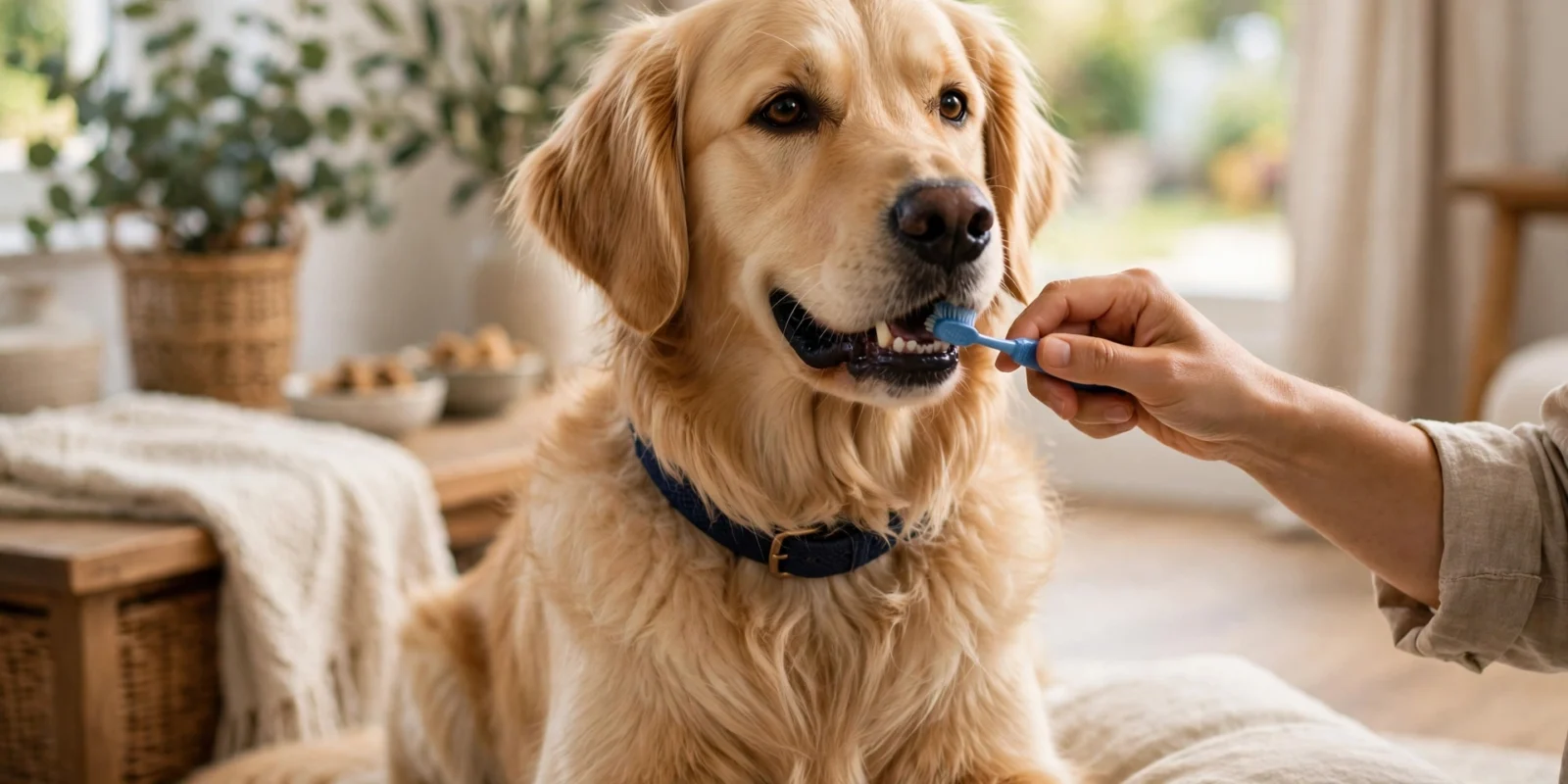
Most dog owners have been there: toothbrush in hand, dog backing away, and a quiet feeling of guilt every time the vet mentions tartar. Learning how to brush your dog’s teeth is one of the simplest, cheapest things you can do for your dog’s health — and one of the most commonly skipped. This guide walks you through it properly: what to buy, how often to brush, the exact technique, and what to do when your dog refuses to cooperate.
Written by Md Masud Rana based on published expert sources. This article has not been professionally reviewed. See our sources below.
Here is the reassuring part. You do not need to be perfect, and you do not need to clean every tooth on day one. A short, calm session a few times a week beats a stressful monthly wrestling match every time. Dogs that accept brushing usually learn it gradually, in small steps, with plenty of praise. If your dog already has sore gums or heavy tartar, the order changes: vet check first, brushing second.
Imagine you lift your dog’s lip one evening and spot a yellow-brown crust along the gumline and gums that look redder than they should. Many owners describe that moment as the point they finally take dental care seriously — not because their dog was suddenly ill, but because the problem had clearly been building unnoticed. That slow, quiet build-up is exactly what brushing interrupts.
Quick Answer Box
Brush your dog’s teeth daily if you can, or at least two to three times a week, using a soft dog toothbrush and toothpaste made for dogs — never human toothpaste. Angle the bristles at about 45 degrees to the gumline, focus on the outer surfaces of the upper teeth, and aim for 30 seconds per side. Build up gradually over one to two weeks if your dog is new to brushing, and see your vet first if the gums are red, bleeding, or sore.
Key Takeaways
- Daily brushing is best; two to three times a week is the realistic minimum.
- Plaque hardens into tartar within days, and tartar cannot be brushed off at home.
- Human toothpaste is dangerous for dogs — some contain xylitol, which can be life-threatening.
- Focus on the outer surfaces of the upper teeth, especially the large back teeth.
- A reluctant dog needs smaller steps, not more force — patience beats pressure.
- Red, bleeding, or swollen gums mean a vet visit before brushing, not after.
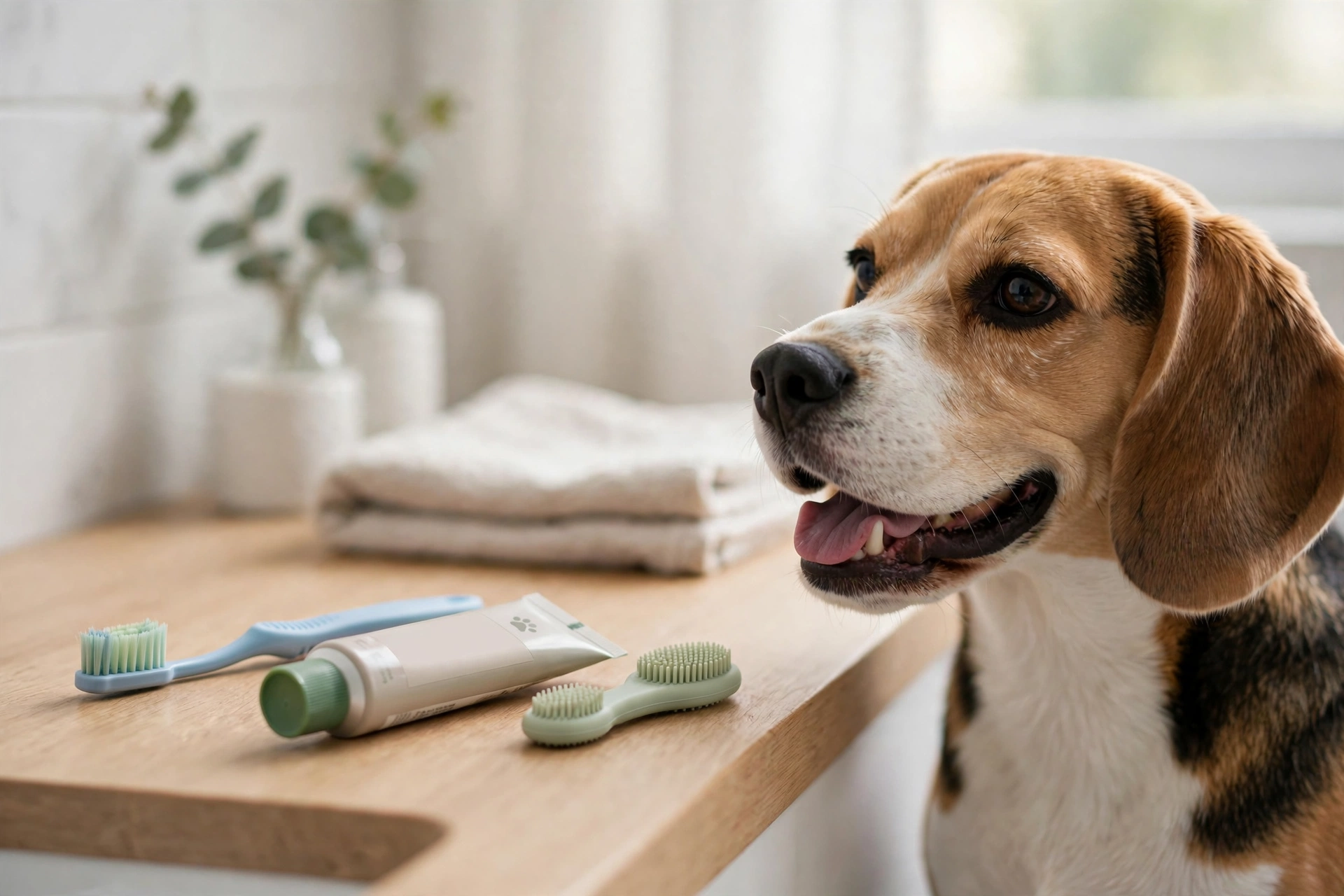
Table of Contents
- Why Brushing Your Dog’s Teeth Matters So Much
- How Often Should You Brush Your Dog’s Teeth?
- What You Need to Brush Your Dog’s Teeth
- How to Brush Your Dog’s Teeth, Step by Step
- What If Your Dog Won’t Let You Brush Their Teeth?
- Signs You Should See the Vet Before You Brush
- When Brushing Isn’t Possible: What Actually Helps
- What Recent Research Shows
- Common Mistakes to Avoid
- Final Recommendations
- Frequently Asked Questions
Why Brushing Your Dog’s Teeth Matters So Much
Every time your dog eats, a soft, sticky film of bacteria called plaque forms on their teeth. Left alone, plaque hardens into tartar — the rough, yellow-brown crust you can see along the gumline. Brushing removes plaque while it is still soft. Once it has hardened into tartar, no amount of home brushing will shift it, and only a professional veterinary cleaning can remove it.
That matters because tartar is not just cosmetic. It irritates the gums, creeps below the gumline, and drives periodontal disease — gum disease — which is the most common health problem vets see in adult dogs. PetMD notes that most dogs over the age of three already have some degree of dental disease, and that studies put the figure at 80–90% of dogs aged three and older. Animal Trust explains that gum disease is caused by plaque build-up, can be painful, and, without treatment, can destroy the tissues and bone supporting the teeth until affected teeth need removing.
What dental disease actually does
Gum disease usually starts quietly as gingivitis: red, slightly puffy gums and breath that smells worse than usual. Dogs are good at hiding mouth pain, so the early stages often pass unnoticed. As it advances, gums recede, teeth loosen, eating becomes painful, and bacteria from the mouth can enter the bloodstream. PetMD warns that severe periodontal disease can contribute to heart, kidney, and liver problems because mouth bacteria travel to other organs through the blood.
Small and toy breeds face higher risk, partly because their teeth are crowded into small jaws, and short-nosed breeds can be more prone too. The good news is that the earliest stage, gingivitis, is reversible with consistent home care, which is exactly why starting now matters more than starting perfectly.
The habit that prevents most of it
The American Veterinary Medical Association (AVMA) calls regular brushing the single most effective thing owners can do between dental cleanings, noting it may reduce how often a professional cleaning is needed. Brushing will not replace vet dentistry for a dog that already has tartar or damaged teeth. What it does is slow the whole cycle down, keeping a healthy mouth healthy for longer.
How Often Should You Brush Your Dog’s Teeth?
Daily is the gold standard, and every major veterinary source lands in the same place. PetMD recommends brushing at least two to three times per week, with daily as the ideal. WebMD’s veterinary guidance agrees: daily brushing is best because plaque can harden into tartar within a few days, and if you go too long between sessions, tartar removal becomes a vet’s job, not yours.
If daily feels impossible right now, treat two to three sessions a week as your floor, not your goal. Brushing every other day still disrupts plaque before it hardens. Brushing once a week, honestly, is better than nothing — but it is not enough to reliably prevent disease, because plaque starts hardening within roughly 24 to 72 hours. A short session done often beats a long session done rarely, every time.
How long should each session last?
Once your dog is used to the routine, a full session takes about one to two minutes: roughly 30 seconds per side. Early sessions will be much shorter — a few seconds on a couple of teeth — and that is fine. PetMD suggests stopping every five to ten seconds in the early days to offer praise, keeping the experience light and fun rather than something your dog dreads.
Pick a consistent time and stick to it. Many owners find after the evening meal works well, because the dog is settled and the toothbrush can live next to your own.
When should you start?
The best time is puppyhood — WebMD notes that the younger a dog is when you start, the easier it tends to be — but it is genuinely never too late. Older dogs can learn to accept brushing if you go slowly enough. If your older dog has never had their teeth brushed, read the vet-first section below before you begin.
What You Need to Brush Your Dog’s Teeth
You need very little, and getting the right two items matters more than buying every gadget on the shelf. A soft-bristled brush sized for your dog’s mouth, and toothpaste made specifically for dogs. Everything else is optional.
The toothbrush
Choose a soft-bristled brush made for dogs — angled heads and long handles help you reach the back teeth without wrestling your dog’s mouth open. For small dogs, a toddler toothbrush or a small-headed adult brush works well; the bristle softness matters more than the brand. A silicone finger brush, which slips over your fingertip, gives you more control and feels less threatening to a nervous dog, though it is a poor choice if your dog tends to chomp down on anything in their mouth. Replace the brush every few months, or sooner if the bristles splay.
The toothpaste — and the one rule that matters most
Never use human toothpaste on your dog. Human toothpaste is designed to be spat out, and it can upset a dog’s stomach. Worse, some human toothpastes contain xylitol, an artificial sweetener that is poisonous to dogs. The US Food and Drug Administration (FDA) warns that xylitol can trigger a rapid, dangerous drop in blood sugar in dogs, with symptoms including vomiting, weakness, staggering, collapse, and seizures — and advises owners to use only pet toothpaste, never human toothpaste.
Dog toothpaste is made to be swallowed safely and comes in flavours dogs actually enjoy, such as poultry, beef, and peanut butter. Some are enzymatic, meaning they contain enzymes that help break down plaque chemically as well as mechanically. WebMD notes that enzymatic toothpastes can help prevent tartar build-up and tackle bad breath. Let your dog taste a few flavours if needed — the one they like is the one you will actually use.
Helpful extras
| Item | What it is for | When it helps most |
|---|---|---|
| Finger brush | Gentle first step before a full brush | Puppies and nervous dogs |
| Dental wipes | Wiping plaque off tooth surfaces | Dogs that will not tolerate a brush yet |
| Gauze or soft cloth | Rubbing teeth during early training | The very first getting-used-to-it sessions |
| High-value treats | Rewarding calm cooperation | Every single session, especially early ones |
| VOHC-accepted chews | Extra plaque and tartar control | As a support to brushing, never a replacement |
When choosing chews or additives, look for the Veterinary Oral Health Council (VOHC) seal of acceptance, which means the product has submitted evidence showing it actually reduces plaque or tartar. Plenty of products claim dental benefits; the seal is the simplest filter for the ones that have proved it. A broader look at everyday routines — feeding, grooming, and vet visits together — is covered in our Pet Care Basics guide.
How to Brush Your Dog’s Teeth, Step by Step
Assume your dog is already comfortable with you touching their muzzle. If they are not, use the two-week plan in the next section first.
Before you start
Choose a calm moment, not right after a walk or play session when your dog is wired. Sit beside or slightly behind your dog rather than facing them head-on, which can feel confrontational. Small dogs can sit on your lap facing away from you; larger dogs can sit beside your chair.
The routine
- Let them taste the paste. Put a pea-sized amount of dog toothpaste on the brush and let your dog sniff and lick it. This turns the brush into something interesting instead of something suspicious.
- Lift the lip, don’t force the mouth. With your free hand, gently raise your dog’s lip on one side. You do not need to pry the mouth open — the outer surfaces are your target, and you can reach them by lifting the lip.
- Start at the back, on the outside. Begin with the large upper back teeth on one side, where plaque and tartar build fastest. Hold the brush at about a 45-degree angle to the tooth, bristles pointing towards the gumline.
- Use small, gentle strokes. Brush with light pressure in small circular or short back-and-forth motions along the gumline. WebMD’s guidance stresses keeping the bristles straight, not flared away from the teeth, and being gentle — scrubbing hard does not clean better and can irritate the gums.
- Work around the mouth. Move from the back teeth towards the front on one side, then switch to the other side. Cover the upper teeth first, then the lower teeth if your dog is comfortable.
- Don’t worry about the insides. The tongue naturally helps clean the inner surfaces of the teeth. If your dog only tolerates a short session, the outer surfaces of the upper teeth are the highest-value real estate — prioritise those.
- End on a win. Praise your dog, offer a treat, and stop while the experience is still positive. Aim for about 30 seconds per side once you are both in the groove.
One practical tip from veterinary guidance: if your dog cannot resist chewing the brush because they love the toothpaste flavour so much, brush with just water and give the toothpaste as a treat afterwards.
What If Your Dog Won’t Let You Brush Their Teeth?
This is the most common reason owners give up — and the most fixable. A dog that clamps their mouth shut, turns away, or chews the brush is usually telling you the steps were too big, too fast. The fix is not force. It is a slower ladder, with a reward at every rung.
A two-week getting-used-to-it plan
Days 1–3: muzzle handling only. Gently touch your dog’s muzzle and briefly lift a lip for a second or two, then reward immediately. Repeat a few times per session, once or twice a day. Nothing goes in the mouth yet.
Days 4–6: taste the paste. Put a dab of dog toothpaste on your finger and let your dog lick it. Then rub a pasted fingertip along the outer surfaces of a few front teeth. Reward and stop.
Days 7–9: introduce the brush. Let your dog sniff and lick the pasted brush, then brush just a few front teeth for a few seconds. Keep it short on purpose.
Days 10–14: work backwards. Gradually reach the large upper back teeth, angling the bristles towards the gumline. Extend the time a little each day until you can cover the outer surfaces on both sides.
Move to the next step only when your dog stays relaxed at the current one. If they tense up, go back a step for a few days. Two to four weeks is a normal timeline for a nervous dog, and that patience pays off for years.
If your dog growls, snaps, or panics
Stop. Never punish a dog for reacting to something in their mouth — punishment teaches them that brushing predicts conflict, and the next session gets harder. Drop back to a step they can handle, shorten the session, and raise the value of the reward. If resistance appears suddenly in a dog that previously accepted brushing, treat it as a possible pain signal, not a behaviour problem, and book a vet check. A reward-based trainer or your vet can also help with dogs that stay fearful despite slow introductions.
When a brush is not happening yet
While you work through the plan, dental wipes or a gauze pad rubbed along the outer teeth still remove some plaque, and VOHC-accepted chews add mechanical cleaning. These are bridges to brushing, not destinations. Keep working the ladder alongside them.
Signs You Should See the Vet Before You Brush
Brushing a sore mouth hurts, and a dog that learns brushing hurts will fight it forever. Check your dog’s mouth first — gently lift the lips and look in good light — and book a vet visit before starting if you notice any of the following. The AVMA lists the warning signs that warrant a sooner check: bad breath, broken or loose teeth, discoloured teeth or visible tartar, abnormal chewing, drooling or dropping food, reduced appetite, pain around the mouth, bleeding, or swelling.
Animal Trust adds the urgent cases: contact your vet urgently if your dog appears to be in significant pain, cannot eat or drink, has marked facial swelling, significant mouth bleeding, or cannot close their mouth. Dogs hide dental pain well, so a change in eating habits or behaviour — chewing on one side, dropping food, flinching when the face is touched — is itself a reason to call.
Your vet will examine the mouth and, if treatment is needed, usually assess it fully under general anaesthesia, including probing around the teeth and taking dental X-rays to check the roots and supporting bone. That sounds dramatic, but it is the only way to see and treat disease below the gumline, where most of it hides. Note that the AVMA and the American Veterinary Dental College do not recommend anaesthesia-free dental cleanings, because they cannot clean or inspect below the gumline. Once the mouth is healthy again, brushing keeps it that way. A yearly dental check is part of the routine — our pet wellness plan guide explains what a preventive care schedule typically includes.
When Brushing Isn’t Possible: What Actually Helps
Some dogs, despite weeks of patient work, will not accept a brush. A few have medical reasons that make brushing inadvisable. In those cases, the goal shifts: reduce plaque by other means, and be honest about their limits.
Dental chews with the VOHC seal are the strongest backup. The chewing action scrapes plaque from tooth surfaces, and products with the seal have evidence behind the claim. Choose a size matched to your dog’s weight, and supervise chewing — the VOHC itself warns that correctly sized products and supervision sharply reduce obstruction risk. Dental wipes, water additives, and dental diets can add smaller benefits, but none matches brushing, and none removes tartar that is already there.
What does not help: hard bones, antlers, and other objects that do not bend. These are often marketed as natural dental care, but they can crack teeth. If a chew is harder than the tooth it is cleaning, skip it. Diet plays a supporting role too: crunchy kibble gives some mechanical cleaning, and some diets are formulated for dental health, but food alone will not keep a mouth healthy. For dogs with specific dietary needs, our guide to feeding choices for dogs with allergies shows how diet decisions interact with overall health.
The honest bottom line: alternatives slow the problem down; brushing stops it at the source. If brushing is currently impossible, use the alternatives, keep trying the desensitisation ladder in tiny steps, and keep the vet checks regular.
What Recent Research Shows
The evidence base for home dental care has stayed consistent rather than changing dramatically, which is reassuring: the fundamentals keep winning. PetMD’s guidance, refreshed in March 2026, repeats the core finding — daily brushing is best, two to three times a week is the minimum, and most dogs over three already show some dental disease, with studies reporting 80–90% prevalence in that age group. The same update repeats the systemic link: untreated periodontal disease is associated with damage to the heart, kidneys, and liver via bacteria entering the bloodstream.
WebMD’s veterinary-reviewed guidance echoes the practical side: plaque hardens into tartar within days, which is why frequency matters more than session length, and why even a 30-second-per-side routine done daily outperforms an occasional thorough session. The VOHC’s position, restated on its current site, is equally plain: daily oral hygiene is the gold standard, and periodic veterinary examination remains necessary because many middle-aged and older dogs need professional scaling alongside home care.
One theme worth noting: where guidance has shifted, it has shifted towards honesty about limits. Veterinary sources now say plainly that home care complements professional cleaning rather than replacing it, and that anaesthesia-free cleaning is not a substitute for proper dentistry.
Common Mistakes to Avoid
1. Using human toothpaste. It can upset your dog’s stomach, and xylitol-containing products can be life-threatening. Dog toothpaste exists for a reason — use it.
2. Trying the whole mouth on day one. A dog overwhelmed on the first attempt learns that brushing is something to escape. Start with a few teeth and build up over days.
3. Brushing only the front teeth. The large upper back teeth collect the most plaque and tartar, and they are the ones owners most often skip. They are also the hardest to reach, which is exactly why they need attention.
4. Scrubbing hard. Pressure does not equal cleaning. Hard scrubbing irritates gums and makes your dog dread the next session. Gentle strokes at the gumline do the work.
5. Brushing a sore mouth. Red, bleeding, or swollen gums, loose teeth, or sudden resistance in a previously cooperative dog mean a vet visit first. Brushing through pain teaches your dog to fear the brush.
6. Treating chews as a substitute. Dental chews help, especially VOHC-accepted ones, but they are not equal to brushing. If you can brush, brush — and use chews as backup, not the plan.
7. Giving up after a bad week. Most dogs need one to four weeks to accept brushing. A few rough sessions are normal, not a verdict. Go back a step, shorten the session, and try again tomorrow.
Final Recommendations
- Brush daily if you can; never drop below two to three times a week once the habit is established.
- Use a soft dog toothbrush and enzymatic dog toothpaste in a flavour your dog enjoys.
- Focus on the outer surfaces of the upper teeth, especially the large back teeth, at a 45-degree angle to the gumline.
- Keep sessions short — about 30 seconds per side — and always end with praise and a treat.
- Follow the two-week ladder for reluctant dogs, and never punish fear or resistance.
- Check your dog’s mouth weekly: lift the lips, look at the gums and teeth in good light, and note any changes.
- Book a vet dental check at least once a year, sooner if you spot any warning signs.
- Choose VOHC-accepted chews and additives as support, not as a replacement for brushing.
- Keep human toothpaste, xylitol products, and hard bones or antlers out of your dog’s dental routine.
- If you do nothing else, start today with one tooth. One tooth brushed well beats a perfect routine you never begin.
This content is for educational purposes only and does not replace professional veterinary advice. Always consult your veterinarian before making health decisions for your pet.
Frequently Asked Questions
Daily is ideal, because plaque can start hardening into tartar within one to three days. If daily is not realistic, aim for at least two to three times a week, which still disrupts plaque before it hardens. Once a week is better than nothing but is not enough to reliably prevent dental disease. Consistency matters more than session length — a one-minute session done daily beats a five-minute session done once a month.
No, never use human toothpaste on your dog. It is designed to be spat out, not swallowed, and it can upset your dog's stomach. More seriously, some human toothpastes contain xylitol, a sweetener that is poisonous to dogs and can cause a rapid, life-threatening drop in blood sugar. The FDA advises using only toothpaste made for pets, in flavours such as poultry and peanut butter that dogs actually enjoy.
Once your dog is comfortable, about one to two minutes in total, or roughly 30 seconds per side. Early sessions will be much shorter — a few seconds on a couple of teeth — and that is exactly how it should start. Keep early sessions short and positive, stopping every few seconds to praise your dog. A calm one-minute session every day is far more useful than a long, stressful session that makes your dog dread the next one.
Go slower, not harder. Start with muzzle handling and lip lifting for a few days, then let your dog lick dog toothpaste from your finger, then rub a few teeth with your finger, and only then introduce the brush. Reward every step and move on only when your dog stays relaxed. If resistance appears suddenly in a dog that previously accepted brushing, see your vet first, since pain is a common cause. Never punish growling or pulling away.
Plaque hardens into tartar within days, and tartar irritates the gums and drives periodontal disease. Over time this can cause pain, receding gums, loose teeth, tooth loss, and difficulty eating. Most dogs over three already show some degree of dental disease. In advanced cases, bacteria from the mouth can enter the bloodstream and affect the heart, kidneys, and liver.
It is best not to. Baking soda does not taste good to dogs, unlike flavoured dog toothpaste, and swallowing too much of it can upset their stomach. It also lacks the enzymes found in many dog toothpastes that help break down plaque. Dog toothpaste is inexpensive, safe to swallow, and designed to make brushing pleasant — which matters, because a routine your dog tolerates is a routine you will actually keep.
Yes, and the earlier the better. Many veterinary sources suggest starting when a puppy is around eight to twelve weeks old, because puppies that grow up with brushing accept it as normal. Keep the first sessions very short — a finger rub with a dab of puppy-safe toothpaste — and build up gradually. If you adopted an older dog, the same slow approach works; it simply takes a little longer.
No. Dental chews, especially those carrying the VOHC seal of acceptance, do help reduce plaque and tartar, and they are the best backup when brushing is genuinely impossible. But they do not clean the gumline as thoroughly as a brush, and they cannot remove tartar that is already present. Think of chews as support for brushing, not a substitute.
Conclusion
Brushing your dog’s teeth is a small habit with an outsized payoff. Two minutes a day, a soft brush, and a toothpaste your dog actually likes can hold back the plaque that otherwise hardens into tartar, inflames gums, and eventually costs your dog teeth. The dogs that do best are not the ones whose owners bought the fanciest kit. They are the ones whose owners started small, stayed patient through the awkward first weeks, and kept the routine boringly regular.
Start where you are. If your dog’s mouth is healthy, pick a calm moment tonight, let them taste the toothpaste, and brush a few outer teeth. If you spot red gums, tartar, or a change in how they eat, call your vet first and let brushing follow the all-clear. Either way, the next step is a small one. For a gentler overall routine that keeps your dog healthy between vet visits, our eco-friendly pet care guide covers everyday habits that support the same goal.
References
- PetMD — How Often Should You Brush Dog Teeth and Cat Teeth? — PetMD — Updated 2026 — https://www.petmd.com/general-health/how-often-should-you-brush-dog-teeth-and-cat-teeth
- WebMD — Why Brushing Your Dog’s Teeth Matters & How Often to Do It — WebMD — https://www.webmd.com/pets/dogs/brushing-your-dogs-teeth-why-it-matters
- American Veterinary Medical Association — Pet Dental Care — AVMA — https://www.avma.org/resources-tools/pet-owners/petcare/pet-dental-care
- US Food and Drug Administration — Paws Off Xylitol; It’s Dangerous for Dogs — FDA — https://www.fda.gov/consumers/consumer-updates/paws-xylitol-its-dangerous-dogs
- Animal Trust Vets — Gum Disease in Dogs — Animal Trust — Published August 2026 — https://www.animaltrust.org.uk/pet-health-advice-hub/gum-disease-in-dogs
- Veterinary Oral Health Council — VOHC — https://vohc.org/