

Pet Supplements & Wellness: The Complete 2026 Guide
Walk into any pet store today and you’ll find an entire aisle dedicated to supplements — soft chews, capsules, fish oils, probiotic powders, calming treats. It can feel overwhelming. And honestly, it’s hard to know what’s real and what’s marketing fluff.
Here’s the direct answer: some pet supplements are well-supported by veterinary research, others have mixed evidence, and some have almost no credible science behind them at all. The key is knowing which is which — and that’s exactly what this guide is here to help you figure out.
Pet supplement use has grown dramatically in recent years. According to the American Pet Products Association (APPA), more than half of dog owners now give their pets some form of vitamin or supplement — a 56% increase over a six-year period. That’s a meaningful shift in how we think about preventive pet care.
But more usage doesn’t automatically mean more benefit. As the AAFCO (Association of American Feed Control Officials) warns, supplementing a complete and balanced diet can actually risk exceeding safe upper limits for certain nutrients. So the stakes of choosing wisely are real.
This guide covers the most widely used pet wellness products — dog joint supplements, omega-3 fatty acids, probiotics, calming chews, and dog vitamins — explaining what the evidence actually says, what to look for on a label, and how to have a productive conversation with your vet. We’ll also flag where evidence is limited or mixed, because you deserve the honest picture.
Whether your dog is a bouncy puppy or a grey-muzzled senior, this is the most thorough, source-backed guide we’re able to produce as an editorial team.
The best-evidenced pet supplements for dogs are omega-3 fatty acids (fish oil) for joint, skin, and heart support; glucosamine and chondroitin for joint cartilage maintenance; probiotics for gut and immune health; and L-theanine for mild to moderate anxiety. Most dogs on a complete and balanced commercial food don’t need a multivitamin. Always confirm any supplement plan with your vet, as over-supplementation can be harmful.
Do Dogs Actually Need Supplements?
This is the most important question to ask before reaching for any product — and the honest answer is: it depends on your dog.
Most commercially produced dog foods sold in the US, UK, Canada, Australia, and New Zealand are formulated to be “complete and balanced” for a dog’s life stage. In the US, this is verified against standards set by the AAFCO (Association of American Feed Control Officials). In Europe, the equivalent is the FEDIAF Nutritional Guidelines. Australia and New Zealand follow standards administered partly through the APVMA and pet food industry codes.
When a food carries these nutritional adequacy statements, it generally means your dog’s baseline vitamin and mineral needs are already being met — and adding a general multivitamin on top may actually do more harm than good. The American Kennel Club notes that dogs eating AAFCO-approved diets don’t typically require additional supplementation unless there is a specific diagnosed need.
When Supplements Can Make Sense
That said, there are real situations where supplements earn their place in a dog’s routine:
- Age-related joint changes: Senior and large-breed dogs often benefit from joint support supplements before stiffness becomes obvious.
- Gut disruption: Dogs recovering from illness, antibiotic courses, or a diet change may benefit from a short course of probiotics.
- Skin, coat, or allergy concerns: Omega-3s have well-supported benefits here.
- Situational anxiety: Travel, fireworks, or vet visits can prompt a short-term need for calming support.
- Diagnosed nutritional gaps: Vet-identified deficiencies in dogs on home-cooked or raw diets may require targeted supplementation.
A Note on Over-Supplementation
As AAFCO explicitly warns, some nutrients — including Vitamin D and selenium — have a narrow margin between beneficial and toxic levels in dogs. Giving multiple supplements without checking for ingredient overlap is a real risk. This is why your vet should always be the starting point, not the afterthought.
Omega-3 Fatty Acids: The Most Versatile Supplement
If there’s one supplement that earns near-universal support from veterinary sources, it’s omega-3 fatty acids from fish oil. The Cornell University Riney Canine Health Center describes omega-3 fatty acids as having “the most support in the literature currently” of any supplement for dogs with orthopedic conditions. The American Kennel Club similarly highlights omega-3s as supporting heart health, coat quality, skin, immunity, and joint function.
The two key compounds are EPA (eicosapentaenoic acid) and DHA (docosahexaenoic acid). Dogs can’t produce these on their own and must get them from their diet or a supplement.
What Fish Oil Actually Supports
According to the AKC, fish oil benefits in dogs include:
- Reducing inflammation associated with arthritis and chronic kidney disease
- Supporting skin barrier function and reducing itchy or flaky skin
- Producing a healthier, shinier coat
- Helping with brain and eye development in puppies (DHA is especially important here)
- Supporting cognitive function in older dogs
Cornell’s guidance, updated in late 2025, recommends a daily dose of approximately one teaspoon per 20 pounds of ideal body weight — but notes that because product concentrations vary widely, you should read the specific label and confirm dosing with your vet.
Choosing a Quality Fish Oil
Not all fish oils are created equal. The AKC advises buying in dark bottles, storing in the refrigerator to prevent rancidity, and discarding any product with an “off” odour. It also notes that natural triglyceride oil is the most natural and easiest for dogs to absorb. Over time, fish oil supplements may deplete Vitamin E — your vet may recommend monitoring this with long-term use.
The AKC also cautions that some theoretical side effects have been reported, including gastrointestinal disturbances, altered platelet function, and potential heavy metal exposure depending on the source. These risks are generally low with quality products, but are worth being aware of.
Green-Lipped Mussel: An Alternative Source
Green-lipped mussel (from New Zealand) is gaining attention as an alternative or complementary omega-3 source. According to the AKC, it contains not only omega-3 fatty acids but also glycosaminoglycans and natural antioxidants — compounds that may support joint function and comfortable movement, especially in active or ageing dogs. Evidence is still developing, but it is a promising ingredient.
Dog Joint Supplements: What the Evidence Says

Joint supplements are the most popular category of dog supplement, and for good reason — arthritis and mobility issues are among the most common quality-of-life concerns in ageing dogs, especially larger breeds. But the evidence for specific ingredients varies considerably.
Glucosamine and Chondroitin
These are the most widely used joint supplement ingredients. PetMD’s veterinary panel explains that glucosamine is a natural molecule found in shellfish and certain fungi that helps maintain cartilage and joint fluid; chondroitin is a natural cartilage component that helps joints resist compression.
They are widely considered safe and are recommended by many vets — but it’s worth being honest: research results in dogs are more mixed than popular marketing suggests. The AKC notes that “many dog owners and veterinarians believe glucosamine is effective in treating arthritis in dogs,” while acknowledging there hasn’t yet been enough research to definitively confirm the effect in all cases.
The Cornell Riney Canine Health Center has reviewed the literature more critically, noting that some trials show benefit while others show modest or mixed results. This is not a reason to dismiss these supplements — it’s a reason to set realistic expectations and choose products that are transparent about their ingredients and dosing.
MSM (Methylsulfonylmethane)
MSM is a sulphur-based compound often included in joint supplement formulas. According to PetMD’s veterinary team, it may help reduce inflammation and protect cartilage. It is considered generally safe and commonly appears alongside glucosamine and chondroitin in combination formulas.
Which Dogs Benefit Most from Joint Supplements?
According to the AKC, joints are living, moving tissues that benefit from daily support at every age — not only once problems appear. However, certain groups are highest priority:
- Senior dogs (typically 7+ years, though this varies by breed)
- Large and giant breeds (German Shepherds, Labradors, Rottweilers) predisposed to hip dysplasia
- Active or working dogs with high daily joint load
- Dogs already showing early signs of stiffness — slower movement, reluctance to jump, difficulty rising after rest
If you notice these early signs, the AKC recommends talking to your vet about next steps before assuming a supplement alone is enough. Significant joint problems may require veterinary pain management alongside supplementation.
A Note on Product Quality
Joint supplements are one of the most poorly regulated areas of the pet product market. The Cornell Riney Canine Health Center advises choosing products from transparent companies that provide dosing research and third-party testing. In the US, the NASC Quality Seal is a credible indicator of manufacturing standards.
| Ingredient | Primary role | Evidence level | Notes |
|---|---|---|---|
| Omega-3 (EPA/DHA) | Anti-inflammatory | Strongest published evidence | Best as separate fish oil for optimal dose |
| Glucosamine | Cartilage maintenance | Moderate / mixed in dogs | Safe; widely recommended by vets |
| Chondroitin | Joint cushioning | Moderate / mixed in dogs | Often combined with glucosamine |
| MSM | Inflammation support | Limited canine-specific trials | Safe; common in combination products |
| Green-lipped mussel | Omega-3s + glycosaminoglycans | Developing evidence | Native to New Zealand; promising |
Probiotics for Dogs: Gut Health and Beyond
Probiotics for dogs have moved well past trend territory. The Cornell University College of Veterinary Medicine describes probiotics as “a well-established therapy for diarrhoea and gastrointestinal upset” in dogs, with newer research pointing toward immune system benefits and even anxiety reduction via the gut-brain axis.
How Probiotics Work in Dogs
Probiotics are live beneficial bacteria that, when given in adequate amounts, improve the microbial balance in the digestive tract. Cornell explains that the canine gastrointestinal tract contains roughly 70% of the immune system — making gut health directly connected to overall immune function. Probiotics normalise gut conditions, compete with harmful bacteria for nutrients, and help the immune system function properly.
A particularly exciting area of research involves the gut-brain axis. Cornell reports that dogs given the probiotic strain Bifidobacterium longum BL999 were less likely to bark, jump, spin, or pace in situations that typically caused them distress — and were more likely to explore new environments. This is consistent with what we know about the gut-brain connection in humans, though research in dogs is still developing.
When Probiotics Make Most Sense
Probiotics are most clearly beneficial in these situations, according to PetMD’s veterinary team:
- During or after antibiotic treatment
- During dietary transitions
- During periods of stress (travel, boarding, moving home)
- For dogs prone to loose stools or digestive sensitivity
- As a proactive measure before a known stressful event
Probiotic use is generally not recommended for severely immunocompromised dogs without direct veterinary supervision, as their immune systems may not be able to handle even a beneficial bacterial load.
Dog-Specific vs Human Probiotics
An important point: PetMD notes that while human probiotics are not harmful to dogs, they may not provide the same benefits. Dogs have a fundamentally different gut microbiome, and dog-specific strains (such as certain isolates of Lactobacillus and Bifidobacterium adapted for canine digestive systems) are better positioned to survive the journey and establish in the gut.
Dosing and Label Reading
Cornell recommends 1–10 billion CFUs (colony-forming units) per day for general health maintenance in dogs. Labels should list the exact species and strain, include an expiration date, and guarantee the number of live organisms at the time of use — not just at time of manufacture.
Calming Chews for Dogs: Separating Fact from Marketing
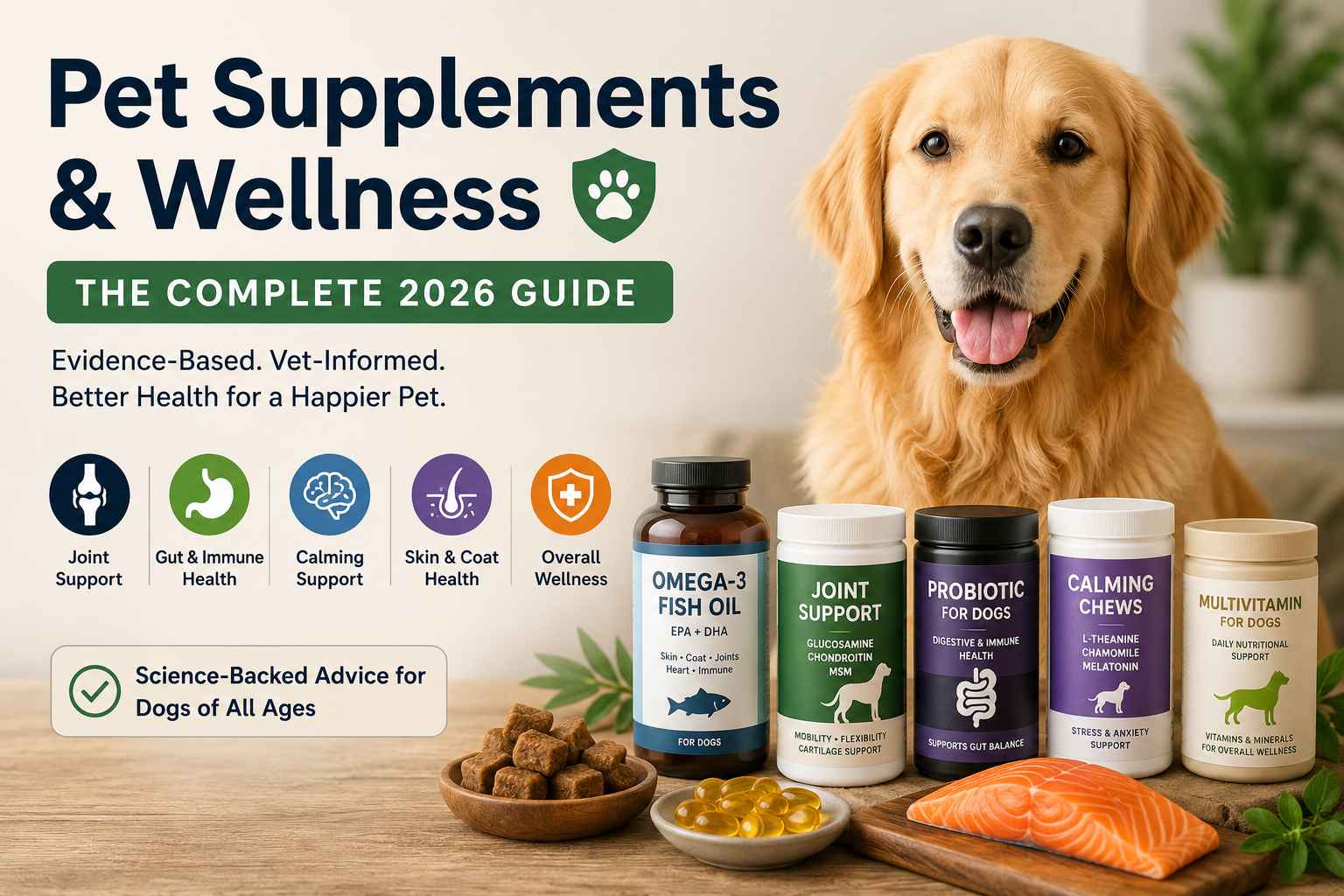
Calming chews for dogs are one of the fastest-growing supplement categories — and also one of the most unevenly evidenced. The blunt truth, as a review by McGill University’s Office for Science and Society found, is that many products on the market have limited or no credible peer-reviewed research supporting them — particularly those relying on proprietary herbal blends or undisclosed ingredient quantities.
That said, some calming ingredients do have meaningful evidence behind them. The key is knowing which ones.
L-Theanine: The Best-Evidenced Option
L-theanine is a naturally occurring amino acid found in tea plants. According to PetMD, multiple veterinary studies have found L-theanine beneficial for dogs experiencing fear of strangers, noise phobia, and storm phobia. It works by modulating GABA, serotonin, and dopamine — calming neurotransmitters — without causing sedation. Products containing L-theanine are generally intended for daily use, and some dogs may need 4–6 weeks before effects become noticeable.
Alpha-Casozepine
Alpha-casozepine is derived from milk protein and has been studied in diet formulations for dogs with anxiety. Veterinary sources note it interacts with the brain similarly to mild anti-anxiety medications but with fewer side effects. It may be particularly useful for situational anxiety and separation anxiety, though it typically needs 2–4 weeks of daily use to build up to full effect.
Melatonin
Melatonin can be useful for dogs with nighttime anxiety or noise phobias. PetMD notes it appears safe when combined with other supplements or medications — but there is one critical safety point: always check that any melatonin product for dogs does not contain xylitol, an artificial sweetener that is highly toxic to dogs and sometimes used as a filler in human-grade melatonin tablets.
What About Herbal Blends and “Natural” Ingredients?
Valerian, chamomile, and passionflower appear frequently in calming chew formulas. The evidence for these in dogs is considerably weaker than for L-theanine or alpha-casozepine. As the McGill analysis points out, many studies on calming supplements are weak, small, or sponsored by the manufacturer — and “natural” does not mean safe or effective. Treat any product that does not disclose specific ingredient amounts per dose with real caution.
International Quality Standards for Calming Products
In the US, the NASC Quality Seal is a useful marker of manufacturing accountability. In the UK, look for products made in GMP-certified facilities regulated under feed law by the VMD. In Australia and New Zealand, check for APVMA registration where applicable. In Canada, look for products from Health Canada-compliant manufacturers. Regardless of country, products that list specific milligram amounts per dose — rather than “proprietary blend” — give you far more ability to assess whether the dose is actually meaningful.
Dog Vitamins and Multivitamins: Who Actually Needs Them?
The multivitamin question is where a lot of well-meaning pet owners spend money they may not need to. As the AKC explains, dogs eating a diet that meets AAFCO nutritional standards generally don’t require vitamin supplementation — because those standards are specifically designed to meet baseline needs.
When Dog Vitamins May Be Warranted
There are clear circumstances where your vet might recommend a vitamin supplement:
- Home-cooked or raw diets: These diets are often nutritionally incomplete unless carefully designed by a veterinary nutritionist.
- Chronic illness or poor absorption: Conditions that cause gut inflammation can reduce nutrient absorption even from a good diet.
- Medication-related depletion: Some medications interfere with vitamin metabolism. Your vet can identify these interactions.
- Prolonged stress: The AKC notes that dogs under chronic stress produce high cortisol levels, which can drive gut inflammation and reduce nutrient absorption.
- Senior dogs with reduced digestive efficiency: Older dogs may absorb certain nutrients less effectively than younger adults.
The Risk of Going Overboard
Adding vitamins to an already complete diet isn’t neutral — it can push certain nutrients above safe levels. AAFCO specifically calls out Vitamin D and selenium as examples where over-supplementation is genuinely dangerous for dogs. Vitamin D in particular has a notably small margin between what’s needed and what’s toxic.
The take-home: before buying a dog multivitamin, have a brief conversation with your vet about whether your dog’s current diet actually has any gaps worth filling.
What to Look for If You Do Choose a Multivitamin
If your vet does recommend one, the AKC advises looking for products that list specific nutrient amounts per serving, are produced by transparent manufacturers with third-party testing, and carry a quality assurance seal such as the NASC Quality Seal in the US. Dog-specific products are always preferable to human multivitamins, which may contain nutrients at wrong ratios or include additives that are unsafe for dogs.
How to Choose a Quality Pet Supplement
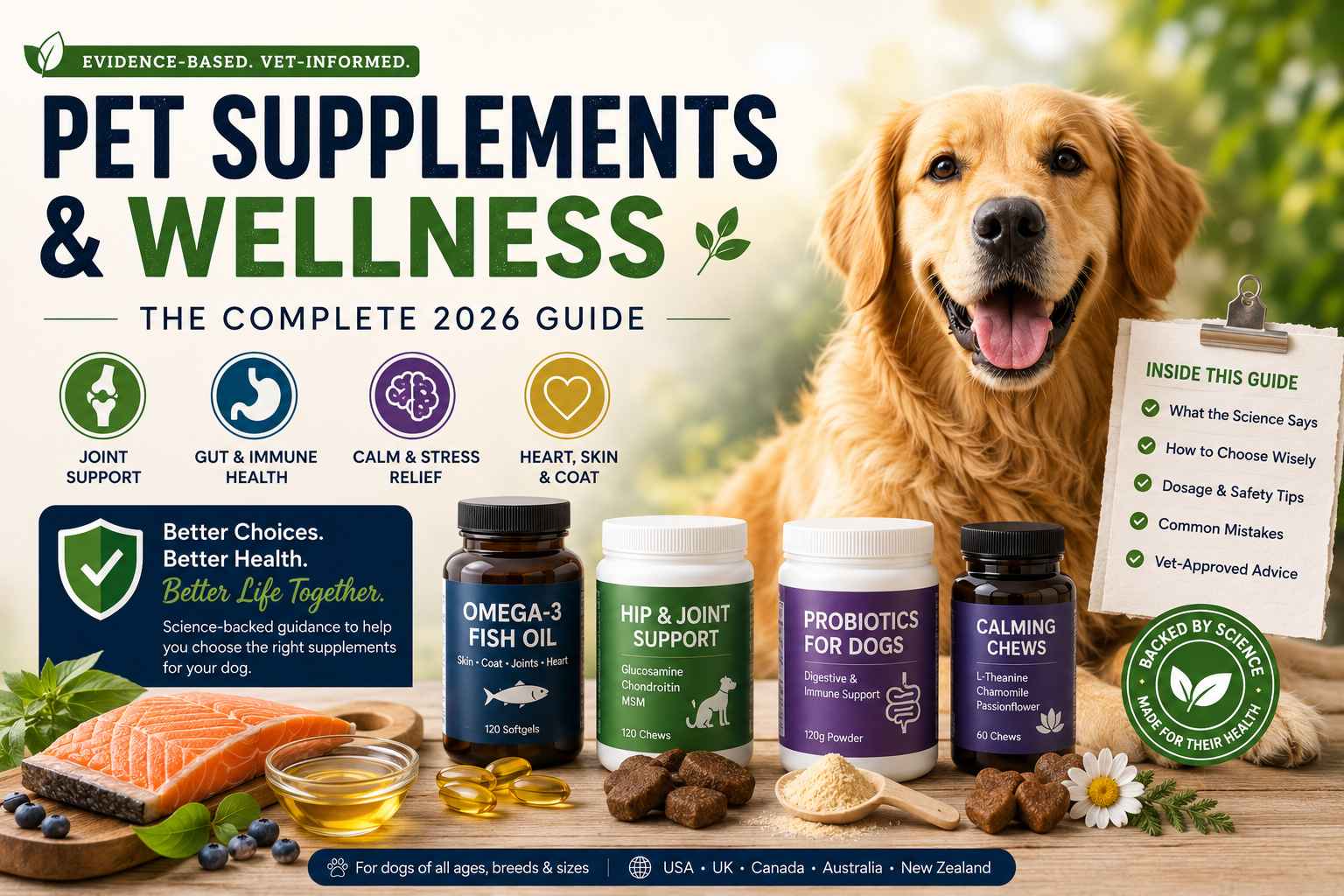
The pet supplement industry is largely self-regulated in most countries. That doesn’t mean good products don’t exist — it means you need to do a bit of filtering work before buying. Here’s a practical framework.
Look for the NASC Quality Seal (US) and Equivalent Marks Elsewhere
In the US, the National Animal Supplement Council (NASC) Quality Seal is the most credible voluntary quality mark available. To earn it, companies must pass rigorous third-party facility audits every two years, maintain quality control documentation, establish an adverse event reporting system, and submit to random product testing by an independent lab to verify that labels accurately reflect what’s inside.
Outside the US:
- UK: Look for products manufactured in GMP-certified facilities and registered under APHA feed regulations. Veterinary-branded products often undergo more rigorous testing.
- Australia / New Zealand: Products making therapeutic claims should be registered with the APVMA. For general wellness supplements, choose brands that voluntarily disclose third-party testing.
- Canada: Look for products from manufacturers compliant with Health Canada and CFIA guidelines. The PPG Canada and CAHI are useful reference bodies.
Check What’s Actually on the Label
A well-labelled supplement should clearly state:
- The specific ingredient names (not just “proprietary blend”)
- The exact amount of each ingredient per serving in milligrams
- An expiration date (critical for live cultures like probiotics)
- A guarantee of live organisms for probiotics
- The manufacturer’s name and contact information
- Appropriate caution statements as required by the FDA’s Center for Veterinary Medicine (US) or relevant equivalents
Be Wary of These Red Flags
- Claims to “cure,” “treat,” or “prevent” diseases — these are drug claims not permitted for supplements
- No ingredient amounts listed per dose
- No expiration date
- Excessive testimonials substituting for research references
- Ingredients listed in a proprietary blend with no individual milligram breakdowns
- No contact information for the manufacturer
Start One Supplement at a Time
Introducing multiple supplements at once makes it impossible to identify which, if any, is helping — or which is causing an adverse reaction. Start with the supplement most indicated for your dog’s specific situation, give it an adequate trial period (4–8 weeks for most products), then reassess with your vet before adding anything else.
What Recent Research Shows
The Pet Supplement Market Is Growing — But Evidence Often Lags Behind
According to the American Pet Products Association’s 2025 data, supplement use has increased 56% among dog owners and 70% among cat owners over a six-year period. Joint and mobility supplements remain the most widely purchased for dogs, while calming and immune health products are in the fastest-growing middle tier.
The Gut-Brain Axis in Dogs: Emerging Evidence
Research into canine gut health has accelerated. A 2025 review published in the Journal of the American Veterinary Medical Association highlighted the role of microbiome therapeutics — including probiotics, prebiotics, and postbiotics — in managing companion animal health. The review noted that diet, prebiotics, and probiotics can all modulate the gut microbiome and help restore balance in dogs experiencing dysbiosis. However, the authors emphasised that further research is needed to optimise protocols for individual patients.
Functional Ingredients Crossing Over from Human Wellness
Industry analysis from PetfoodIndustry.com (April 2026) found that ingredients popular in human wellness — including biotics, collagen, adaptogens, and functional mushrooms — are increasingly appearing in dog supplements. Functional mushroom ingredients are of particular note: dog supplement buyers showed significantly higher positive associations with mushroom ingredients than the average dog owner. Research on these ingredients in dogs specifically is still early-stage; they should be approached with curiosity but also appropriate caution until more canine-specific trials are published.
NASC Quality Seal Expanded to Treats in 2026
In a significant industry development, the NASC announced in early 2026 that it has expanded its Quality Seal programme to include pet treats — marking the organisation’s first major scope expansion in its 25-year history. This matters because the calming chew and functional treat category has been among the least regulated, and this expansion brings more accountability to a fast-growing segment of pet wellness products.
Caution: Evidence for Many Products Remains Thin
Despite market growth, a critical analysis from McGill University’s Office for Science and Society found that many calming supplement studies are small, lack rigorous controls, or are conducted by the manufacturers themselves. This applies not only to calming chews but to many supplement categories. More independent, peer-reviewed canine trials are needed before confident claims can be made about many products on the market.
6 Common Mistakes Pet Owners Make with Supplements
Assuming More Is Better
Giving Human Supplements to Dogs
Not Telling Your Vet About Supplements
Choosing Supplements Based on Testimonials Alone
Stopping Too Soon (or Never Stopping at All)
Using Calming Supplements Instead of Addressing the Cause
Final Evidence-Based Recommendations
These recommendations are based on published veterinary and behavioural guidance and are intended to support general wellbeing. They are not personalised medical advice — your vet is the right person to tailor a supplement plan to your dog’s individual needs.
- Talk to your vet first. Before adding any supplement, confirm there’s a specific reason to add it. Most dogs on complete commercial foods don’t have nutritional gaps worth filling with a general multivitamin.
- Start with omega-3s if you’re choosing one supplement. Fish oil from a reputable source has the broadest body of veterinary evidence for joint, skin, coat, and heart support across life stages.
- Introduce supplements one at a time, spaced several weeks apart. This is the only way to know what’s helping, what isn’t, and what might be causing a reaction.
- Choose products with the NASC Quality Seal (US) or equivalent third-party certification in your country. These marks don’t guarantee a supplement will work for your dog, but they do confirm the manufacturer meets minimum quality and transparency standards.
- For joint support, give it a real trial — at least 4–8 weeks of consistent daily dosing before concluding a product is or isn’t working. Then discuss findings with your vet before continuing or switching.
- For calming chews, look for products listing specific milligram amounts of L-theanine or alpha-casozepine. Avoid products with “proprietary blends” and undisclosed doses. Check any melatonin product for xylitol.
- For probiotics, use dog-specific strains, aim for 1–10 billion CFUs per day, and confirm there is an expiry date and a live organism guarantee on the label.
- Keep a supplement log and share it with your vet at every visit. Include the brand, dose, and date you started each product.
- Reassess at least once per year. A dog’s supplement needs at age 3 are different from their needs at age 10. What’s appropriate now may not be appropriate in two years — and vice versa.
- Be honest about expectations. Supplements support health — they don’t replace veterinary treatment, adequate exercise, a balanced diet, or professional behavioural support when those are what your dog actually needs.
Frequently Asked Questions
Do dogs really need supplements if they eat a complete and balanced food?
Most dogs eating a high-quality commercial food labelled “complete and balanced” — verified against AAFCO standards in the US, FEDIAF guidelines in Europe, or equivalent frameworks in Australia and New Zealand — receive all the baseline nutrients they need. Supplements are not automatically necessary. However, specific situations — age-related joint changes, digestive disruption after antibiotics, anxiety, or conditions diagnosed by a vet — may make targeted supplements worthwhile. Always confirm with your vet before adding anything new.
What are the best-evidenced supplements for dogs with joint problems?
According to Cornell University’s Riney Canine Health Center, the supplement with the strongest published evidence for joint support in dogs is omega-3 fatty acids from fish oil. Glucosamine and chondroitin are widely recommended and considered safe, though research results in dogs are more mixed than many product labels suggest. Green-lipped mussel is another ingredient with developing support. Vets typically recommend combination formulas and always advise confirming the approach with your vet, especially for dogs with diagnosed joint conditions.
How long does it take for dog joint supplements to work?
Most veterinary and industry sources suggest allowing at least 4–6 weeks of consistent daily use before judging whether a joint supplement is helping. Some dogs respond sooner; others may take longer. If you see no improvement after 8–12 weeks, speak with your vet about adjusting the approach or investigating other causes of stiffness — pain management or a veterinary physiotherapy referral may be more appropriate.
Are calming chews safe for dogs?
Calming chews containing well-evidenced ingredients like L-theanine, alpha-casozepine, and melatonin generally have a good safety profile in dogs. However, they vary widely in quality, dose, and evidence base. One critical safety note: always confirm that any melatonin product does not contain xylitol, which is toxic to dogs. Severe or persistent anxiety warrants a veterinary assessment — supplements alone are not a substitute for professional behavioural support. For mild situational anxiety (travel, fireworks), calming chews with disclosed ingredient amounts are a reasonable starting point.
What should I look for when buying dog vitamins?
Look for named ingredients with specific milligram amounts per dose, an expiry date, a manufacturer’s name and contact information, and ideally an independent quality certification. In the US, the NASC Quality Seal is a useful indicator. In the UK, look for GMP-certified manufacturing. In Australia and New Zealand, check for APVMA registration for products making health claims. Avoid products making disease-treatment claims, which are not permitted for supplements and suggest the manufacturer is operating outside proper regulatory guidelines.
Can you give a dog too many supplements?
Yes. AAFCO warns that supplementing a complete and balanced diet risks exceeding safe upper limits for certain nutrients. Vitamin D and selenium in particular can be toxic to dogs at excessive levels. Always check for ingredient overlap across all products you are giving, and have a conversation with your vet about your dog’s total supplement load — particularly if your dog is on any medications that might interact.
Are probiotics good for dogs?
Cornell University describes probiotics as a well-established therapy for diarrhoea and gastrointestinal upset in dogs, with developing evidence for immune support and anxiety reduction via the gut-brain axis. Dog-specific probiotic strains are preferable to human products. Cornell recommends 1–10 billion CFUs per day for general health maintenance, but individual needs vary and probiotics are not recommended without veterinary guidance for severely immunocompromised dogs.
What is L-theanine and does it work for anxious dogs?
L-theanine is a naturally occurring amino acid found in tea plants. PetMD reports that multiple veterinary studies have found it beneficial for reducing anxiety-related behaviours in dogs, including fear of strangers, noise phobia, and storm phobia. It modulates calming neurotransmitters — GABA, serotonin, and dopamine — without causing sedation. It is considered one of the better-evidenced calming ingredients currently available, and is typically used daily with an onset period of 30–60 minutes for acute use or 2–4 weeks for chronic anxiety management.
Which regulatory bodies oversee pet supplements in different countries?
Oversight varies significantly. In the US, the FDA’s Center for Veterinary Medicine regulates animal supplements, with voluntary quality standards set by the NASC. In the UK, products are overseen by the VMD and APHA under feed legislation. In Australia and New Zealand, the APVMA has jurisdiction over veterinary medicines and some supplement categories. In Canada, Health Canada and the CFIA share oversight. Because regulation is inconsistent and often light, choosing products from manufacturers who voluntarily exceed minimum requirements — through third-party audits, disclosed testing, and transparent labelling — is the most reliable approach for pet owners in all five countries.
Conclusion
The world of pet supplements is genuinely useful — and genuinely complicated. Done well, supplements like fish oil, probiotics, and targeted joint support can make a meaningful difference to your dog’s quality of life. Done carelessly, they can create nutrient imbalances, mask problems that need veterinary attention, or simply drain your budget without any real benefit to your dog.
The most important mindset shift is to think of supplements not as products you add because “they seem like a good idea,” but as specific tools you use for specific, identified reasons — with a beginning, a review point, and a conversation with your vet.
Here are the key things to take away from this guide. Omega-3 fatty acids have the strongest evidence base across the widest range of benefits — if you’re going to add one supplement to a healthy dog’s routine, this is the most well-supported choice. Probiotics are clearly helpful for gut disruption and have developing evidence beyond digestion. For joint support, glucosamine and chondroitin are safe and widely recommended, but set realistic expectations about timelines and results. Calming chews work best when you choose products with disclosed ingredient amounts and treat them as one part of a broader anxiety management plan. And multivitamins are usually unnecessary for dogs on complete commercial diets.
As this guide has aimed to show throughout, the quality of the product matters as much as the category. Choosing manufacturers who voluntarily meet third-party audit standards — the NASC Quality Seal in the US, GMP-certified equivalents elsewhere — gives you a meaningful baseline of accountability.
Above all: for any specific health concern, from persistent stiffness to anxiety that affects your dog’s daily life, please involve your vet. They can help you build a supplement plan that’s genuinely appropriate for your dog’s age, breed, weight, health history, and current medications. That conversation is worth more than any number of supplement reviews.
References
- American Pet Products Association (APPA) — “The Boom in Pet Wellness: How Supplements Are Reshaping the Market” — APPA Blog — December 2025 — https://americanpetproducts.org/blog/the-boom-in-pet-wellness-how-supplements-are-reshaping-the-market
- AAFCO — “Supplements” — Association of American Feed Control Officials — 2024 — https://www.aafco.org/consumers/understanding-pet-food/supplements/
- AAFCO — “Selecting the Right Pet Food” — 2024 — https://www.aafco.org/consumers/understanding-pet-food/selecting-the-right-pet-food/
- Cornell University Riney Canine Health Center — “How Joint Supplements Can Help with Orthopedic Conditions” — Updated December 2025 — https://www.vet.cornell.edu/departments-centers-and-institutes/riney-canine-health-center/canine-health-topics/how-joint-supplements-can-help-orthopedic-conditions
- Cornell University Riney Canine Health Center — “The Power of Probiotics” — 2025 — https://www.vet.cornell.edu/departments-centers-and-institutes/riney-canine-health-center/canine-health-topics/power-probiotics
- American Kennel Club — “Fish Oil for Dogs: What to Know” — Updated May 2026 — https://www.akc.org/expert-advice/nutrition/fish-oil-for-dogs/
- American Kennel Club — “What Are the Benefits of Using Multivitamins for Dogs?” — Updated March 2025 — https://www.akc.org/expert-advice/nutrition/multivitamins-for-dogs/
- American Kennel Club — “What Are Dog Supplements? What Functions Do They Serve?” — February 2026 — https://www.akc.org/expert-advice/nutrition/popular-dog-supplements/
- American Kennel Club — “Supporting Your Dog’s Mobility, Joints, Skin, and Coat Through Every Life Stage” — May 2026 — https://www.akc.org/expert-advice/health/supporting-your-dog-through-every-life-stage/
- American Kennel Club — “Senior Dog Nutrition and Supplement Tips” — September 2024 — https://www.akc.org/expert-advice/nutrition/nutrition-and-supplements-for-senior-dogs/
- PetMD — “8 Best Joint Supplements for Dogs in 2026, Recommended by Vets” — January 2026 — https://www.petmd.com/vet-verified/best-joint-supplements-for-dogs
- PetMD — “What to Know About Calming Aids for Dogs” — October 2025 — https://www.petmd.com/dog/behavior/dog-calming-products-help-ease-dog-anxiety
- PetMD — “Probiotics for Dogs: Does Your Dog Need Them?” — July 2025 — https://www.petmd.com/dog/general-health/probiotics-dogs-what-you-need-know
- National Animal Supplement Council (NASC) — “NASC Quality Seal” — 2026 — https://www.nasc.cc/nasc-seal/
- PetfoodIndustry.com — “Pet Supplement Market Poised for Double-Digit Growth” — April 2026 — https://www.petfoodindustry.com/pet-supplements-pro/pet-supplements-and-treats-digest/article/15819513/pet-supplement-market-poised-for-doubledigit-growth
- PetfoodIndustry.com — “NASC Expands Quality Seal Program to Include Pet Treats” — April 2026 — https://www.petfoodindustry.com/pet-supplements-pro/nasc-news/news/15817138/nasc-expands-quality-seal-program-to-include-pet-treats
- McGill University Office for Science and Society — “Calming Chews for Dogs: A Dog’s Breakfast of Evidence” — May 2025 — https://www.mcgill.ca/oss/article/critical-thinking-health-and-nutrition/calming-chews-dogs-dogs-breakfast-evidence
- Journal of the American Veterinary Medical Association — “The heroes within: utilizing the gut microbiome, microbiome therapeutics, and fecal microbiota transplant in managing companion animal health and disease” — October 2025 — https://avmajournals.avma.org/view/journals/javma/263/S2/javma.25.03.0218.xml
- Stylla Care — “Are Calming Supplements Safe for Dogs? A Vet’s Guide” — October 2025 — https://styllacare.com/blogs/dog/are-calming-supplements-safe-for-dogs
- APVMA — Australian Pesticides and Veterinary Medicines Authority — Official website — https://www.apvma.gov.au