

By Md Masud Rana, LifeWellGuide.com
Written by Md Masud Rana based on published veterinary sources. This article has not been clinically reviewed by a veterinarian. See our sources below.
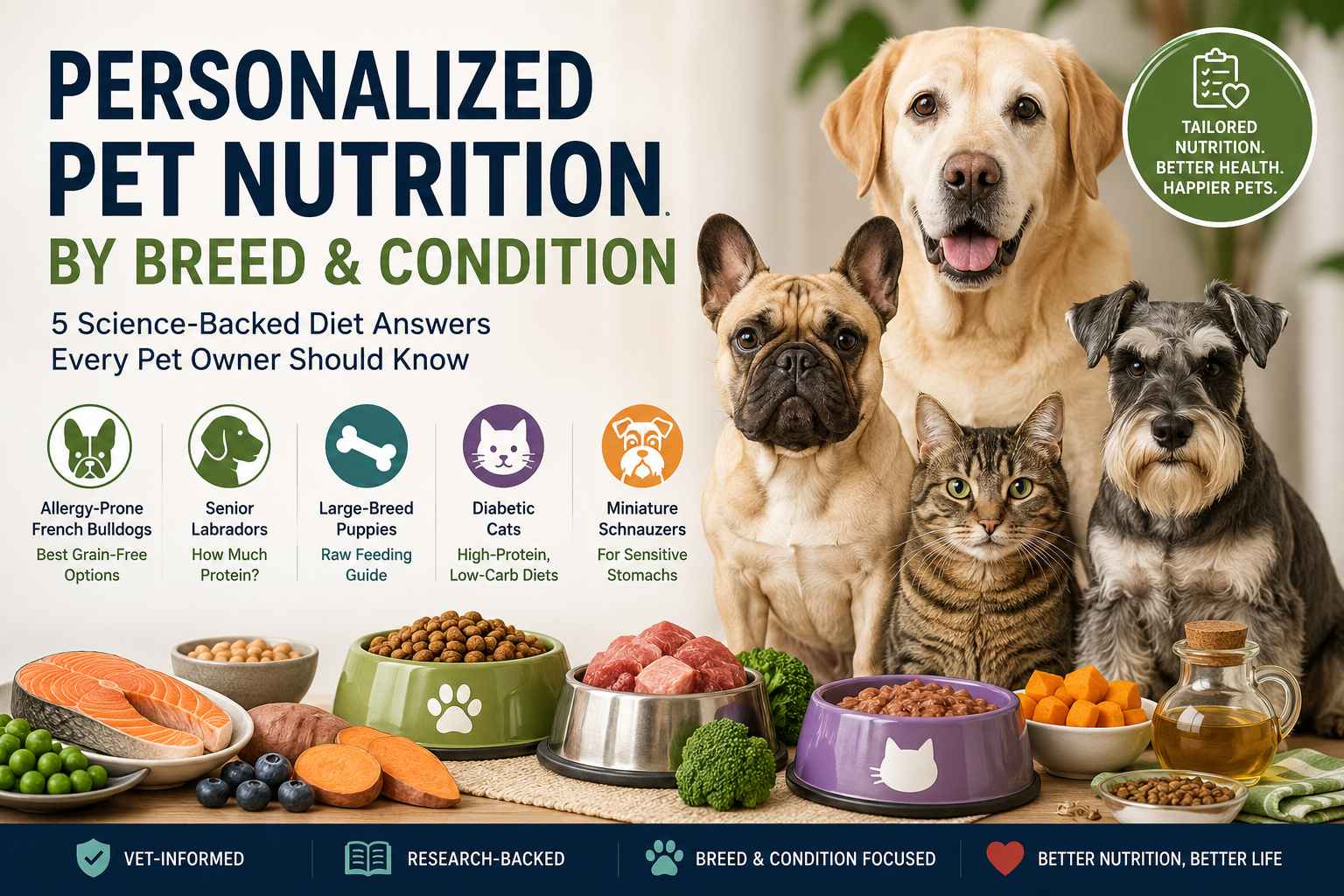
Stand in any pet store aisle and you’ll see it: dozens of bags promising to be “complete and balanced,” as if every dog and cat has the same body. They don’t. A French Bulldog’s skin, a senior Labrador’s aging joints, a diabetic cat’s blood sugar, and a Miniature Schnauzer’s pancreas all respond to food in genuinely different ways. If you’ve ever wondered about the best grain-free dog food for French Bulldogs with allergies, or how a large-breed puppy’s diet differs from a Chihuahua’s, you’re asking the right question — because generic feeding advice quietly ignores the traits that make your pet’s body unique.
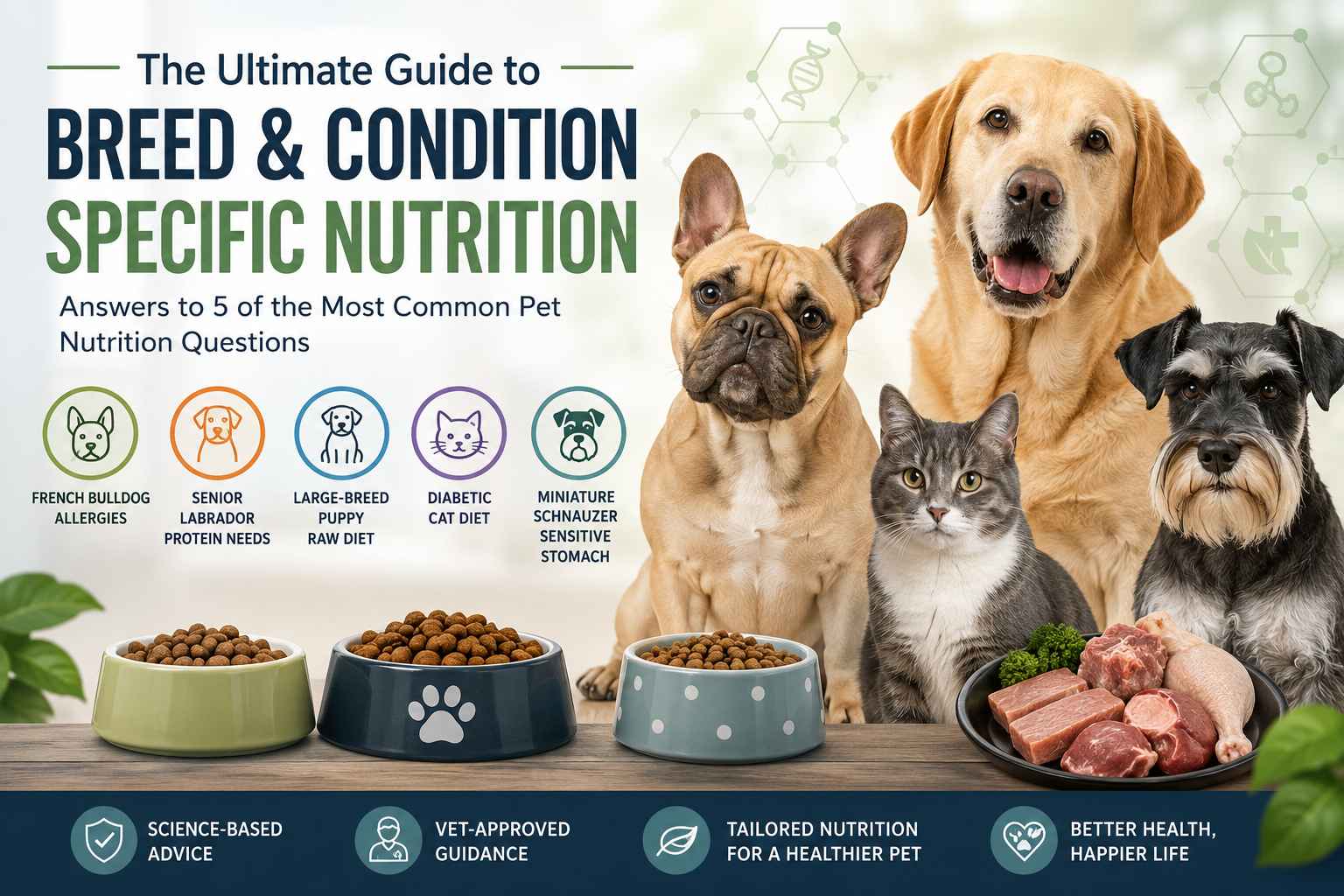
This guide walks through five of the most common breed- and condition-specific nutrition questions pet owners search for: allergy-prone French Bulldogs, protein needs in senior Labradors, raw feeding for large-breed puppies, diabetic cat diets, and sensitive-stomach Miniature Schnauzers. None of this replaces your veterinarian. What it does is give you the research, in plain language, so that conversation is a more informed one.
Quick Answer
There is no single “best” food for every French Bulldog, Labrador, or Schnauzer — nutrition needs are shaped by breed predispositions, age, and any diagnosed medical condition. Allergy-prone French Bulldogs often do best on limited-ingredient diets with a novel protein; senior Labradors typically need more quality protein, not less; large-breed puppies need controlled calcium and phosphorus; diabetic cats generally benefit from low-carbohydrate, high-protein diets; and Miniature Schnauzers prone to pancreatitis usually require strict fat control. A veterinarian should confirm any plan for your individual pet.
Table of Contents
- Why “Breed-Specific” Nutrition Isn’t Just Marketing
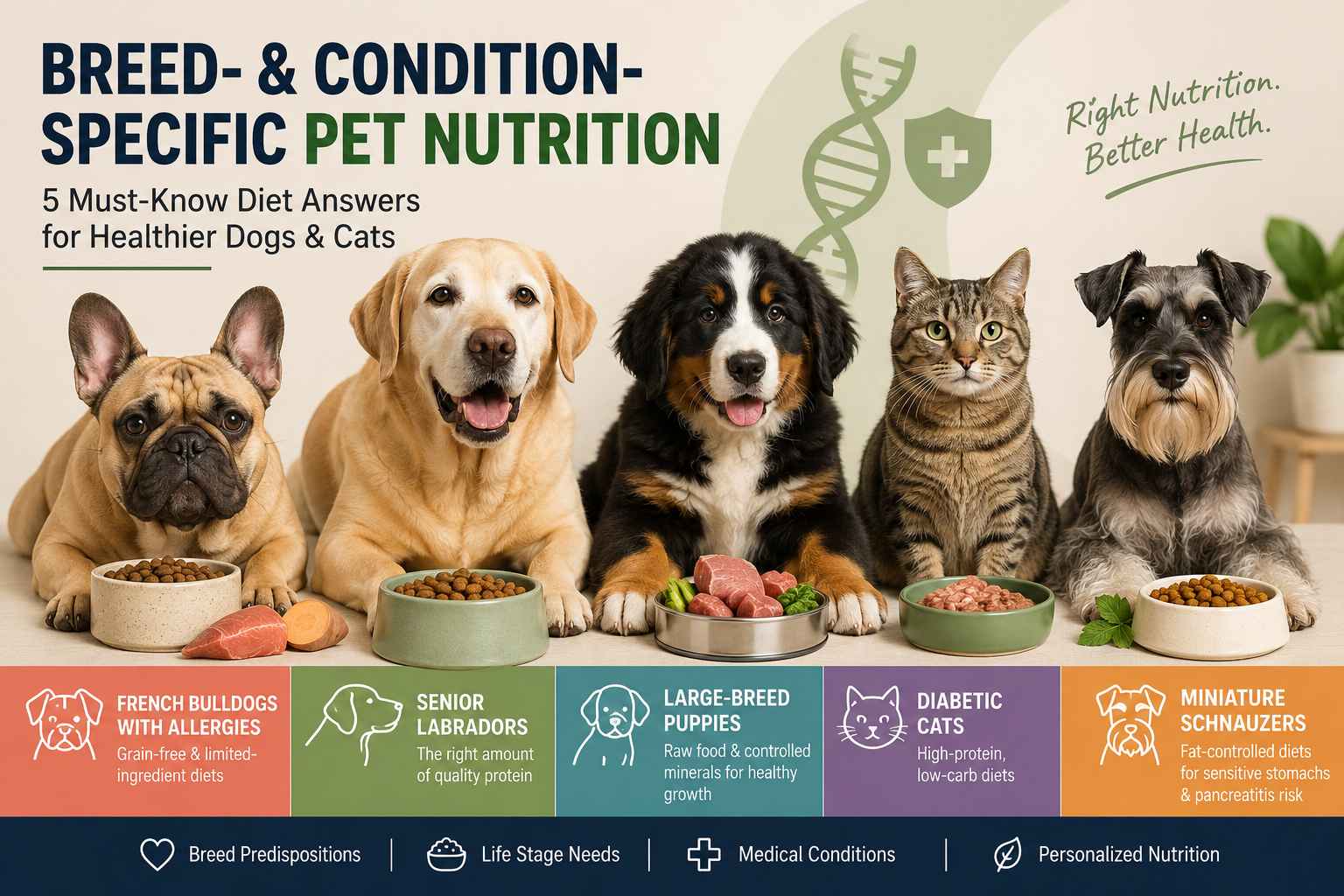
- Best Grain-Free Diets for French Bulldogs With Allergies
- How Much Protein Does a Senior Labrador Really Need?
- Raw Food Diets for Large-Breed Puppies: A Cautious Guide
- High-Protein, Low-Carb Diets for Diabetic Cats
- Miniature Schnauzers and Sensitive Stomachs
- Building Your Pet’s Personalized Nutrition Plan
- What Recent Research Shows
- Common Mistakes
- Final Recommendations
- Frequently Asked Questions
Why “Breed-Specific” Nutrition Isn’t Just Marketing
Genetics shape more than looks
Selective breeding didn’t just create different sizes and coat types — it also concentrated certain metabolic quirks. Miniature Schnauzers are far more likely to carry a genetic tendency toward high blood fat levels than most other breeds. French Bulldogs, as a brachycephalic breed, seem more prone to skin and immune-related sensitivities. These aren’t marketing claims; they show up repeatedly in veterinary literature on specific breeds.
Generic feeding guidelines miss key differences
The back of a bag of dog food usually gives a single feeding chart based on body weight. It can’t account for whether your dog is a fast-growing large-breed puppy that needs controlled mineral levels, or a senior dog that may actually benefit from more protein than a younger adult of the same size. Breed- and life-stage-aware feeding fills that gap — with your vet’s input, not instead of it.
Best Grain-Free Diets for French Bulldogs With Allergies
Recognizing a true food allergy versus intolerance
According to VCA Animal Hospitals, a genuine food allergy involves the immune system producing antibodies against a protein in the diet, and it usually develops only after months or years of eating the same food — not the first time a dog tries something new. Typical signs include itchy skin, paws, or ears, recurring ear infections, and sometimes digestive upset. Many owners describe a French Bulldog that seems to be constantly licking its paws or shaking its head, with symptoms that don’t clear up with a bath or flea treatment.
It’s worth noting that French Bulldogs are also commonly affected by environmental allergies (atopy) — reactions to pollen, dust mites, or mold rather than food. VCA Animal Hospitals lists French Bulldogs among the breeds more frequently diagnosed with atopic dermatitis, so skin symptoms alone don’t confirm a food allergy. A veterinarian can help distinguish the two, usually through a combination of history-taking, ruling out fleas and mites, and — if food is suspected — a strict elimination diet trial lasting several weeks.
What to look for in a grain-free or limited-ingredient diet
If a food allergy is suspected or confirmed, many veterinary dermatologists recommend a limited-ingredient diet built around a single “novel” protein source your dog hasn’t eaten before — such as duck, rabbit, or fish — paired with a short, simple ingredient list. Grain-free formulas are one route some owners take, particularly if grains are the suspected trigger, but according to VCA Animal Hospitals, the most common canine food allergens are actually animal proteins — beef, dairy, chicken, and egg — rather than grains themselves. This means “grain-free” alone doesn’t guarantee an allergy-friendly food; the protein source matters just as much, if not more.
Grain-Free vs. Grain-Inclusive Diets for Allergy-Prone Dogs
👍 Pros
- Removes grain as a possible trigger if grain sensitivity is suspected
- Often paired with novel or limited protein sources
- Can simplify an elimination diet trial
👎 Cons
- Grain is a less common allergen than animal protein
- so it may not address the real cause
- Some grain-free formulas rely heavily on legumes as a starch replacement
- Switching diets without a plan can make it harder to identify the true allergen
The grain-free and heart-disease question
Any honest discussion of grain-free dog food has to include the FDA’s ongoing look into a possible link between certain grain-free diets and canine dilated cardiomyopathy (DCM), a serious heart condition. Since July 2018, the FDA has investigated reports of DCM in dogs eating foods — many labeled grain-free — that were high in peas, lentils, other legumes, or potatoes.
The evidence here is genuinely mixed, and it’s important to say so plainly. By late 2022, the FDA stated that adverse-event reports alone did not supply enough data to establish a causal relationship between any specific diet or ingredient and DCM, and the agency has since scaled back routine public updates. At the same time, the American Kennel Club notes that researchers have continued to find associations between diets high in peas and lentils and changes in heart function in some dogs, and the underlying mechanism is still not fully understood. Research findings are mixed here, and more studies are needed.
What this means practically: if you’re considering a grain-free, legume-heavy diet for a French Bulldog with allergies, it’s worth telling your veterinarian, particularly if grain-free legume-based food will be a long-term, primary diet rather than an occasional treat. This is not a reason to panic, but it is a reason to have the conversation rather than choose blind. No single commercial product can be called uniformly “safest” here — your vet can weigh your dog’s individual case, including whether taurine levels or periodic heart screening make sense.
[Add a real first-hand observation example: a photo or short note about how you identified your own dog’s food-allergy pattern, or a reader-submitted story, would strengthen this section before publishing.]
How Much Protein Does a Senior Labrador Really Need?
The AAFCO baseline — and the “senior protein myth”
The Association of American Feed Control Officials (AAFCO) sets minimum nutrient levels that a “complete and balanced” dog food must meet. According to PetMD, the AAFCO minimum for adult maintenance is 18% crude protein on a dry-matter basis, with no separate, lower minimum set specifically for senior dogs.
There’s a long-standing assumption that older dogs should be moved to a lower-protein diet to “protect” their kidneys. Multiple veterinary and nutrition sources now describe this as outdated for healthy senior dogs specifically. Aging dogs tend to become less efficient at using dietary protein to maintain muscle, which is why many veterinary nutritionists actually favor moderate-to-higher quality protein for lean, healthy seniors — the goal is preserving muscle mass, not restricting it by default.
When kidney disease changes the picture
This is where individual diagnosis matters enormously. Chronic kidney disease becomes more common as dogs age, and it is a progressive condition that can only be confirmed and staged through veterinary bloodwork and urine testing — not by guessing from symptoms or an article like this one. If your Labrador is later diagnosed with kidney disease, your vet may recommend a moderately protein-restricted, phosphorus-controlled therapeutic diet as part of managing the condition; this is a case-by-case decision based on disease stage, not a number we can responsibly give you for your specific dog here.
Watch for early warning signs that warrant a prompt veterinary visit rather than a wait-and-see approach: increased thirst and urination, unexplained weight loss, vomiting, or a noticeably reduced appetite. These can point to kidney disease or several other conditions, and diagnostics — not diet changes alone — are the appropriate next step.
Raw Food Diets for Large-Breed Puppies: A Cautious Guide
What a raw diet actually involves
Raw feeding typically means raw muscle meat, organ meat, and often ground bone, sometimes with added vegetables or supplements, fed either home-prepared or as a commercially frozen or freeze-dried product. Interest in raw diets has grown among owners who want to feed something that more closely resembles a wild canid’s ancestral diet.
Why major veterinary bodies urge caution
Here the professional consensus is fairly unified, even though public opinion is more divided. The American Veterinary Medical Association discourages feeding any animal-source protein that hasn’t first been processed to eliminate pathogens, citing risk to both pets and the humans handling their food. The Canadian Veterinary Medical Association takes a similar position, stating that the scientific evidence of health risk to pets and people outweighs the purported benefits of raw feeding, and noting these diets may not always be nutritionally balanced.
The concern isn’t theoretical: raw pet foods have repeatedly tested positive for Salmonella and Listeria in FDA sampling, at meaningfully higher rates than conventional cooked or dry foods. This matters especially in households with young children, elderly family members, pregnant individuals, or anyone immunocompromised, since these pathogens can pass between pets and people.
The large-breed puppy growth risk factor
Large-breed puppies carry an extra consideration on top of the general raw-feeding debate: they’re growing fast, and skeletal development is highly sensitive to calcium and phosphorus balance during this period. Home-formulated raw diets that aren’t calculated by a board-certified veterinary nutritionist can easily end up with mineral ratios that are inappropriate for a rapidly growing large or giant breed, contributing to developmental orthopedic problems later on. If you’re set on raw feeding a large-breed puppy, veterinary nutrition sources consistently recommend a commercially prepared raw product that has gone through AAFCO-style feeding trials and growth-stage formulation, ideally with input from a veterinary nutritionist — not an improvised home recipe.
High-Protein, Low-Carb Diets for Diabetic Cats
A note before this section: feline diabetes is a progressive metabolic condition, and its severity, stage, and the right treatment plan can only be determined by a veterinarian through bloodwork, glucose monitoring, and — often — insulin therapy. Nothing below is intended as an individualized treatment plan for any specific cat.
Why low-carb, high-protein diets are commonly recommended
According to the Cornell Feline Health Center, a diet low in carbohydrates has been shown to improve blood glucose regulation in diabetic cats, and several prescription therapeutic diets are formulated around this principle in both wet and dry forms. PetMD notes that many over-the-counter canned foods already have a naturally low-carbohydrate, high-protein profile suitable for diabetic cats, meaning a prescription diet isn’t always required — but the right choice, and portion size, depends on your individual cat’s weight, other health conditions, and insulin regimen. We won’t name a single “best” brand here, because the appropriate therapeutic category — and whether a prescription diet is even necessary — is something only your cat’s vet can determine.
Signs that need same-day veterinary care
Because diabetes can destabilize quickly, it’s worth flagging urgent warning signs early rather than at the end of this article. If a diabetic (or newly diabetic) cat becomes unusually lethargic, stops eating, vomits repeatedly, or develops rapid or labored breathing, this can indicate diabetic ketoacidosis, a life-threatening emergency. That warrants an immediate call to your vet or an emergency clinic — not a wait-and-see approach at home.
What only your vet can determine
Diet is one part of managing feline diabetes, alongside insulin dosing, weight management, and monitoring — and all of these interact. A change in food can shift how much insulin a cat needs, which is why diet adjustments in a diabetic cat should always be made in coordination with your veterinarian, not independently. Some cats can achieve diabetic remission with early, aggressive management according to veterinary sources, but this outcome varies by cat and cannot be promised or predicted by diet alone.
Miniature Schnauzers and Sensitive Stomachs: Feeding Around Pancreatitis Risk
A note before this section: pancreatitis can range from mild to life-threatening, and hyperlipidemia is a chronic condition that requires blood testing to diagnose and monitor. The guidance below describes general patterns reported in veterinary literature, not an individualized diet plan.
The hyperlipidemia connection
Miniature Schnauzers are unusually prone to primary (idiopathic) hyperlipidemia — abnormally high blood fat levels for reasons that aren’t fully understood genetically. According to a welfare review compiled by the Universities Federation for Animal Welfare (UFAW), roughly a third of Miniature Schnauzers show abnormally high blood triglyceride levels, and the breed has the highest reported prevalence of pancreatitis among dogs, with an estimated lifetime risk of around 5%. The same review notes that a high-fat diet is one of several recognized triggers for acute pancreatitis episodes.
What a low-fat diet looks like in practice
Because of this predisposition, many veterinarians recommend a consistently low-fat diet for Miniature Schnauzers as a preventive measure, even before any pancreatitis episode occurs — and a strict low-fat, vet-guided diet for dogs that have already had one. In practice, this usually means avoiding fatty table scraps, rich treats, and fatty meal toppers, and being cautious with commercial foods that are coated in rendered fat for palatability. The exact fat percentage appropriate for an individual dog is something your veterinarian should specify based on bloodwork and history, rather than a fixed number applied to every Schnauzer.
A common real-world pattern reported by veterinary clinics: pancreatitis emergency visits for this breed spike around holidays, when a “harmless” taste of a fatty meal from the table triggers a flare-up. Owners who’ve been through it often describe how quickly a normally food-motivated Schnauzer goes from begging at the table to refusing food entirely within a day.
Warning signs that need urgent attention
Sudden vomiting, loss of appetite, lethargy, and abdominal pain — sometimes visible as a hunched or “praying” posture with the front end low and rear raised — are the most commonly reported signs of acute pancreatitis. These signs, especially following a fatty meal, warrant prompt veterinary attention rather than home monitoring, since untreated acute pancreatitis can become severe quickly.
Building Your Pet’s Personalized Nutrition Plan
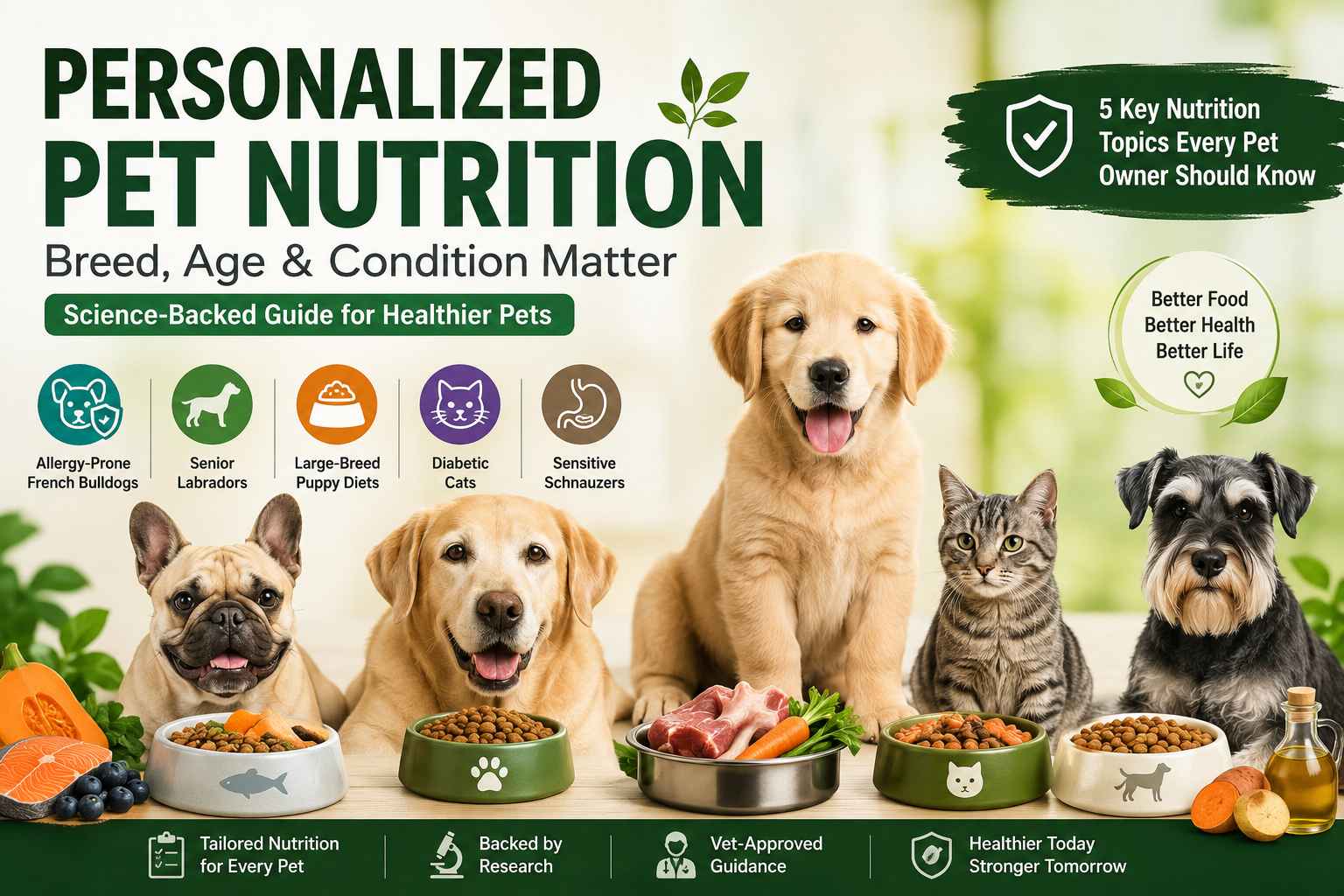
Across all five scenarios above, a pattern repeats: breed and life stage tell you what questions to ask, but a diagnosis — or the absence of one — should drive the actual diet decision.
A pre-switch checklist
- Has a vet confirmed there’s an allergy, intolerance, or metabolic condition, or are you working from suspected symptoms alone?
- Does the new food carry an AAFCO nutritional adequacy statement for the correct life stage (growth, adult maintenance, or all life stages)?
- If your pet has, or might develop, a progressive condition — kidney disease, diabetes, pancreatitis, heart disease — has your vet reviewed the specific product or diet type?
- Are you transitioning gradually (typically 7–10 days) to avoid digestive upset?
Working with your vet, not around them
None of the research in this guide is a substitute for a physical exam, bloodwork, or your vet’s knowledge of your individual pet’s history. Bring specific questions — “Is my French Bulldog’s itching more likely food or environmental?” or “Does my Labrador’s current protein level make sense for her age and kidney values?” — rather than asking generally “what should I feed my dog.” Specific questions tend to get more specific, more useful answers.
Sudden diet changes are also worth flagging on their own: they’re a common cause of short-term digestive upset even in pets without any diagnosed sensitivity, so gradual transitions matter regardless of which diet you land on.
What Recent Research Shows
The FDA’s non-hereditary canine DCM investigation is the most closely watched research thread in this space. As of its most recent public update, the agency had received 1,382 case reports of DCM in dogs from January 2014 through November 2022, with reports declining substantially after 2020. The FDA has been explicit that reported cases, by themselves, don’t establish causation, and it does not currently plan to name specific brands going forward.
On the Miniature Schnauzer side, a controlled study published in the Journal of Veterinary Internal Medicine found that an ultra-low-fat diet significantly reduced the proportion of Miniature Schnauzers classified as hyperlipidemic based on lipoprotein profile testing, supporting dietary fat restriction as a meaningful management tool for this breed’s genetic predisposition — though the study also notes that hyperlipidemia often persists to some degree even with an appropriate diet.
Separately, research on high-protein, low-carbohydrate diets in cats has continued to explore effects beyond blood glucose, including changes to gut microbiome composition, though how these findings translate into individual feeding recommendations is still an active area of study. Research findings here are ongoing, and more studies are needed before firm conclusions can be drawn.
Common Mistakes
1. Assuming “grain-free” automatically means “allergy-friendly”
Why it matters: As covered above, the most common canine food allergens are proteins, not grains. A grain-free food with chicken as the top ingredient won’t help a chicken-allergic dog.
Better approach: Identify the actual suspected allergen (often through an elimination trial) before choosing a “grain-free” label as a solution.
2. Restricting a healthy senior dog’s protein “just in case”
Why it matters: Unnecessary protein restriction in a healthy senior dog may contribute to muscle loss rather than prevent disease.
Better approach: Reserve protein restriction for dogs with a veterinarian-confirmed condition, such as diagnosed kidney disease, rather than applying it preemptively by age alone.
3. Formulating a home raw diet for a large-breed puppy without professional guidance
Why it matters: Improper calcium-phosphorus ratios during rapid skeletal growth are a recognized risk factor for developmental orthopedic problems.
Better approach: Use a commercially formulated, growth-stage raw or cooked diet, or consult a board-certified veterinary nutritionist for a home-prepared recipe.
4. Changing a diabetic cat’s food without adjusting insulin monitoring
Why it matters: Diet changes can alter a diabetic cat’s insulin needs, and doing so without coordinated monitoring can risk dangerous blood sugar swings.
Better approach: Always make dietary changes for a diabetic cat in partnership with your veterinarian, with a monitoring plan in place.
5. Giving a Miniature Schnauzer “just a little” fatty table food
Why it matters: Even a single high-fat meal is a recognized trigger for acute pancreatitis in predisposed dogs.
Better approach: Keep treats and any table food strictly low-fat for this breed, year-round — not just around holidays.
6. Switching foods abruptly
Why it matters: Sudden diet changes are one of the most common causes of vomiting and diarrhea in otherwise healthy pets, and can also complicate diagnosis if a true allergy is being investigated.
Better approach: Transition over 7–10 days, mixing increasing amounts of the new food with the old.
Final Recommendations
- Confirm suspected allergies, intolerances, or metabolic conditions with a veterinarian before committing to a specialized long-term diet.
- For allergy-prone dogs, prioritize identifying the specific protein trigger over chasing a “grain-free” label alone.
- For senior dogs without kidney disease, don’t assume lower protein is automatically better — ask your vet whether your dog’s current protein level actually supports healthy aging.
- For large-breed puppies, choose growth-stage-formulated diets (raw or otherwise) with verified, appropriate calcium and phosphorus levels.
- For diabetic cats, treat diet as one part of a broader, vet-supervised management plan rather than a standalone fix.
- For Miniature Schnauzers, consider discussing baseline triglyceride screening with your vet, even before any symptoms appear, given the breed’s genetic predisposition.
- Whatever the diet, look for an AAFCO nutritional adequacy statement matching your pet’s correct life stage.
- Keep a simple food and symptom diary during any transition — it’s one of the most useful tools for spotting patterns early.
This content is for educational purposes only and does not replace professional veterinary advice. Always consult your veterinarian before making health decisions for your pet.
Frequently Asked Questions
There isn't one single best product, since the right choice depends on your dog's specific allergen. Veterinary sources suggest looking for a limited-ingredient diet built around a novel protein your dog hasn't eaten before, rather than assuming grain-free alone solves a food allergy. A vet-guided elimination diet trial is the most reliable way to identify the true trigger.
The FDA has investigated a possible link between certain grain-free diets — particularly those high in peas and lentils — and canine dilated cardiomyopathy (DCM), but as of its most recent update, it stated there was insufficient data to establish a direct causal relationship. The evidence remains mixed, and researchers continue to study it. If you feed a grain-free, legume-heavy diet long term, mention it to your vet.
AAFCO's minimum for adult dogs is 18% crude protein on a dry-matter basis, with no separate lower minimum for seniors. Many veterinary sources now suggest healthy senior dogs may benefit from moderate-to-higher quality protein to help preserve muscle mass, rather than automatic restriction. Dogs with diagnosed kidney disease are the exception, and protein levels for those cases should be set by a veterinarian.
Major veterinary organizations, including the AVMA and CVMA, generally discourage raw feeding due to documented pathogen risks to pets and humans. Large-breed puppies add an extra concern, since improperly balanced calcium and phosphorus during rapid growth can affect skeletal development. If you choose raw feeding, a commercially prepared, growth-stage formula—or guidance from a veterinary nutritionist—is safer than an improvised home recipe.
Veterinary sources commonly recommend high-protein, low-carbohydrate diets for diabetic cats, since this profile has been shown to support better blood glucose regulation. Many over-the-counter canned foods already fit this profile, though some cats need a prescription therapeutic diet. The right choice depends on your cat's weight, other health conditions, and insulin plan, so this should be decided with your veterinarian.
Miniature Schnauzers have a genetic predisposition to hyperlipidemia — elevated blood fat levels — which is linked to their unusually high rate of pancreatitis compared to other breeds. Veterinary welfare reviews estimate that around a third of the breed shows elevated triglycerides, and lifetime pancreatitis risk may be around 5%. A consistently low-fat diet is commonly recommended as a preventive measure.
Commonly reported signs include sudden vomiting, loss of appetite, lethargy, and abdominal pain, sometimes shown as a hunched or 'praying' posture. These signs, especially after a fatty meal in a predisposed breed like the Miniature Schnauzer, warrant prompt veterinary attention rather than waiting to see if they resolve on their own.
A true food allergy involves the immune system and usually develops after months or years of eating the same food, often causing itchy skin, ear infections, or digestive upset. Food intolerance can occur on first exposure and is more often linked to digestive sensitivity than immune response. A veterinarian can help distinguish the two, typically through history-taking and, if needed, an elimination diet trial.
Conclusion
Breed-specific nutrition isn’t about finding a magic bag of food with your dog’s silhouette on the label — it’s about recognizing that a French Bulldog’s allergy risk, a senior Labrador’s changing protein needs, a large-breed puppy’s growing skeleton, a diabetic cat’s blood sugar, and a Miniature Schnauzer’s pancreas each call for a slightly different conversation with your vet.
The research summarized here is a starting point, not a substitute for diagnostics. If your pet is showing symptoms — skin irritation, changes in thirst or appetite, digestive upset, or anything that worries you — the next right step is a veterinary visit, not a new bag of food. For pets with a progressive or serious condition specifically, only your veterinarian can confirm the stage of disease and the diet that’s actually appropriate for it.
Take the checklist in this guide into your next vet visit, ask specifically about your pet’s breed and life stage, and build the plan together. That combination — your observations plus your vet’s diagnostics — is what actually personalizes nutrition, far more than any single product ever could.
References
- VCA Animal Hospitals — Food Allergies in Dogs — https://vcahospitals.com/know-your-pet/food-allergies-in-dogs
- VCA Animal Hospitals — Inhalant Allergies (Atopy) in Dogs — https://vcahospitals.com/know-your-pet/inhalant-allergies-atopy-in-dogs
- U.S. Food and Drug Administration — FDA Investigation into Potential Link Between Certain Diets and Canine Dilated Cardiomyopathy — https://www.fda.gov/animal-veterinary/outbreaks-and-advisories/fda-investigation-potential-link-between-certain-diets-and-canine-dilated-cardiomyopathy
- U.S. Food and Drug Administration — Questions & Answers: FDA’s Work on Potential Causes of Non-Hereditary DCM in Dogs (2024) — https://www.fda.gov/animal-veterinary/animal-health-literacy/questions-answers-fdas-work-potential-causes-non-hereditary-dcm-dogs
- American Kennel Club — Diet-Associated Dilated Cardiomyopathy: 2023 Update — https://www.akc.org/expert-advice/nutrition/dilated-cardiomyopathy-dogs-update/
- Association of American Feed Control Officials — Selecting the Right Pet Food — https://www.aafco.org/consumers/understanding-pet-food/selecting-the-right-pet-food/
- PetMD — Dog Nutrition: Guide to Dog Food Nutrients — https://www.petmd.com/dog/nutrition/evr_dg_whats_in_a_balanced_dog_food
- American Veterinary Medical Association — Raw Diets for Dogs and Cats (Policy) — https://www.avma.org/resources-tools/avma-policies/raw-or-undercooked-animal-source-protein-cat-and-dog-diets
- Canadian Veterinary Medical Association — Safety of Raw Meat-Based Pet Food Products (Position Statement) — https://www.canadianveterinarians.net/policy-and-outreach/position-statements/statements/safety-of-raw-meat-based-pet-food-products/
- Cornell University College of Veterinary Medicine, Cornell Feline Health Center — Feline Diabetes — https://www.vet.cornell.edu/departments-centers-and-institutes/cornell-feline-health-center/health-information/feline-health-topics/feline-diabetes
- PetMD — Best Food for Cats with Diabetes — https://www.petmd.com/cat/nutrition/best-food-cats-diabetes
- Universities Federation for Animal Welfare (UFAW) — Miniature Schnauzer: Pancreatitis and Hyperlipidaemia — https://www.ufaw.org.uk/dogs/miniature-schnauzer-pancreatitis-and-hyperlipidaemia
- American Veterinary Medical Association — International Veterinary Medical Associations — https://www.avma.org/membership/international-vmas
- British Veterinary Association — https://www.bva.co.uk/
- Australian Veterinary Association — https://www.ava.com.au/
- New Zealand Veterinary Association — https://nzva.org.nz/
International professional bodies referenced in this guide
- United States — American Veterinary Medical Association (AVMA)
- United Kingdom — British Veterinary Association (BVA)
- Canada — Canadian Veterinary Medical Association (CVMA)
- Australia — Australian Veterinary Association (AVA)
- New Zealand — New Zealand Veterinary Association (NZVA)