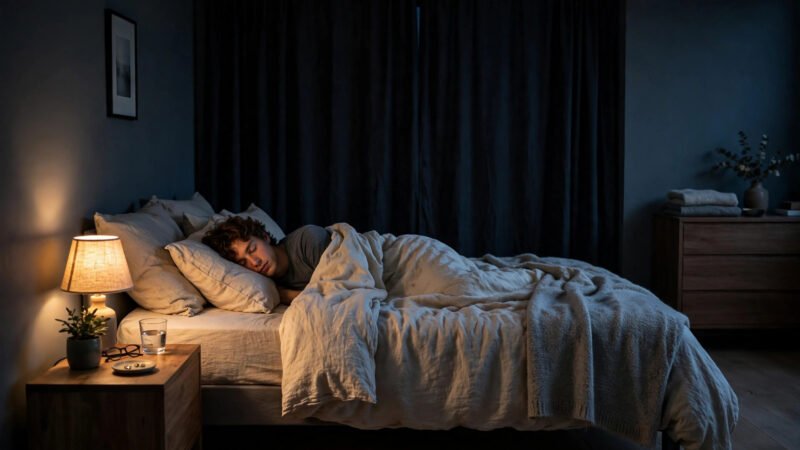

It usually starts with an elbow. Somewhere around 2 a.m., your partner jabs you in the ribs, you roll over mid-snore, and by morning nobody remembers exactly what happened — except that one of you slept badly and the other slept worse. If that sounds familiar, you already know why learning how to stop snoring matters. It is about two people waking up tired, day after day, in the same bed.
Snoring is far more common than most people realise. The American Academy of Sleep Medicine’s patient-education site notes that more than a third of adults between the ages of 30 and 60 snore habitually. Most snoring can be reduced — sometimes a lot — with changes that cost nothing and take effect the same night.
This guide sorts out what actually works from what is mostly marketing: why you snore, how to tell simple snoring apart from sleep apnea, which fixes help tonight, which ones take weeks, and when it is time to see a doctor. Everything here is drawn from published guidance by sleep-medicine organisations and major clinics, with links so you can check the sources yourself.
Written by Md Masud Rana based on published expert sources. This article has not been professionally reviewed. See our sources below.
Quick Answer: How to Stop Snoring
Most snoring improves fastest by sleeping on your side, skipping alcohol for at least two to three hours before bed, clearing a stuffy nose, and getting enough sleep. Over weeks, throat and tongue exercises and gradual weight loss can help further, and a dentist-fitted mouthpiece works for many people. If snoring comes with breathing pauses, gasping, or heavy daytime sleepiness, see a doctor — it may be obstructive sleep apnea, which needs medical treatment.

What Is in This Guide
- What Snoring Actually Is — and Why You Do It
- Is Snoring Dangerous? Snoring vs Sleep Apnea
- How to Stop Snoring Tonight: 5 Fixes That Work Straight Away
- How to Stop Snoring for Good: Habits That Quiet Your Nights
- Do Throat and Tongue Exercises Really Stop Snoring?
- Anti-Snoring Devices Compared: Nasal Strips, Mouthpieces and CPAP
- Mouth Taping for Snoring: What the Evidence Actually Says
- When Snoring Needs a Doctor — and What Happens Next
- What Recent Research Shows
- Common Mistakes People Make When Trying to Stop Snoring
- Final Recommendations
- Frequently Asked Questions
What Snoring Actually Is — and Why You Do It
Snoring is the sound of soft tissue vibrating. When you fall asleep, the muscles in your tongue, soft palate and throat relax. In most people the airway stays wide enough for air to pass quietly. In snorers it narrows, and the same amount of air forced through a smaller space speeds up and makes the slack tissue flutter. That flutter is the noise. The Sleep Foundation explains that snoring happens when air passes through a partially blocked airway and the tissues at the top of it vibrate against each other. Why your airway narrows is the real question, and there is rarely one single answer — most snorers have a mix of causes, and working out your mix is what separates fixes that work from gadgets that gather dust.
Your anatomy sets the starting point
Some people are built in ways that make snoring more likely: a low or thick soft palate, a large tongue base, enlarged tonsils, a small or recessed jaw, or a deviated septum. WebMD notes that the shape of your mouth and throat, or a problem with the shape of your nose such as a deviated septum or nasal polyps, can make it hard for air to get through. You cannot change anatomy with a lifestyle tweak, which is why some snorers need a device or a medical procedure rather than a new pillow.
Sleep position matters more than people think
Lying on your back lets gravity pull the tongue and soft palate backwards, narrowing the airway at exactly the wrong spot. Sleep researchers call this positional snoring, and for a meaningful share of snorers it is the whole story: they snore loudly on their back and barely at all on their side. SleepApnea.org points out that sleeping on your back can increase the risk of snoring or sleep apnea because gravity pulls the tissues around the throat down. If your partner says the noise stops the moment you roll over, position is almost certainly part of your problem.
Triggers that narrow the airway night by night
Beyond anatomy and position, everyday factors push a borderline airway over the edge. A blocked nose forces mouth breathing, which destabilises the airway. Alcohol relaxes throat muscles beyond their normal nighttime slack — which is why someone who never snores can rattle the walls after a few drinks. Exhaustion does the same in a different way: overtired throat muscles relax more deeply, so short nights often mean louder ones. And throat muscle tone declines gradually with age, so someone who never snored at 25 may snore at 55.
The pattern: anything that relaxes airway muscles or swells airway tissue makes snoring worse — and evening habits are the easiest things to change.
Is Snoring Dangerous? Snoring vs Sleep Apnea
Most snoring is what doctors call primary snoring: noisy and hard on the household, but not dangerous in itself. The airway vibrates yet stays open, and breathing continues normally. Obstructive sleep apnea (OSA) is different. The airway repeatedly collapses or narrows so much that breathing pauses or becomes dangerously shallow, sometimes dozens of times an hour. Each pause briefly rouses the brain to restart breathing, shredding sleep quality even when the sleeper remembers none of it.
You cannot diagnose apnea by ear. But certain patterns raise the odds considerably, and the Sleep Foundation lists the warning signs clearly: witnessed breathing pauses, gasping or choking during sleep, excessive daytime sleepiness, morning headaches, high blood pressure, and loud, habitual snoring. WebMD adds that about half of people who snore regularly actually stop breathing over and over all night long.
| What you notice | More likely simple snoring | More likely sleep apnea |
|---|---|---|
| Sound | Steady, even snoring | Snoring broken by silences, then a gasp |
| Breathing | Continuous, no pauses noticed | Partner has seen you stop breathing |
| Mornings | You wake feeling rested | Dry mouth, sore throat, headaches |
| Daytime | Normal energy | Sleepiness while driving or working |
| What to do | Try the fixes in this guide | See a doctor; ask about a sleep study |
Untreated sleep apnea is linked to higher risks of high blood pressure, heart disease, stroke and type 2 diabetes, and many cases remain undiagnosed because people assume they are just ordinary snorers. If anything in the right-hand column sounds familiar, skip ahead to the section on seeing a doctor — the rest of this guide assumes simple snoring.
How to Stop Snoring Tonight: 5 Fixes That Work Straight Away
No single trick works instantly for everyone, but these five steps can reduce snoring the same night for many people, and they cost little or nothing. Try them one at a time for a few nights each, and note what changes. Guessing is how people waste money on the wrong fix.
1. Sleep on your side
This is the cheapest fix available, and often the most effective. Roll onto your side before you drift off, and use a body pillow hugged along your front to stay there. If you roll onto your back in the night, WebMD suggests lining up pillows behind you as a barrier. The old tennis-ball trick — a ball sewn into the back of a sleep shirt — works on the same principle and is still used in sleep medicine.
2. Raise the head of the bed, not just your head
Lifting the head of the bed by a few inches changes the angle of your head and neck and can reduce airway collapse. Use blocks under the bed frame or a wedge pillow. Stacking extra pillows under your head does not work well: it bends the neck forward, kinks the airway and can make snoring worse. A wedge keeps the whole upper body on a gentle slope instead.
3. Skip alcohol in the hours before bed
Alcohol is the most reliable snoring amplifier there is. It relaxes the throat muscles beyond their normal nighttime slack, so an airway that usually stays open begins to flutter. Cleveland Clinic advises avoiding alcohol for several hours before bedtime. WebMD’s guidance is at least two hours; other sources say three to four. If you drink in the evening, finish early and give your body time to clear it before sleep — many people find this one change alone quiets the worst of their snoring.
4. Clear a stuffy nose before bed
If your nose is blocked, you will breathe through your mouth, your jaw will drop open, and your tongue will slide back — a chain reaction that makes snoring almost inevitable. A saline rinse or spray before bed clears mucus mechanically, with no medication involved. External nasal strips, which stick to the bridge of the nose and gently pull the nostrils open, help when the blockage sits at the front of the nose. Our guide to falling asleep faster covers the bedroom setup that helps breathing stay easy through the night.
5. Do not go to bed exhausted
When you are sleep deprived, you drop into deep sleep fast, your muscles relax more deeply than usual, and snoring gets louder. SleepApnea.org explains that not getting enough sleep can increase the likelihood of snoring, because overtired throat muscles relax more deeply and narrow the airway. A regular bedtime and a full night’s sleep are part of the treatment. Our bedtime routine guide for adults walks through how to build a wind-down that actually sticks.
How to Stop Snoring for Good: Habits That Quiet Your Nights
Tonight’s fixes help tonight. The habits below take weeks, but they change the pattern rather than patching one night at a time. It helps to know which of them actually applies to you before committing to any of them.
Weight and the airway
Extra tissue around the neck compresses the airway from the outside, and fat at the base of the tongue narrows it from the inside. The Sleep Foundation notes that for people with overweight or obesity, experts recommend weight loss as one of the first and most important treatments for disrupted breathing during sleep, and that losing even a small percentage of overall weight may help. Two honest qualifiers: plenty of lean people snore loudly, so if you are already at a healthy weight this lever is not yours to pull — and weight change is slow, so pair it with same-night strategies rather than waiting months for quieter sleep.
Smoking and the swollen airway
Tobacco smoke irritates and inflames the lining of the nose and throat, swelling tissue and narrowing the passage. Cleveland Clinic points out that quitting smoking improves nasal congestion, which has a ripple effect on snoring. Many ex-smokers notice quieter nights within weeks as inflammation settles. If you smoke, talk to your doctor about cessation support, including nicotine replacement, prescription medicines and counselling programmes.
Do Throat and Tongue Exercises Really Stop Snoring?
Of all the snoring remedies, this one has the strangest ratio of evidence to popularity: decent science, almost no uptake. Oropharyngeal exercises — sometimes called myofunctional therapy — strengthen and tone the tongue, soft palate and throat muscles so they hold their position better during sleep. Firmer tissue flutters less.
The research is genuinely encouraging. A randomised controlled trial published in the journal Chest found that three months of daily exercises reduced snoring frequency by roughly a third and snoring intensity by more than half in habitual snorers, compared with controls. A review of that trial notes the catch: benefits require daily practice, typically eight to ten minutes for two to three months, and they fade if you stop.
A simple daily routine to try
These take about eight minutes and need no equipment. Do them once a day for at least eight weeks before judging the result.
- Tongue press: press the tip of your tongue firmly against the roof of your mouth and slide it backwards. Repeat 20 times.
- Tongue suction: suck your whole tongue up against the roof of your mouth and hold for a few seconds. Repeat 20 times.
- Vowel sounds: say A-E-I-O-U out loud, slowly and clearly, for a few minutes. It works the soft palate.
- Tongue extension: stick your tongue out as far as it will go and hold for five seconds. Repeat three or four times.
- Chew both sides: chew food deliberately on both sides of your mouth.
Be honest about whether you will actually do this daily for months. If not, that is fine — a mouthpiece or positional change may suit you better. But if you stick with a routine, this is the cheapest effective treatment in this guide, and the only one that keeps working for years at no further cost.
Anti-Snoring Devices Compared: Nasal Strips, Mouthpieces and CPAP
The anti-snoring marketplace is crowded, and its marketing is far more confident than its evidence. A cheap fix that matches your snoring type beats an expensive gadget that does not.
| Approach | Best suited for | What the evidence shows |
|---|---|---|
| Nasal strips and dilators | Snorers with nasal blockage | Modest benefit; low cost, low risk |
| Positional trainers | Back-position snorers | Reasonable evidence for less back sleeping |
| Custom oral appliances | Tongue-base snoring, mild to moderate apnea | Best-supported non-CPAP option |
| Mouth and throat exercises | Habitual snorers willing to practise daily | Trials show reduced frequency and intensity |
Nasal strips and dilators
External nasal strips stick to the bridge of the nose and gently pull the nasal passages open, while internal dilators sit inside the nostrils to widen them from within. The Sleep Foundation notes that they can improve nasal airflow for some people, but are less likely to help when snoring starts farther back in the throat or is caused by sleep apnea. Buy a small pack first — if your snoring is mainly a nose problem, you will know within a few nights.
Anti-snoring mouthpieces
Mouthpieces are the most effective over-the-counter option for throat-based snoring. Mandibular advancement devices fit over the teeth and gently move the lower jaw forward, keeping the throat more open during sleep. Tongue-retaining devices use suction to hold the tongue forward so it is less likely to fall back. Cleveland Clinic advises working with a dentist to get a custom-fitted appliance, warning that a badly fitting one can strain the jaw and trade one problem for another. Possible side effects include jaw soreness, tooth discomfort, drooling and dry mouth.
CPAP and other medical treatments
Continuous positive airway pressure (CPAP) is the most effective treatment for snoring caused by obstructive sleep apnea. A machine delivers a steady stream of pressurised air through a mask worn during sleep, preventing the airway from collapsing. SleepApnea.org explains that many people notice improvement right away — but CPAP requires a prescription and proper mask fitting, and it is not generally used to treat simple snoring on its own. For people who cannot tolerate CPAP, options include hypoglossal nerve stimulation — an implanted device that stimulates the nerve controlling the tongue — and, rarely, surgery for structural problems such as a deviated septum. Surgery for simple snoring has inconsistent results and is usually a last resort.
Mouth Taping for Snoring: What the Evidence Actually Says
Mouth taping has gone viral: stick a small strip of tape over your lips at bedtime so you breathe through your nose instead of your mouth. Social media presents it as a near-miracle. The evidence says considerably less.
The theory is not absurd: mouth breathing during sleep is genuinely associated with worse snoring, and forcing nasal breathing could, in principle, stabilise the airway. But a few small studies, mostly in narrow groups, have produced mixed and modest results. The Sleep Foundation’s assessment is blunt: the overall evidence is limited and inconsistent, and recent reviews have raised safety concerns, especially for people with nasal obstruction or untreated sleep apnea.
The safety questions deserve more attention than they get. If you have undiagnosed sleep apnea, you may rely on mouth breathing when the airway falters — sealing the mouth without knowing your apnea status is the central concern clinicians raise. If your nose is congested, taping the backup route closed is an obviously bad plan. And anyone prone to nighttime reflux or nausea, or anyone who has been drinking, should not restrict the mouth. SleepApnea.org advises talking with a doctor before trying mouth tape, especially if you suspect you may have sleep apnea.
The more sensible sequence: figure out why you mouth-breathe first. Usually the answer is a nose that does not work well at night, and fixing that makes tape unnecessary. If you still want to try it, talk with a clinician first. This is one trend where the boring advice is the right advice.
When Snoring Needs a Doctor — and What Happens Next
See a doctor promptly if your snoring is loud and frequent, or if it comes with any of these: breathing pauses witnessed by a partner, waking up gasping or choking, morning headaches, excessive daytime sleepiness, or high blood pressure that is hard to control. Cleveland Clinic puts it plainly: if at-home remedies are not helping, it may be time to get checked out.
What happens next is less daunting than most people expect. Your doctor will ask about your symptoms and sleep history, examine your nose, mouth, throat and neck, and may ask you to fill in a questionnaire such as STOP-BANG, a validated screening tool for apnea risk. If apnea seems likely, you will be referred for a sleep study — either a home sleep test using a small wearable device in your own bed, or an overnight study at a sleep clinic. Both can detect sleep apnea.
Do not let embarrassment delay this. Sleep clinics see snorers every day, and the evaluation is routine. The people who regret waiting spent years assuming loud snoring with daytime exhaustion was just a personality quirk, when it was a treatable condition all along.
What Recent Research Shows
A few findings from recent years are worth knowing, because they cut through a lot of the marketing noise around snoring products. First, the oropharyngeal exercise trial published in Chest remains the strongest evidence for a free, drug-free snoring treatment: three months of daily practice reduced snoring frequency by roughly a third and intensity by more than half, and the Sleep Foundation continues to list mouth exercises among its recommended approaches. Second, the evidence on mouth taping has moved in the opposite direction. Recent reviews have found little reliable evidence that taping improves obstructive sleep apnea, and sleep physicians increasingly advise against it for people with moderate or severe apnea.
Common Mistakes People Make When Trying to Stop Snoring
1. Buying a gadget before finding the cause
A nasal strip cannot help a tongue-base snorer, and a chin strap cannot open a blocked nose. A week of noting when you snore — on your back, after drinking, when congested — costs nothing and tells you which fix to buy first.
2. Treating the partner instead of the snorer
Earplugs and white noise help the listener, but they leave the snorer’s airway — and any undiagnosed apnea — untouched. They are a stopgap, not a solution.
3. Trying mouth tape with a blocked nose or possible apnea
Sealing the mouth shut when the nose does not work, or when you may rely on mouth breathing during apnea events, carries real risk. Sort out the nose and rule out apnea first.
4. Giving up on throat exercises after a week
The Chest trial took three months of daily practice. Judging the exercises after a few days is like judging a gym programme after one session.
5. Treating a snoring app as a treatment
Snoring apps measure the problem; they do not fix it. A week of recordings is genuinely useful data to bring to a doctor, but the app itself changes nothing about your airway.
Final Recommendations
- Start tonight with position. Sleep on your side, with a body pillow or pillows behind you to stay there. It is free, and for positional snorers it is the single biggest win.
- Finish alcohol at least two to three hours before bed. This one change alone quiets the worst snoring for many people.
- Clear your nose every night. A saline rinse or nasal strips before bed, plus allergy control in the bedroom if congestion is part of your picture.
- Keep a sleep diary for a week. Note your position, drinks, congestion and what your partner heard. Patterns you can see are patterns you can fix.
- Try throat exercises daily for eight weeks if you will stick with them — eight minutes a day, no equipment, the best-evidenced free treatment available.
- Consider a custom-fitted mouthpiece if lifestyle changes are not enough and your snoring starts in the throat. See a dentist rather than guessing with a one-size-fits-all device.
- Get enough sleep. Overtired muscles relax more deeply and snore louder. A regular bedtime is part of the treatment — our guide to waking up at 3 a.m. covers broken sleep, and our nap guide explains how daytime rest fits in without wrecking the night.
- Do not tape your mouth until you have ruled out apnea and fixed any nasal blockage — and talk to a clinician first.
- See a doctor if snoring comes with breathing pauses, gasping, morning headaches or daytime sleepiness. Ask about a sleep study.
- Be patient and systematic. Try one change at a time for several nights and measure the result. Scattershot fixes tell you nothing.
This content is for educational purposes only and does not replace professional medical advice. Always consult a qualified healthcare professional before making health decisions for yourself or others.
Frequently Asked Questions
Sleep on your side, skip alcohol for at least two to three hours before bed, and clear a stuffy nose with a saline rinse or nasal strips. Raising the head of the bed a few inches can also help. No single method works instantly for everyone, but these steps reduce snoring the same night for many people.
Sudden worsening usually has a trigger: a cold or allergy flare blocking your nose, drinking alcohol in the evening, sleeping on your back, exhaustion after short nights, or weight gain around the neck. If it comes with breathing pauses, gasping or new daytime sleepiness, see a doctor — it may be sleep apnea rather than simple snoring.
Snoring can often be treated very effectively, but whether it can be fully stopped depends on the cause. Positional snoring may disappear entirely with side sleeping. Snoring caused by anatomy, such as a deviated septum or a recessed jaw, may need a device or medical treatment. There is no single cure that works for everyone, which is why finding your cause matters more than buying the latest gadget.
Not always — many people snore without having sleep apnea. But loud, frequent snoring is one of its most common symptoms, and the two often go together. Apnea becomes more likely if your snoring is interrupted by silences and gasps, you wake with morning headaches, or you feel sleepy during the day. A sleep study is the only way to know for sure.
There is genuine evidence behind them. A randomised trial published in the journal Chest found that three months of daily oropharyngeal exercises reduced snoring frequency by roughly a third and intensity by more than half. The catch is consistency: about eight to ten minutes of daily practice for two to three months, and the benefit fades if you stop.
The evidence is limited. It may help some mouth breathers with clear nasal passages, but recent reviews have found little reliable evidence that it improves sleep apnea, and it can be risky if your nose is blocked or you have untreated apnea. Talk to a doctor first. Fixing the reason you mouth-breathe — usually a blocked nose — is usually the better step.
Sleeping on your side is best for most snorers, because it stops gravity pulling the tongue and soft palate backwards into the airway. A body pillow can help you stay on your side, and the old tennis-ball trick — a ball sewn into the back of a sleep shirt — discourages rolling onto your back. Raising the head of the bed a few inches helps too, but avoid stacking pillows, which bends the neck and can make snoring worse.
Gently rolling them onto their side is the most reliable trick — it opens the airway and often quiets the snoring within seconds. Earplugs or white noise can protect your sleep in the meantime, but if their snoring is loud every night, encourage them to see a doctor, especially if you have noticed breathing pauses.
Conclusion
Snoring feels like a small problem until you live with it night after night. The good news is that most snoring is fixable, or at least greatly reducible, and the fixes that work best are not the expensive ones. Side sleeping, an earlier last drink, a clear nose and a full night’s sleep can change the very first night you try them.
The one thing this guide cannot do is decide which cause is yours. That takes a week of paying attention: when you snore, what you did that evening, and what your partner heard. Try one change at a time and measure the result honestly. If nothing works, or the warning signs of sleep apnea are there, that is not a failure — it is information, and a sleep study is the next step.
Start tonight. Roll onto your side, finish your drink earlier than usual, and rinse your nose before bed. Your partner will notice the difference before you do. If sleep in general is a struggle, our complete sleep health guide brings together everything on the site about sleeping well, from bedtime routines to naps.
Last updated: November 2026.
References
- Sleep Foundation — How to Stop Snoring: 10 Expert-Approved Tips for Quieter Sleep — Sleep Foundation — 2026 — https://www.sleepfoundation.org/snoring/how-to-stop-snoring
- Cleveland Clinic — How to Stop Snoring — Cleveland Clinic — 2026 — https://health.clevelandclinic.org/how-to-stop-snoring
- WebMD — Why Do I Snore and How Do I Stop? — WebMD — 2026 — https://www.webmd.com/sleep-disorders/snore-no-more
- SleepApnea.org — How to Stop Snoring — American Academy of Sleep Medicine — 2026 — https://www.sleepapnea.org/snoring/how-to-stop-snoring/
- Acibadem International — How to Stop Snoring: What Works & When It’s Apnea — Acibadem International — 2026 — https://acibademinternational.com/blog/how-to-stop-snoring-what-works-what-doesnt-and-when-its-sleep-apnea/