
Almost everyone has had the same miserable experience: exhausted at bedtime, staring at the ceiling at midnight, then dragging through the next day on broken sleep. Sleep is not a luxury or a productivity hack — it is the foundation that memory, mood, immunity, and concentration all rest on. The reassuring part is that most sleep problems are not mysterious. They trace back to a handful of fundamentals: when you sleep, what your bedroom is like, and what you do in the hours before bed. This guide covers the sleep hygiene basics that genuinely work, the common disruptors to watch for, and when a sleep aid is worth considering.
Keep a Consistent Sleep Schedule
If you change one thing about your sleep, make it this: go to bed and wake up at roughly the same time every day, including weekends. Your circadian rhythm — the internal clock that times sleepiness and alertness — anchors to regularity. A consistent schedule trains it; a weekend lie-in that shifts by two hours confuses it, which is why Monday mornings can feel like jet lag.
Most adults need somewhere around seven to nine hours, but the right amount is the one that leaves you alert through the day without an alarm. If you are shifting your schedule, move it in 15–30 minute steps every few days rather than all at once. And get daylight — especially morning light — into your eyes early in the day; it is the strongest signal your clock uses to set itself.
Make Your Bedroom a Sleep Cave
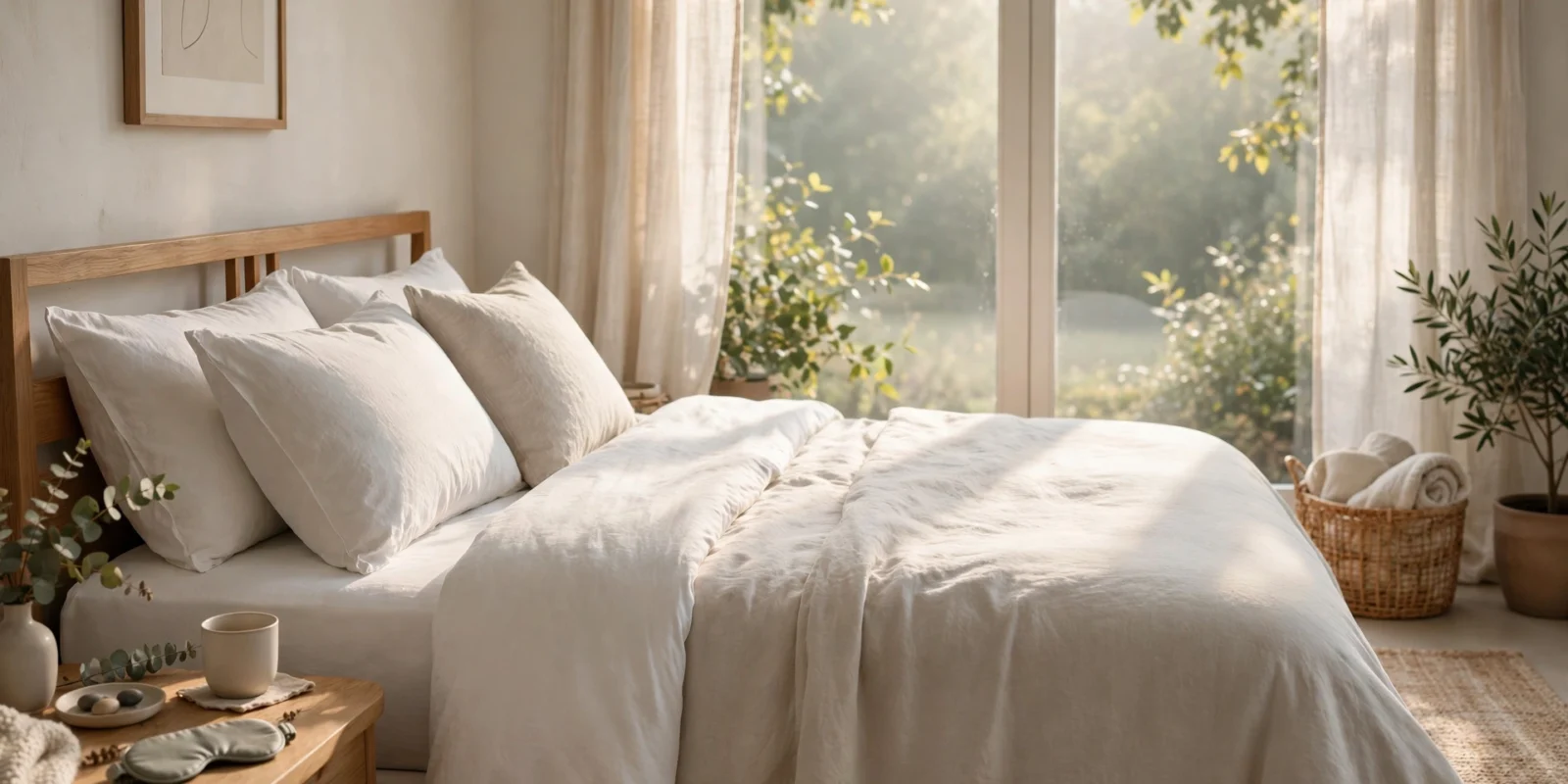
Your bedroom should send one message to your brain: this is where sleep happens. Three levers matter most. Darkness: light suppresses melatonin, the hormone that signals night-time. Blackout curtains or a sleep mask make a real difference, especially if you work shifts or live near street lighting. Coolness: your core body temperature needs to drop to fall asleep, so a slightly cool room — around 18–20°C for most people — helps. Quiet: sudden noise fragments sleep even when you do not fully wake. Earplugs or steady white noise beat an unpredictable street.
Comfort counts too: a mattress and pillows that support your usual sleeping position without pain, bedding you can adjust through the night, and a bed reserved for sleep (and intimacy) rather than work emails and doom-scrolling. If your brain associates the bed with screens and stress, sleep becomes harder to find there.
Tame the Screens Before Bed
Screens earn their reputation as sleep saboteurs through two routes: the blue-enriched light that can delay melatonin release, and the stimulation — news, arguments, one more episode — that keeps your mind revved. The practical version of the advice: set a screen curfew 30–60 minutes before bed, or at minimum switch to passive, calming content and dim the brightness.
If willpower fails, use friction instead of discipline: charge your phone outside the bedroom, use a basic alarm clock, and enable night-shift or warm colour modes in the evening. E-readers without backlights are fine for most people. And if you wake in the night, resist the glowing rectangle — checking the time tends to wake you further.
Caffeine, Alcohol, and the Evening Hours
Caffeine has a half-life of roughly five to six hours, which means a 4 pm coffee is still half-present at 10 pm. If you are sensitive — and many poor sleepers are — set a personal caffeine curfew around early afternoon and watch hidden sources like tea, chocolate, energy drinks, and some painkillers. Alcohol deserves a myth-busting: it may help you fall asleep, but it fragments the second half of the night and suppresses REM sleep, so you wake less refreshed. “A nightcap helps me sleep” is one of the most common sleep misconceptions there is.
Large, heavy meals close to bedtime can also cause discomfort and reflux that disturb sleep; a light snack is fine if hunger keeps you awake. Regular daytime exercise improves sleep quality for most people — just avoid intense workouts in the final hour or two before bed.
Wind Down Like You Mean It
You cannot sprint straight from a stressful day into sleep. A wind-down routine — 20 to 30 minutes of the same calming activities each night — teaches your body that sleep is coming. A warm shower or bath works partly because the subsequent cooling mimics the temperature drop of sleep onset. Reading, gentle stretching, journaling tomorrow’s worries out of your head, or a short relaxation exercise all qualify. The specific activity matters less than the consistency.
If you lie awake for more than about 20 minutes, the classic sleep-medicine advice is to get up, go to another room, and do something calm and boring in dim light until you feel sleepy. Lying in bed awake trains your brain to associate the bed with wakefulness — the opposite of what you want.
Sleep Aids: What Is Worth Considering?
Good sleep hygiene resolves most routine sleep complaints on its own, and it should always come first. But some people look for extra help — and the market is full of products with thin evidence. Melatonin supplements, for instance, have modest evidence for certain uses like jet lag and delayed sleep timing, but they are not a general-purpose sleeping pill, and quality varies between brands. Prescription sleep medicines can help short-term in specific situations but carry risks of dependence and next-day effects, so they need a clinician’s judgement.
Then there are comfort aids — and evidence here is honestly mixed. Weighted blankets are the best-known example: some users report feeling calmer and sleeping better, while the research base remains limited and small-scale. If you are curious rather than convinced, our guide Weighted Blankets: Do They Actually Work? gives you the honest rundown — what the studies actually say, who might benefit, safety considerations (including for children and people with breathing difficulties), and how to choose the right weight. It is the no-hype deep-dive companion to this page. And a standing rule for any sleep aid: if poor sleep persists for weeks, or you suspect something like sleep apnoea, talk to your doctor rather than shopping for products.
Napping: A Skill, Not a Failure
Naps get a bad reputation, but a short nap is one of the most effective alertness tools there is — research on napping consistently shows benefits for attention and mood when naps stay brief. The formula: 10–20 minutes, early afternoon (ideally before 3 pm), in a dark quiet spot. This length keeps you in light sleep, so you wake refreshed rather than groggy.
The grogginess people fear comes from waking mid-deep-sleep, which is why naps over 30 minutes can backfire — you wake from slow-wave sleep feeling worse than before. The “coffee nap” is a neat trick some people swear by: drink a coffee, then nap for 15–20 minutes; the caffeine kicks in just as you wake. And the cardinal rule: if naps regularly wreck your night-time sleep, they are costing more than they give — shorten them or skip them.
Stress, Worry, and the Racing Mind
For many people, the barrier to sleep is not the bedroom but the brain — replaying the day, rehearsing tomorrow. This is normal, but it needs an off-ramp. The most effective habit is a “worry window”: spend ten minutes earlier in the evening writing down everything on your mind and one next step for each. Getting it out of your head and onto paper means there is less for 2 am to chew on.
Relaxation techniques — slow diaphragmatic breathing, progressive muscle relaxation, or a short body scan — give your nervous system a concrete signal to downshift. They feel awkward the first few times and then become automatic. What does not work is trying to force sleep; sleep is a passive process, and effort is the enemy. If worry is persistent and severe, or tangled with anxiety or low mood, that is worth raising with your doctor — and cognitive behavioural therapy for insomnia (CBT-I) specifically targets this pattern.
Common Sleep Disruptors Checklist
- Irregular bedtimes and weekend lie-ins that shift your clock
- Late caffeine — remember the five-to-six-hour half-life
- Alcohol as a “sleep aid” that fragments the night
- Bright screens and stimulating content in the last hour
- A bedroom that is too warm, too bright, or too noisy
- Naps longer than 20–30 minutes, or taken late in the afternoon
- Stress and racing thoughts carried unprocessed into bed
- Chronic snoring or gasping — a reason to see a doctor, not a quirk
Most adults do best on seven to nine hours, though individual needs vary. The honest test is how you feel: if you need an alarm to wake, drag through afternoons, or fall asleep the moment you sit still, you are probably running short. Teens need more (eight to ten hours), and sleep needs shift slightly with age. Consistency matters as much as duration.
It can be, for two reasons: screen light can delay the melatonin signal, and stimulating content keeps your mind alert. You do not have to go full digital sunset — a 30 to 60 minute wind-down without stimulating screens helps most people. At minimum, dim the screen, avoid arguments and news, and keep the phone out of arm's reach overnight.
The evidence is mixed. Some small studies and many users report reduced anxiety and a feeling of sleeping more soundly, but the research base is limited and results are not consistent. They may be worth trying if you find deep pressure calming — choose roughly ten percent of your body weight, and avoid them for young children or anyone with breathing difficulties without medical advice.
Moderately. Wearables estimate sleep from movement and heart rate, and they are reasonable at tracking total sleep time and patterns over weeks. They are less reliable at distinguishing sleep stages, so take the nightly 'sleep score' with a pinch of salt. Use them for trends — 'I sleep worse on late-caffeine days' — not for medical conclusions.
If poor sleep lasts more than a few weeks despite good sleep hygiene, or you notice loud snoring, gasping, daytime sleepiness that affects driving or work, or restless legs, see your doctor. These can signal conditions like sleep apnoea that need proper diagnosis. Persistent insomnia is treatable — cognitive behavioural therapy for insomnia (CBT-I) is the first-line recommendation.
Conclusion
Great sleep is rarely about one trick. It is a consistent schedule, a dark cool quiet room, sensible caffeine and screen habits, and a wind-down routine that tells your body the day is done. Build those foundations first — they do the heavy lifting for free. If you are exploring comfort aids on top of that, the honest Weighted Blankets: Do They Actually Work? guide separates what the evidence says from the marketing. And if sleep stays elusive for weeks, that is a conversation for your doctor, not your shopping cart.